
When to Plant Kohlrabi in Canberra, Cold / Highland Guide
Sow August to April. Right now in October you can sow.
Grow Kohlrabi in your space
- Planting window
- Start in trays from August. Sow direct from September to March once the soil is above 10°C, and plant out up to April.
- Days to harvest
- 55 days
- Sunlight
- Full sun (6+ hours). Tolerates light shade, especially in warmer zones where afternoon shade prevents bolting.
- Water needs
- Consistent, even moisture throughout growth. Water deeply 2-3 times per week...
- Spacing
- 20cm apart, 35cm between rows
- Soil pH
- 6.5-7.5
Published · Last reviewed · By GardenBuddy.au
Growing advice is reviewed by hand. Planting dates, current conditions and prices on this page update daily.
This Kohlrabi guide is written for the Cold / Highland zone, which takes in Canberra, Cooma and Bright. Somewhere else? Your postcode picks the right one.
Not your zone? Cairns Brisbane Sydney Melbourne Alice Springs Perth
Also handy: will it frost this week? and what grows in shade.
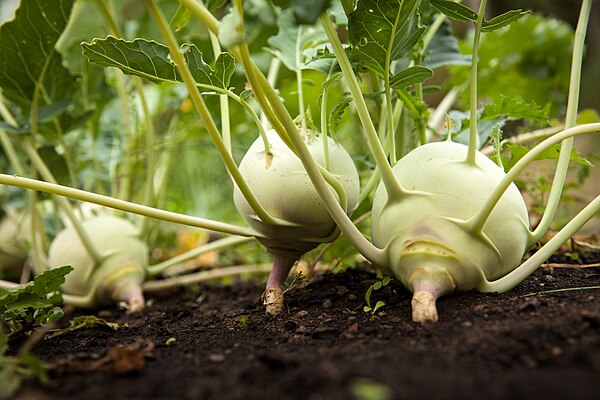
Photo: Wikimedia Commons
Kohlrabi is technically not a root vegetable. The edible part is a swollen stem that forms above ground. Fast-growing (55-70 days), mild-flavoured, and versatile in the kitchen, kohlrabi is an underused gem in Australian gardens. It thrives in cool weather, handles light frost, and is one of the best brassicas for beginners. Both the bulb and leaves are edible.
See what grows now in your own postcode
Planting Calendar for Cold / Highland
| Jan | Feb | Mar | Apr | May | Jun | Jul | Aug | Sep | Oct | Nov | Dec |
|---|---|---|---|---|---|---|---|---|---|---|---|
| S/T/D | S/T/D | S/T/D | T | - | - | - | S | S/T/D | S/T/D | S/T/D | S/T/D |
S = Seed Tray T = Transplant D = Direct Sow
Want a nudge when it is Kohlrabi sowing time in Canberra?
One email a week with what is worth planting in the Cold / Highland zone right now, Kohlrabi included, plus which veg has jumped in price at the supermarket. Free, and you can stop it in one click.
Current Growing Conditions
Soil temperature: 13.6°C (optimal range: 10–30°C) ✓ Ready to plant
Modelled from Open-Meteo forecast (Canberra), not a live sensor.
What this month normally looks like
In October the Cold / Highland zone normally runs 20°C by day and 7°C overnight, with about 58 mm of rain over 7 or 8 wet days. The coldest October night on record across the zone was -6.4°C, so a late frost is not out of the question. Averages 1991 to 2026, 15 postcodes, SILO.
How to Grow Kohlrabi in Cold / Highland Australia
When to Plant
Start in trays from August. Sow direct from September to March once the soil is above 10°C, and plant out up to April.
- Soil
- Rich, well-drained soil with plenty of organic matter. Prefers neutral to slightly alkaline soil. Dig in compost and well-rotted manure before planting. Add lime to acidic soils (critical for preventing clubroot).
- pH Range
- 6.5-7.5
- Sunlight
- Full sun (6+ hours). Tolerates light shade, especially in warmer zones where afternoon shade prevents bolting.
- Spacing
- 20cm apart, 35cm between rows
- Watering
- Consistent, even moisture throughout growth. Water deeply 2-3 times per week. Inconsistent watering causes the stem bulb to become woody and split. Drip irrigation preferred.
Companion plants: Beetroot, Celery, Cucumber, Dill, Lettuce, Onion
Avoid planting near: Strawberry, Tomato, Runner Bean
Grow before, grow after
Kohlrabi belongs with the brassicas, the leafy greens and brassicas turn of a four turn bed rotation.
- Grow before it
- Legumes (Beans - Dwarf, Peas, Broad Beans)
- Grow after it
- Fruiting crops (Tomato, Capsicum, Zucchini)
Give the bed 3 turns before brassicas go back in. The cabbage family is hungry for nitrogen and shares club root and other soil diseases.
Cold / Highland Growing Tips for Kohlrabi
Recommended Varieties
- White Vienna
- Purple Vienna
- Early White Vienna
Key Challenges
- Short growing season
- Late spring frosts on seedlings
Pro Tips
- Start early in punnets indoors. Transplant after last frost
- Fast maturity (55-70 days) suits short highland seasons
- Two crops easily possible: September start, January start
Harvesting Kohlrabi
When ready: Stem bulb is 6-8cm diameter (tennis ball size) for standard varieties. Bulb should feel firm and smooth. Harvest promptly. Overgrown bulbs (>10cm for standard varieties) become woody and fibrous. Exception: Superschmelz stays tender up to 20cm.
How to harvest: Cut stem just below the bulb with a sharp knife, or pull the entire plant. Trim off leaves (save for cooking, they are edible). Trim the root.
Common Kohlrabi Pests in Cold / Highland Zones
Fungal Soft Rot, risk: LOW (score: 20/100)In the pest library for kohlrabi:
Cabbage White Butterfly, high severityOrganic prevention (Black Rot): Use certified disease-free seed. Hot water seed treatment (50C for 25 minutes). Avoid overhead watering. Crop rotation (3 years). Remove crop debris.
Where to next
Get the Full Interactive Guide
Track your garden, get real-time pest alerts, and plan around your zone's weather.
Open the planting dashboard Join GardenBuddy.auCommon Questions About Kohlrabi
When do you plant kohlrabi in Australia?
It depends on your climate zone, not the calendar month alone. Planting months by zone:
- Tropical (Cairns): Mar to Aug
- Subtropical (Brisbane): Mar to Aug
- Warm Temperate (Sydney): Feb to Jun, Aug to Nov
- Cool Temperate (Melbourne): Jan to Apr, Aug to Dec
- Cold / Highland (Canberra): Jan to Apr, Aug to Dec
- Arid / Semi-Arid (Alice Springs): Feb to Jun
- Mediterranean (Perth): Feb to Oct
Does kohlrabi grow all year round in Canberra?
No. In the Cold / Highland zone the planting months are Jan to Apr, Aug to Dec. Outside that window it either bolts, sulks or gets cut down by the weather.
Which zone am I in?
Type your postcode into the box under the heading and the page tells you, and links this crop in your own zone if it differs. Or look it up on the grow zone map. This page is the Cold / Highland zone, Canberra is its reference city.