
When to Plant Cucumber in Canberra, Cold / Highland Guide
Soil temperature is modelled from Open-Meteo forecast (Canberra), not a live sensor.
What this month normally looks like in Cold / Highland
In October the Cold / Highland zone normally runs 20°C by day and 7°C overnight, with about 58 mm of rain over 7 or 8 wet days. The coldest October night on record across the zone was -6.4°C, so a late frost is not out of the question. Averages 1991 to 2026, 15 postcodes, SILO.
Jump to section
This Cucumber guide is written for the Cold / Highland zone, which takes in Canberra, Cooma and Bright. Somewhere else? Your postcode picks the right one.
Not your zone? Cairns Brisbane Sydney Melbourne Alice Springs Perth
Also handy: will it frost this week? and what grows in shade.
- Planting window
- Oct to Dec
- Days to harvest
- 55 days
- Sun
- Full sun to part shade
- Water
- Regular
- Spacing
- 50 cm apart
- Soil pH
- 6.0–7.0
- Shop price
- $6.35/kg
Cucumbers are warm-season cucurbits that produce prolifically in Australian summers. Three main types are grown: Lebanese (short, smooth, seedless), Continental (long, thin-skinned) and pickling/gherkin varieties.
Published · By GardenBuddy.au
Planting dates, current conditions and prices on this page update daily.
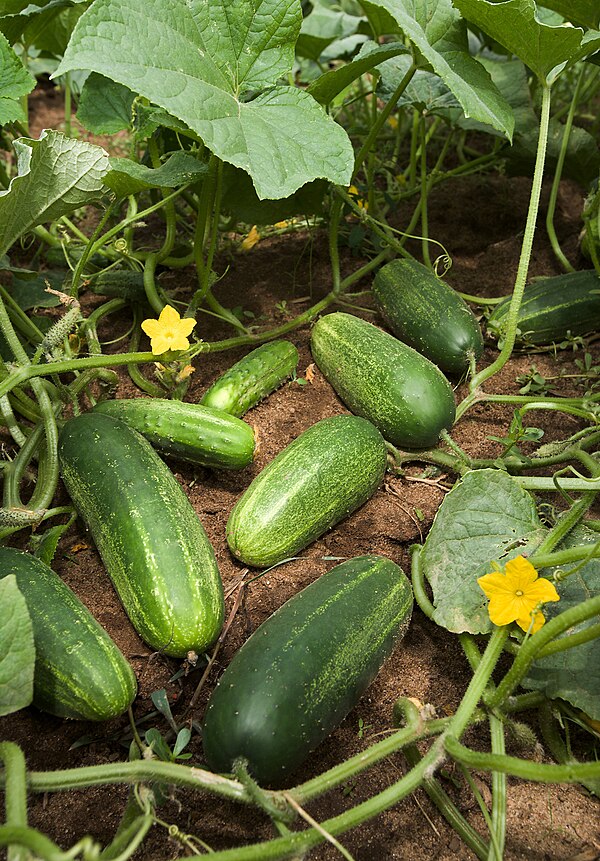
Photo: Wikimedia Commons
Planting Calendar for Cold / Highland
- Jan -
- Feb -
- Mar -
- Apr -
- May -
- Jun -
- Jul -
- Aug -
- Sep -
- Oct S
- Nov S/T/D
- Dec T/D
S = Seed Tray T = Transplant D = Direct Sow
Want a nudge when it is sowing time?
One email a week with what is worth planting in the Cold / Highland zone right now, Cucumber included, plus which veg has jumped in price at the supermarket. Free, and you can stop it in one click.
How to Grow Cucumber in Cold / Highland Australia
- Soil
- Rich, well-drained soil with generous compost and well-rotted manure. Cucumbers are heavy feeders and need fertile, moisture-retentive soil.
- Salt
- Moderately sensitive. Copes with a little salt, but the harvest drops on salty bore water.
- pH Range
- 6.0-7.0
- Sunlight
- Full sun (minimum 6 hours). In hot climates (tropics, arid), light afternoon shade reduces heat stress.
- Spacing
- 50cm apart, 120cm between rows
- Watering
- Heavy water demands. Deep, consistent watering at base is critical. Irregular watering causes bitter, misshapen fruit. Drip irrigation ideal. Water in morning to allow foliage to dry (reduces mildew).
- Good companions
- Nasturtium, Dwarf Beans, Lettuce, Sweet Corn, Radish
- Keep away from
- Galangal, Guava, Potato, Rockmelon (same family rotation issues), Sage
- Grow before it
- Leafy greens and brassicas (Lettuce, Silverbeet, Broccoli)
- Grow after it
- Roots and alliums (Carrot, Beetroot, Onion)
Give the bed 3 turns before cucurbits go back in. Pumpkin, cucumber and zucchini want a bed with fresh compost dug through.
Cold / Highland Growing Tips for Cucumber
Recommended Varieties
- Lebanese (fastest maturing)
- Marketmore
Key Challenges
- Insufficient heat outdoors
- Frost risk
- Very short season
Pro Tips
- Greenhouse growing is the only reliable method in highland areas
- If growing outdoors, use every warmth trick available
- Focus on fast-maturing varieties
Pests and problems for Cucumber in Cold / Highland
- Powdery Mildew Good air circulation (trellis growing helps). Avoid overcrowding. Choose resistant varieties (Socrates, Diva). Succession planting means... Moderate
- Queensland Fruit Fly Watch
- Botrytis (Grey Mould) Watch
- Mosaic Viruses Watch
- Root-knot Nematode Watch
- Two-spotted spider mite Watch
- Thrips Watch
- Cucumber Mosaic Virus (CMV) Control aphids rigorously. Wash hands and tools between plants. Choose resistant varieties. Remove weeds that act as virus reservoirs. Watch
Organic prevention (Powdery Mildew): Good air circulation (trellis growing helps). Avoid overcrowding. Choose resistant varieties (Socrates, Diva). Succession planting means younger, healthier plants replace mildewed ones.
Harvesting Cucumber
When ready: Lebanese: 12-15cm, firm, dark green. Continental: 30-40cm, firm. Gherkins: 5-8cm for pickling. All types: harvest BEFORE seeds inside become large and hard. Overripe cucumbers are seedy, bitter and watery.
How to harvest: Cut with scissors or secateurs leaving short stem. Do not pull (damages vine). Harvest early morning when fruit is cool and firm.
Storing and preserving cucumber
How to keep it
- Lacto-Fermented Pickles. Pack whole small cucumbers into jar with dill, garlic, grape/oak leaf (provides tannin for crunch). Dissolve 30g salt per litre water. Pour brine over cucumbers ensuring complete submersion. Weight down. Ferment at room temperature 3-7 days. Refrigerate to slow fermentation. Keeps: 3-6 months refrigerated.
- Freezing (for cooking only). Peel and deseed large cucumbers. Puree and freeze in ice cube trays. Use in smoothies, cold soups or tzatziki. Note: frozen cucumber loses all crunch and is unsuitable for salads. Keeps: 6 months.
- Pickling (Gherkins / Dill Pickles). Use pickling varieties or small Lebanese cucumbers. Pack tightly into sterilised jars with dill, garlic, peppercorns, mustard seed. Bring 1L vinegar, 1L water, 60g salt to boil. Pour over cucumbers leaving 1cm headspace. Process in boiling water bath for 10 minutes. Wait 4-6 weeks before eating for best flavour. Keeps: 12 months sealed in cool dark place.
- Relish. Dice cucumbers, onion and capsicum. Sprinkle with salt, stand 2 hours, drain. Combine with 500ml vinegar, 200g sugar, 2 tsp mustard seed, 1 tsp celery seed, 1/2 tsp turmeric. Simmer 20 minutes. Jar hot. Keeps: 12 months.
What cucumber costs in the shops right now, retailer by retailer, updated daily.
What members get
- Soil and weather from your nearest station
- An email when it's time to sow
- Your own garden plan, including planning from a photo
- Price history and price alerts
- Pest risk alerts for your area
- Full salt and canning detail
Common Questions About Cucumber
When do you plant cucumber in Australia?
It depends on your climate zone, not the calendar month alone. Planting months by zone:
- Tropical (Cairns): Mar to Sep
- Subtropical (Brisbane): Jan to Mar, Aug to Dec
- Warm Temperate (Sydney): Jan to Feb, Sep to Dec
- Cool Temperate (Melbourne): Jan, Oct to Dec
- Cold / Highland (Canberra): Oct to Dec
- Arid / Semi-Arid (Alice Springs): Jan to Feb, Aug to Dec
- Mediterranean (Perth): Jan, Aug to Dec
Can you grow cucumber all year round in Canberra?
No. In the Cold / Highland zone the planting months are Oct to Dec. Outside that window it either bolts, sulks or gets cut down by the weather.
When should I plant Cucumber in Canberra?
Sow under cover in October or direct from mid November, and plant out only after the last frost. Picking runs from late January until cool autumn nights stop growth.
What soil temperature do Cucumber need?
Cucumber germinate best when soil temperature is between 18°C and 35°C.
How do I know when Cucumber are ready to harvest?
Lebanese: 12-15cm, firm, dark green. Continental: 30-40cm, firm. Gherkins: 5-8cm for pickling. All types: harvest BEFORE seeds inside become large and hard. Overripe cucumbers are seedy, bitter and watery.
What are the best Cucumber varieties for Canberra?
Recommended varieties for the Cold / Highland zone include: Lebanese (fastest maturing), Marketmore.
What grows well with Cucumber?
Good companion plants for Cucumber include: Nasturtium, Dwarf Beans, Lettuce, Sweet Corn, Radish.
Are cucumber salt tolerant?
Only a little. Cucumber are moderately sensitive to salt, so the harvest drops on salty bore water. Mix salty water with rainwater, and mulch the bed.
Which zone am I in?
Type your postcode into the box near the top of the page and it tells you, and links this crop in your own zone if it differs. Or look it up on the grow zone map. This page is the Cold / Highland zone, Canberra is its reference city.