
When to Plant Kohlrabi in Sydney, Warm Temperate Guide
Soil temperature is modelled from Open-Meteo forecast (Sydney), not a live sensor.
What this month normally looks like in Warm Temperate
In October the Warm Temperate zone normally runs 24°C by day and 13°C overnight, with about 66 mm of rain over 7 or 8 wet days. The coldest October night on record across the zone was -1.5°C, so a late frost is not out of the question. Averages 1991 to 2026, 153 postcodes, SILO.
Jump to section
This Kohlrabi guide is written for the Warm Temperate zone, which takes in Sydney, Newcastle and Wollongong. Somewhere else? Your postcode picks the right one.
Not your zone? Cairns Brisbane Melbourne Canberra Alice Springs Perth
Also handy: will it frost this week? and what grows in shade.
- Planting window
- Feb to Jun, Aug to Nov
- Days to harvest
- 55 days
- Sun
- Full sun to part shade
- Water
- Regular
- Spacing
- 20 cm apart
- Soil pH
- 6.5–7.5
Kohlrabi is technically not a root vegetable. The edible part is a swollen stem that forms above ground.
Published · By GardenBuddy.au
Planting dates, current conditions and prices on this page update daily.
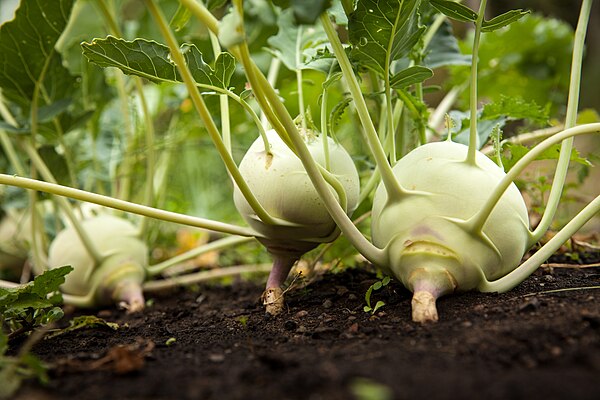
Photo: Wikimedia Commons
Planting Calendar for Warm Temperate
- Jan -
- Feb S/D
- Mar S/T/D
- Apr S/T/D
- May S/T/D
- Jun T
- Jul -
- Aug S/D
- Sep S/T/D
- Oct S/T/D
- Nov T
- Dec -
S = Seed Tray T = Transplant D = Direct Sow
Want a nudge when it is sowing time?
One email a week with what is worth planting in the Warm Temperate zone right now, Kohlrabi included, plus which veg has jumped in price at the supermarket. Free, and you can stop it in one click.
How to Grow Kohlrabi in Warm Temperate Australia
- Soil
- Rich, well-drained soil with plenty of organic matter. Prefers neutral to slightly alkaline soil. Dig in compost and well-rotted manure before planting. Add lime to acidic soils (critical for preventing clubroot).
- Salt
- Moderately sensitive. Copes with a little salt, but the harvest drops on salty bore water.
- pH Range
- 6.5-7.5
- Sunlight
- Full sun (6+ hours). Tolerates light shade, especially in warmer zones where afternoon shade prevents bolting.
- Spacing
- 20cm apart, 35cm between rows
- Watering
- Consistent, even moisture throughout growth. Water deeply 2-3 times per week. Inconsistent watering causes the stem bulb to become woody and split. Drip irrigation preferred.
- Good companions
- Nasturtium, Lettuce, Onion, Cucumber, Dill
- Keep away from
- Climbing Beans, Fennel, Strawberry, Tomato
- Grow before it
- Legumes (Beans - Dwarf, Peas, Broad Beans)
- Grow after it
- Fruiting crops (Tomato, Capsicum, Zucchini)
Give the bed 3 turns before brassicas go back in. The cabbage family is hungry for nitrogen and shares club root and other soil diseases.
Warm Temperate Growing Tips for Kohlrabi
Recommended Varieties
- White Vienna
- Purple Vienna
- Kolibri F1
- Winner
Key Challenges
- Summer heat causing bolting
- Caterpillar damage
- Clubroot in acidic soils
Pro Tips
- Sydney gardeners enjoy an extended kohlrabi season
- Spring and autumn crops are best
- Net against caterpillars. Essential for clean crops
Pests and problems for Kohlrabi in Warm Temperate
- Fungal Soft Rot High
- Diamondback Moth Watch
- Cabbage White Butterfly Watch
- Downy Mildew Good spacing. Avoid overhead watering. Morning watering so foliage dries. Crop rotation. Watch
- Common Garden Snail Watch
- Slugs Watch
- Clubroot Lime soil to pH 7.0-7.2 before planting brassicas. Ensure drainage. Crop rotation (7+ years in infected soil). Do not move soil from... Watch
- Caterpillar damage Caterpillar damage Watch
Harvesting Kohlrabi
When ready: Stem bulb is 6-8cm diameter (tennis ball size) for standard varieties. Bulb should feel firm and smooth. Harvest promptly. Overgrown bulbs (>10cm for standard varieties) become woody and fibrous. Exception: Superschmelz stays tender up to 20cm.
How to harvest: Cut stem just below the bulb with a sharp knife, or pull the entire plant. Trim off leaves (save for cooking, they are edible). Trim the root.
Storing and preserving kohlrabi
How to keep it
- Refrigerator Storage. Remove leaves (store separately). Place unwashed bulbs in a perforated plastic bag in the crisper drawer. Keeps well refrigerated. Keeps: 2-4 weeks refrigerated.
- Freezing. Peel and dice into 2cm cubes. Blanch 2 minutes. Ice bath. Drain, tray freeze, then bag. Keeps: 12 months frozen.
- Dehydrating. Peel and slice thinly (3mm). Blanch 1 minute. Spread on dehydrator trays. Dry at 55C for 6-10 hours until crisp. Keeps: 12 months in airtight container.
- Lacto-Fermentation (Sauerkraut-Style). Peel and grate or shred kohlrabi. Toss with 2% salt by weight. Pack tightly into jar, pressing down until brine covers shreds. Add optional caraway seeds or chilli. Ferment at room temperature 5-7 days. Refrigerate. Keeps: 3-6 months refrigerated.
- Pickling. Peel and cut into sticks or thin slices. Pack into sterilised jars with dill and mustard seeds. Pour over hot brine (1 cup vinegar, 1 cup water, 2 tbsp sugar, 1 tbsp salt). Seal and water bath 10 minutes. Keeps: 12 months sealed.
What kohlrabi costs in the shops right now, retailer by retailer, updated daily.
What members get
- Soil and weather from your nearest station
- An email when it's time to sow
- Your own garden plan, including planning from a photo
- Price history and price alerts
- Pest risk alerts for your area
- Full salt and canning detail
Common Questions About Kohlrabi
When do you plant kohlrabi in Australia?
It depends on your climate zone, not the calendar month alone. Planting months by zone:
- Tropical (Cairns): Mar to Aug
- Subtropical (Brisbane): Mar to Aug
- Warm Temperate (Sydney): Feb to Jun, Aug to Nov
- Cool Temperate (Melbourne): Jan to Apr, Aug to Dec
- Cold / Highland (Canberra): Jan to Apr, Aug to Dec
- Arid / Semi-Arid (Alice Springs): Feb to Jun
- Mediterranean (Perth): Feb to Oct
Can you grow kohlrabi all year round in Sydney?
No. In the Warm Temperate zone the planting months are Feb to Jun, Aug to Nov. Outside that window it either bolts, sulks or gets cut down by the weather.
When should I plant Kohlrabi in Sydney?
Two sowing windows: late summer to autumn (February to May) and late winter to spring (August to October). Hot weather over about 28°C makes the bulbs woody, so skip midsummer sowings.
What soil temperature do Kohlrabi need?
Kohlrabi germinate best when soil temperature is between 10°C and 30°C.
How do I know when Kohlrabi are ready to harvest?
Stem bulb is 6-8cm diameter (tennis ball size) for standard varieties. Bulb should feel firm and smooth. Harvest promptly. Overgrown bulbs (>10cm for standard varieties) become woody and fibrous. Exception: Superschmelz stays tender up to 20cm.
What are the best Kohlrabi varieties for Sydney?
Recommended varieties for the Warm Temperate zone include: White Vienna, Purple Vienna, Kolibri F1, Winner.
What grows well with Kohlrabi?
Good companion plants for Kohlrabi include: Nasturtium, Lettuce, Onion, Cucumber, Dill.
Are kohlrabi salt tolerant?
Only a little. Kohlrabi are moderately sensitive to salt, so the harvest drops on salty bore water. Mix salty water with rainwater, and mulch the bed.
Which zone am I in?
Type your postcode into the box near the top of the page and it tells you, and links this crop in your own zone if it differs. Or look it up on the grow zone map. This page is the Warm Temperate zone, Sydney is its reference city.