
When to Plant Mizuna in Sydney, Warm Temperate Guide
Soil temperature is modelled from Open-Meteo forecast (Sydney), not a live sensor.
What this month normally looks like in Warm Temperate
In October the Warm Temperate zone normally runs 24°C by day and 13°C overnight, with about 66 mm of rain over 7 or 8 wet days. The coldest October night on record across the zone was -1.5°C, so a late frost is not out of the question. Averages 1991 to 2026, 153 postcodes, SILO.
Jump to section
This Mizuna guide is written for the Warm Temperate zone, which takes in Sydney, Newcastle and Wollongong. Somewhere else? Your postcode picks the right one.
Not your zone? Cairns Brisbane Melbourne Canberra Alice Springs Perth
Also handy: will it frost this week? and what grows in shade.
- Planting window
- Feb to Oct
- Days to harvest
- 21 days
- Sun
- Full sun to part shade
- Water
- Regular
- Spacing
- 25 cm apart
- Soil pH
- 6.0–7.5
Mizuna is a fast-growing Japanese mustard green with distinctive feathery, serrated leaves and a mild, slightly peppery flavour.
Published · By GardenBuddy.au
Planting dates, current conditions and prices on this page update daily.
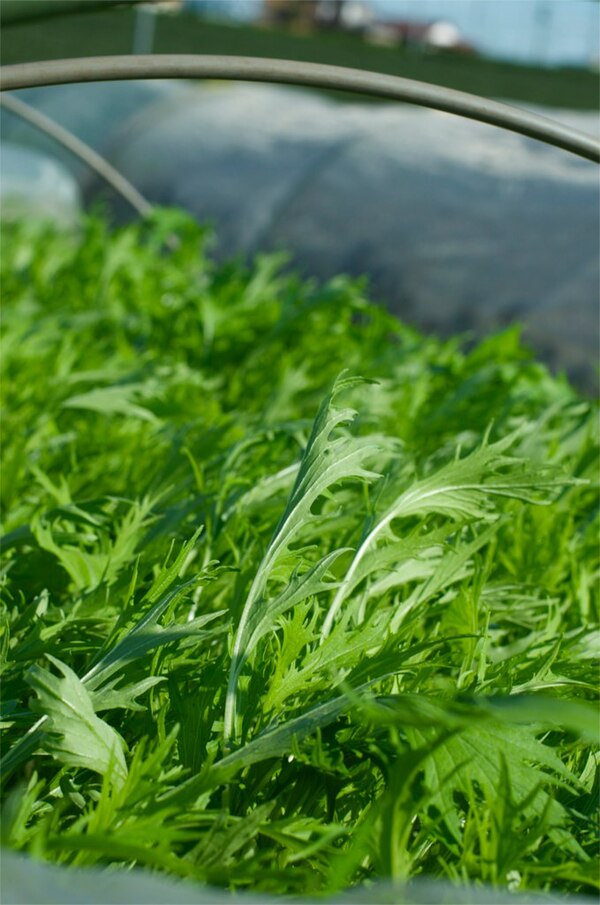
Photo: Wikimedia Commons
Planting Calendar for Warm Temperate
- Jan -
- Feb S/D
- Mar S/T/D
- Apr S/T/D
- May S/T/D
- Jun T/D
- Jul S/D
- Aug S/T/D
- Sep S/T/D
- Oct T (likely to bolt)
- Nov -
- Dec -
S = Seed Tray T = Transplant D = Direct Sow
Amber = likely to bolt if sown this month, it matures into heat or long days.
Want a nudge when it is sowing time?
One email a week with what is worth planting in the Warm Temperate zone right now, Mizuna included, plus which veg has jumped in price at the supermarket. Free, and you can stop it in one click.
How to Grow Mizuna in Warm Temperate Australia
- Soil
- Well-drained, fertile soil enriched with compost. Not fussy about soil type but performs best in loose, moisture-retentive ground.
- Salt
- Moderately sensitive. Copes with a little salt, but the harvest drops on salty bore water.
- pH Range
- 6.0-7.5
- Sunlight
- Full sun in cool weather. Part shade (afternoon) in warm weather to prevent bolting and bitterness.
- Spacing
- 25cm apart, 30cm between rows
- Watering
- Keep consistently moist. Light, frequent watering suits shallow roots. Drought stress triggers bolting and bitterness. Drip or soaker hose ideal.
- Good companions
- Lettuce, Carrot, Radish
- Keep away from
- Other brassicas if disease is present
- Grow before it
- Legumes (Beans - Dwarf, Peas, Broad Beans)
- Grow after it
- Fruiting crops (Tomato, Capsicum, Zucchini)
Give the bed 3 turns before brassicas go back in. The cabbage family is hungry for nitrogen and shares club root and other soil diseases.
Warm Temperate Growing Tips for Mizuna
Recommended Varieties
- Standard green mizuna
- Purple mizuna
- Mibuna
Key Challenges
- May bolt in hot exposed positions in January
- Flea beetles in warm weather
Pro Tips
- One of the easiest and most reliable salad greens for Sydney gardens
- Can be grown year-round with minimal effort
- Broadcast seed thickly for baby leaf mesclun mix
Pests and problems for Mizuna in Warm Temperate
- Aphids and Whiteflies Low
- Common Garden Snail Watch
- Slugs Watch
- Downy Mildew Avoid overhead watering. Space for airflow. Water in morning. Crop rotation. Watch
- Clubroot Lime to pH 7.0+. Good drainage. Rotation. Watch
- Flea beetles Flea beetles in warm weather Watch
Organic prevention (Aphids): Avoid excess nitrogen. Check plants regularly. Grow flowering companions.
Harvesting Mizuna
When ready: Baby leaf: 10-15cm tall (3-4 weeks). Full size: 30-40cm (5-7 weeks). Leaves should be bright green, fresh, and tender.
How to harvest: Cut-and-come-again: cut leaves 3cm above ground level and they will regrow 2-3 times. Or harvest individual outer leaves. Or pull entire plant for one large harvest.
Storing and preserving mizuna
How to keep it
- Blanching and Freezing. Wash. Blanch 1 minute. Ice bath. Drain and squeeze. Pack into freezer bags. Use in stir-fries and soups. Keeps: 6-8 months.
- Fresh Storage. Wrap in damp paper towel in sealed bag in fridge crisper. Best eaten fresh. Keeps: 3-5 days.
What members get
- Soil and weather from your nearest station
- An email when it's time to sow
- Your own garden plan, including planning from a photo
- Price history and price alerts
- Pest risk alerts for your area
- Full salt and canning detail
Common Questions About Mizuna
When do you plant mizuna in Australia?
It depends on your climate zone, not the calendar month alone. Planting months by zone:
- Tropical (Cairns): Apr to Sep Likely to bolt if sown in July, August and September.
- Subtropical (Brisbane): Feb to Aug Likely to bolt if sown in August.
- Warm Temperate (Sydney): Feb to Oct Likely to bolt if sown in October.
- Cool Temperate (Melbourne): Feb to May, Aug to Oct Likely to bolt if sown in October.
- Cold / Highland (Canberra): Feb to Apr, Sep to Oct
- Arid / Semi-Arid (Alice Springs): Mar to Aug Likely to bolt if sown in July and August.
- Mediterranean (Perth): Feb to Sep
Can you grow mizuna all year round in Sydney?
No. In the Warm Temperate zone the planting months are Feb to Oct. Outside that window it either bolts, sulks or gets cut down by the weather. Likely to bolt if sown in October.
When should I plant Mizuna in Sydney?
Grows through the whole cool season. Summer crops need afternoon shade and bolt quickly.
What soil temperature do Mizuna need?
Mizuna germinate best when soil temperature is between 10°C and 30°C.
How do I know when Mizuna are ready to harvest?
Baby leaf: 10-15cm tall (3-4 weeks). Full size: 30-40cm (5-7 weeks). Leaves should be bright green, fresh, and tender.
What are the best Mizuna varieties for Sydney?
Recommended varieties for the Warm Temperate zone include: Standard green mizuna, Purple mizuna, Mibuna.
What grows well with Mizuna?
Good companion plants for Mizuna include: Lettuce, Carrot, Radish.
Are mizuna salt tolerant?
Only a little. Mizuna are moderately sensitive to salt, so the harvest drops on salty bore water. Mix salty water with rainwater, and mulch the bed.
Which zone am I in?
Type your postcode into the box near the top of the page and it tells you, and links this crop in your own zone if it differs. Or look it up on the grow zone map. This page is the Warm Temperate zone, Sydney is its reference city.