Half past seven this morning, last day of July, and my two dogs went out ahead of me to inspect a vegetable garden that by the look of it has given up entirely.
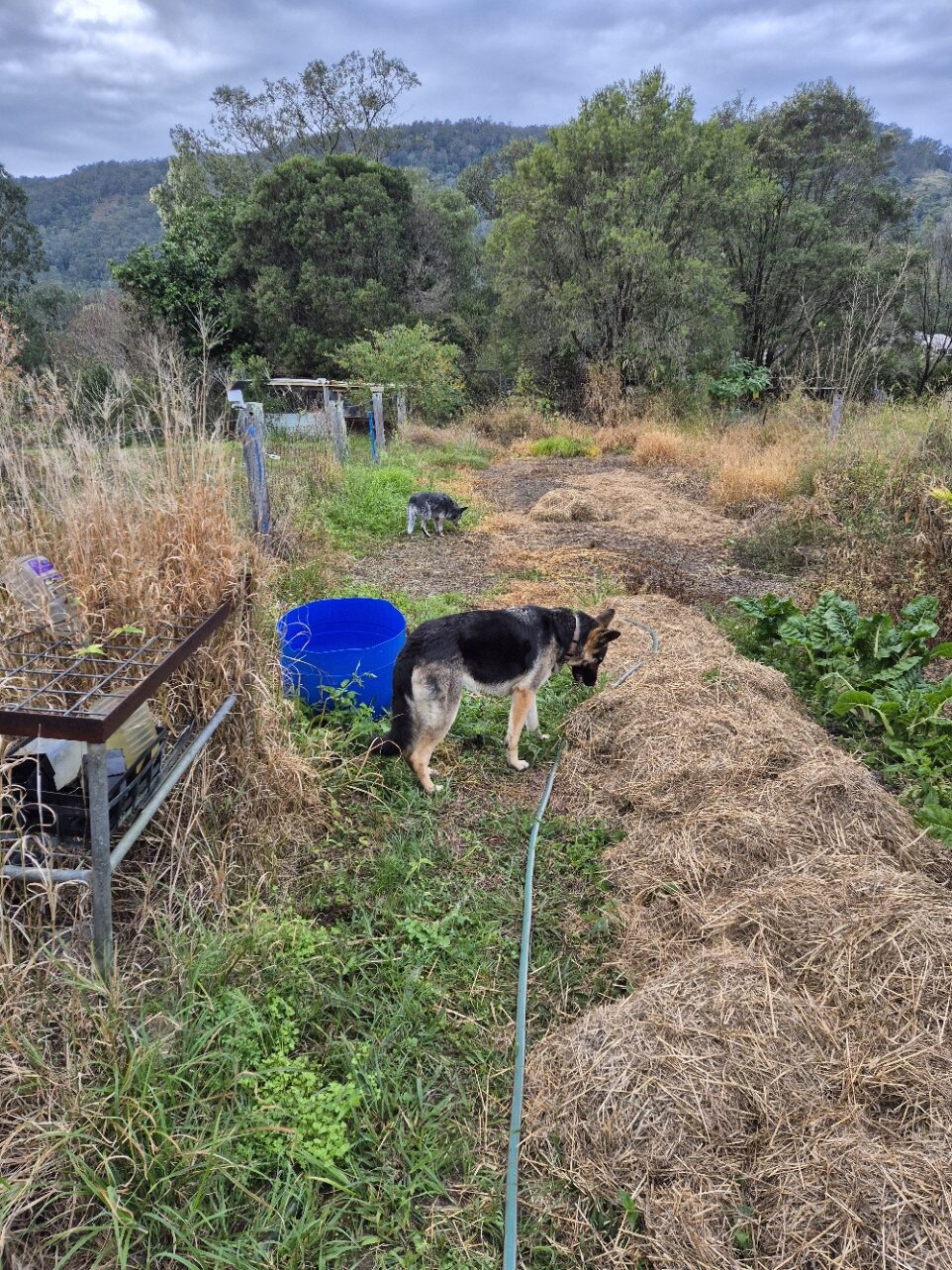
That is what the end of a subtropical winter looks like up here. Straw over everything, dry grass, the range still holding cloud, and not much that says food. We just came through the driest July my weather station has ever recorded, 7.8 mm for the whole month against a median of 45.6 mm, so it looks even more finished than usual.
But there is 100 garlic under that mulch, 70 onions, 39 bush beans and three tomatoes. And an hour after that photo I sowed the first of the summer crop. That is the thing about winter gardening in the subtropics. The patch that looks the deadest is usually the one carrying the most.
Why the last week of July, and not September
Every spring I meet somebody who waits until the weather feels right before they start. By then it is September, the melons go in as seed, and they ripen in March when the fruit fly has already moved in. You end up growing a crop for the birds.
The Plant Now tool is blunt about it. For subtropical, watermelon in July and August reads start undercover in seed trays and plant out in 4 to 6 weeks. Not sow. Not transplant. Undercover, in a tray, then out in early September. That is a six week head start on the bloke waiting for it to feel warm, and six weeks in spring is the whole difference between eating melons and composting them.
Here is the part most calendars will not tell you, and it is the actual reason for the tray. My soil probe averaged between 15.7 and 17.3°C through July. Watermelon seed does not germinate below about 18°C, and it only really gets going between 21 and 35°C. So if I had walked out this morning and pushed those seeds into a garden bed, nothing would have happened. Not slowly. Nothing. The seed would have sat in cold wet ground until it rotted.
The tray is not laziness. It is the only thing that works, because a tray can be moved somewhere warm and a garden bed cannot.
The river sand, and what it actually does
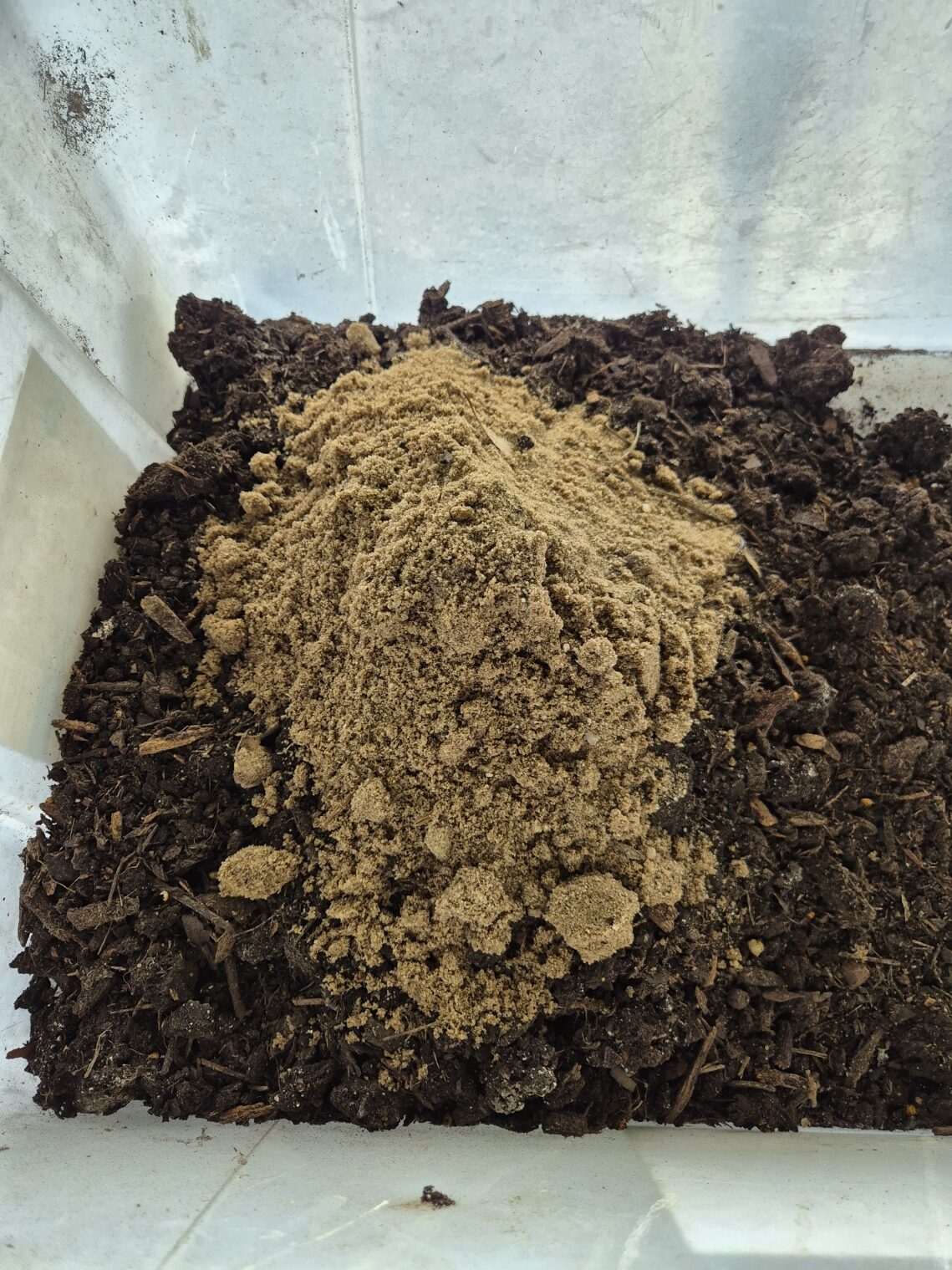
I put river sand through my seed raising mix and my strike rate went up. That is my own observation over a lot of seasons, not a trial, so weigh it accordingly. But I do think I know why it works, and it is not magic.
Straight potting mix out of the bag holds a lot of water and packs down. Three things go wrong from that. Seeds sit in airless wet and rot before they sprout. Damping off gets a run, which is the fungus that drops your seedlings over at the stem exactly when you start feeling pleased with yourself. And the surface sets into a crust that a small seedling has to punch through to reach the light.
Coarse sand fixes all three at once. It opens up air channels so water drains through instead of sitting, it dries the surface faster so the fungus never gets its window, and it keeps the top loose so the seedling comes up easy. Nothing to do with feeding the plant, sand has no nutrition in it at all. It is purely about structure.
Two warnings, because the wrong sand will cost you the tray. Use coarse washed river sand. Fine builders sand mixed into anything with clay in it sets like concrete and you have made a brick, not a seed bed. And never beach sand, the salt will finish your seedlings faster than the cold woudl.
Toilet rolls, the free pot that plants itself
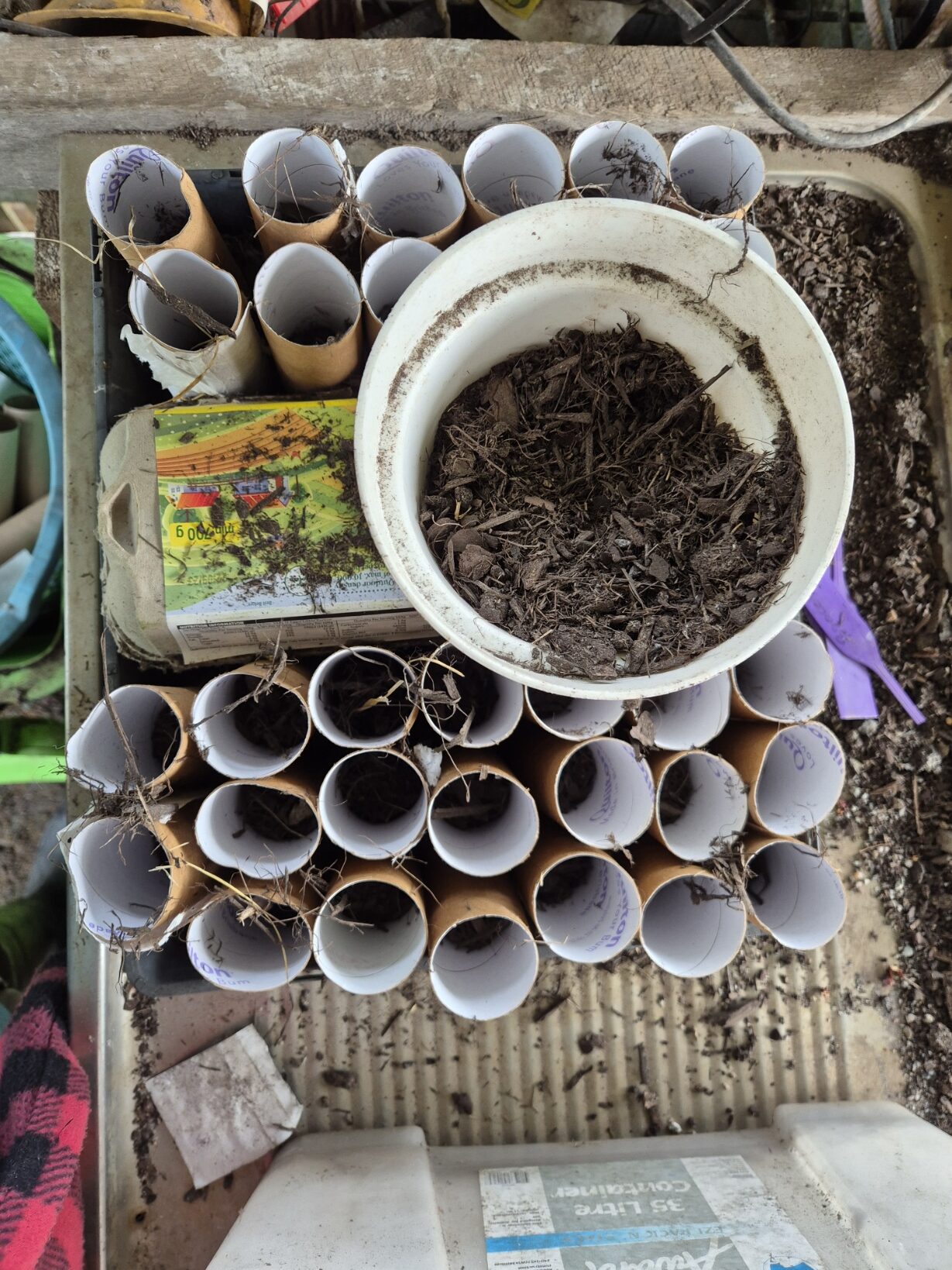
We have been saving toilet rolls for this for years. Fill them with mix, sow into them, and when the seedling is ready the whole tube goes in the ground. Cardboard and all. You do not knock the plant out of a pot, you do not tease the roots, you do not lose a week while it sulks.
Melons in particular hate being transplanted. Their roots are brittle and they do not forgive you for breaking them, which is why half the punnet melons people buy never really take off. A tube removes the whole problem. The roots grow straight through the cardboard, and the cardboard is gone within a few weeks in warm damp soil.
Things I have learned the hard way:
- Pack them tight. Standing on their own they topple and dry out from the sides. Shoulder to shoulder in a tray, they stay upright and hold moisture between them.
- Damp, never soaked. Cardboard sitting in water goes moldy and slimy and then falls apart before your seedling is ready. Water from underneath, let the tray drain.
- Bury the whole tube. Any cardboard left sticking up above the soil acts like a wick and pulls water out of the root ball. If the tube is too tall for the hole, tear the top off, do not leave it proud.
- Do not use them for carrots or radish. Anything you direct sow, direct sow. Tubes are for things that get started early and moved.
- Ordinary rolls, not the fancy ones. Some are made with plastic in the glue seam and they just sit there in the soil.
The whole setup this morning cost me nothing but a scoop of mix and some sand. Well, and a year of not throwing out cardboard.
Now the bit that actually matters, writing it down
Here is where most home gardeners come unstuck, me very much included for about the first fifteen years. You sow a tray in July. By March you have no idea which variety it was, when it went in, when it went out, or whether the thing that did well was the seed or the season or where you happened to put it. Every year you start again from memory, and memory is a liar.
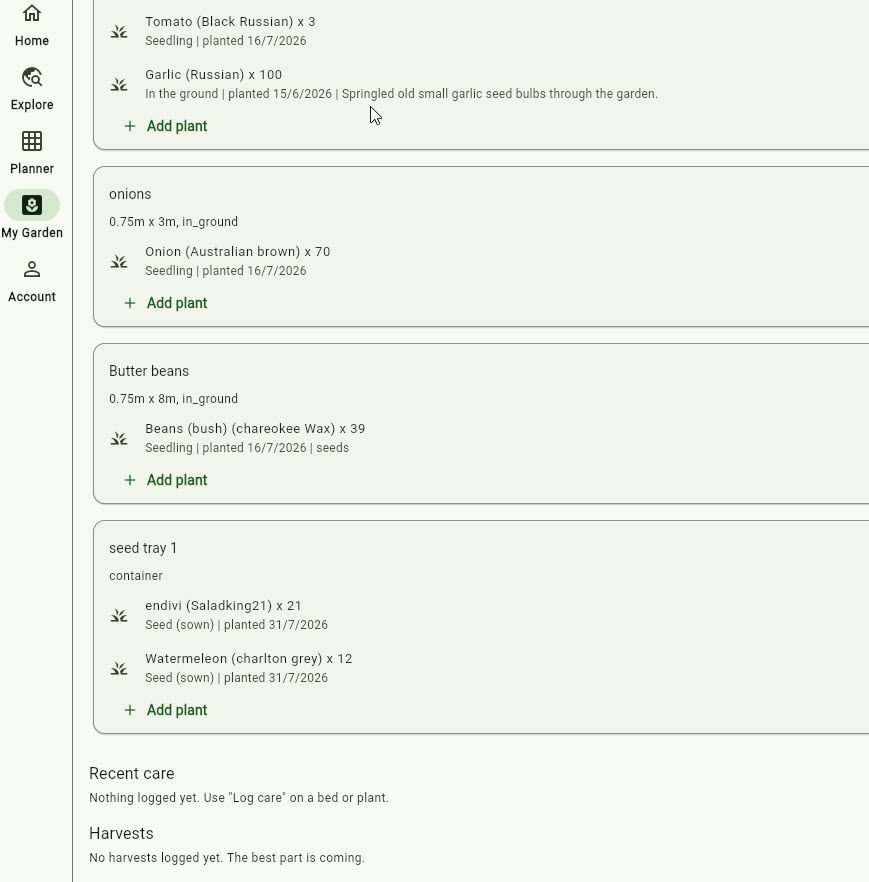
That screen took me about four minutes. Let me walk through it properly, because this is the part people skip.
Beds first, plants second
Everything hangs off a bed. Add a bed, give it a name you will recognise in six months, and put the real dimensions in. Mine are things like onions, 0.75m x 3m, in ground and Butter beans, 0.75m x 8m, in ground. The size is not decoration, it is what lets the system work out spacing and what your patch is actually producing per square metre later on.
A seed tray counts as a bed too. Mine is called seed tray 1 and its type is container. That matters, because a container gets different watering advice than a bed in the ground, and it should, a tray dries out in a day.
Then the plants, and be honest about the stage
Adding a plant asks for the crop, the variety, how many, and how it went in. That last one is the field everybody rushes and it is the most useful one in the whole system. There is a real difference between:
- Seed (sown) into a tray, like the endive and watermelon I did this morning
- Seedling, something you raised or bought and put out, like my onions and beans on 16 July
- In the ground, like the 100 garlic cloves I scattered through the beds on 15 June
They are kept as separate dates on purpose. A seed tray date and a transplant date are two different events in the life of one plant, and the gap between them is the number you want. My watermelons are sown today, 31 July. The calendar says out in 4 to 6 weeks. So when I actually plant them out I will know whether my greenhouse corner is running ahead or behind, and next winter I sow accordingly.
Put the variety in as well, not only the crop. Charleston Grey watermelon and Cherokee Wax beans behave nothing like their supermarket cousins, and in three seasons the variety column is what tells you which seed to buy again. The notes field is worth thirty seconds too. On my garlic I wrote sprinkled old small garlic seed bulbs through the garden, which in June was obvious and by next June woudl have been completely gone from my head.
Then let it do the nagging
Once beds and plants are in, the system starts generating the jobs. Watering, pest inspection, weeding, composting, soil tests, planting reminders. That is not a novelty, on this moment my own account has thousands of task records behind it, and the reason my garlic is still alive is that something told me to go and look at it in a week where I would have forgotten.
Then log the care as you do it, and log the harvest when it comes. My screen says no harvests logged yet, the best part is coming, which is fair, it is the end of July. But the weighing is where it stops being a diary and starts being evidence.
What the numbers do once you have them
This is where I have to point at the garlic, because the garlic is ridiculous.
Across the last 45 days our price tracker has garlic averaging $46.42 a kilo across Woolworths, Coles, Aldi and IGA, and it has been as high as $70.00. Not a typo. Meanwhile onions are averaging $4.26, tomatoes $8.20, lettuce $10.27 and watermelon $3.31.
I have 100 garlic in the ground. If they average a modest 60 g a bulb, and that is my estimate rather than a measurement because they are not up yet, that is around 6 kg, which at today’s price is somewhere near $280 worth of garlic out of one June afternoon spent pushing old bulbs into mulch. The onions might do $45. The garlic is the one paying the water bill.
You only ever get to that number if you wrote down how many went in and then weighed what came out. That is the entire argument for logging. The ROI report does that arithmetic against live supermarket prices, and it changes what you plant. Two seasons of it and you stop growing the cheap stuff and start growing the expensive stuff, which is a very different garden.
The bit where I ignore my own tool
I should own this, because it is on the screenshot for anyone to see.
I sowed 21 endive this morning. The subtropical calendar has endive in seed trays from February to June, July is transplant only, and by August it drops off the list entirely. So I am past the window, not merely at the end of it. Endive that gets going into warming spring days is a good chance to bolt on me and turn bitter before it hearts up.
I did it anyway. Partly because we are eating a lot of salad and the shop lettuce is $10.27 a kilo, partly because our July ran 2.4°C warmer than average in the daytime and I have a hunch the season is shifted, and partly because that is not so easy to resist when you have a tray of spare tubes sitting there.
Now here is the useful part. It is logged. Endive, Saladking, 21 of them, seed sown 31 July 2026. So in October I will not be going hmm, I think the endive went alright that year. I will have a date, a count, and either a harvest weight or an honest blank. If it bolts, I have learned something real about pushing that window in a warm winter. If it works, I have found six extra weeks of endive that the calendar says should not exist.
Either way I am only allowed to claim it because I wrote it down. A gardener who does not record anything has been gardening one year, many times over.
What to get into a tray this week, subtropical
Straight off the August calendar, the ones that want to be started undercover right now and planted out in 4 to 6 weeks:
- Tomato, capsicum, chilli, eggplant. The whole summer solanum crew. Start them now or you will be buying punnets in October like everyone else.
- Cucumber, zucchini, squash, rockmelon, watermelon, luffa. All cucurbits, all hate transplanting, all perfect for a toilet roll.
- Basil. Goes in with the tomatoes later and needs the same warm start.
- Celery, celeriac, okra, tomatillo, rosella. Slow off the mark, which is exactly why they need the head start.
And straight into the ground while it is still cool: carrot, radish, daikon, turnip, parsnip, leeks, rocket, beetroot, silverbeet, lettuce, spring onions, sweet corn, peas and beans. Potatoes go in as seed potatoes, asparagus and rhubarb as crowns.
Different zone? The Plant Now tool takes your postcode and gives you your own list, and the climate zone guides cover all seven Australian zones. What I have written above is for subtropical, which is Brisbane, the Gold Coast, Byron and everything in this valley. If you are in Melbourne none of it applies and you should not take my word for anything.
Go and start something
The Plant Now tool, the growing guides, the companion planting guide and the live veg price tracker are all free and need no account. Go and use them, that is what they are there for.
My Garden is the part that needs you to sign up, because it is your data and it has to live somewhere. That is where the beds, the plants, the reminders, the care log, the harvest weights and the ROI report happen. Starter is $3.99 a month or $29 for the year, Pro is $7.99 or $59, and there is a free tier so you can have a look before you commit anything. The pricing page lays out what sits where, and if you would rather poke around first the demo garden is open.
One tray. Whatever you have got. Even if it is one toilet roll on the kitchen windowsill with a tomato seed in it, put it in and write down the date. In four weeks you will have something to plant out, and by March you will have something better than a feeling about how it went.
I will report back on the endive. I suspect I am about to be proven wrong in public, which is at least useful data.
GardenBuddy.au