
When to Plant Watermelon in Sydney, Warm Temperate Guide
Soil temperature is modelled from Open-Meteo forecast (Sydney), not a live sensor.
What this month normally looks like in Warm Temperate
In October the Warm Temperate zone normally runs 24°C by day and 13°C overnight, with about 66 mm of rain over 7 or 8 wet days. The coldest October night on record across the zone was -1.5°C, so a late frost is not out of the question. Averages 1991 to 2026, 153 postcodes, SILO.
Jump to section
This Watermelon guide is written for the Warm Temperate zone, which takes in Sydney, Newcastle and Wollongong. Somewhere else? Your postcode picks the right one.
Not your zone? Cairns Brisbane Melbourne Canberra Alice Springs Perth
Also handy: will it frost this week? and what grows in shade.
- Planting window
- Sep to Dec
- Days to harvest
- about 12 weeks
- Sun
- Full sun
- Water
- Regular
- Spacing
- 150 cm apart
- Soil pH
- 6.0–7.0
Watermelon is a warm-season vine crop native to Africa, requiring long hot summers and ample space. Australia's arid interior and northern regions produce some of the sweetest watermelons in the world.
Published · By GardenBuddy.au
Planting dates, current conditions and prices on this page update daily.
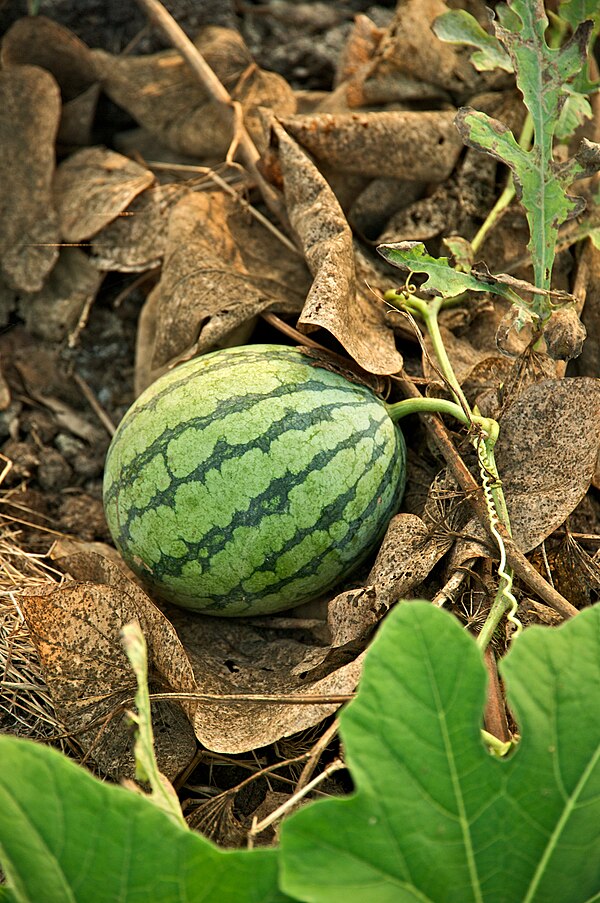
Photo: Wikimedia Commons
Planting Calendar for Warm Temperate
- Jan -
- Feb -
- Mar -
- Apr -
- May -
- Jun -
- Jul -
- Aug -
- Sep S
- Oct S/T/D
- Nov S/T/D
- Dec T
S = Seed Tray T = Transplant D = Direct Sow
Want a nudge when it is sowing time?
One email a week with what is worth planting in the Warm Temperate zone right now, Watermelon included, plus which veg has jumped in price at the supermarket. Free, and you can stop it in one click.
How to Grow Watermelon in Warm Temperate Australia
- Soil
- Sandy loam to loam, well-drained, enriched with compost. Sandy soils warm fastest. Watermelons tolerate slightly sandier conditions than most cucurbits.
- Salt
- Moderately sensitive. Copes with a little salt, but the harvest drops on salty bore water.
- pH Range
- 6.0-7.0
- Sunlight
- Full sun (minimum 8 hours). More heat and sun = sweeter fruit.
- Spacing
- 150cm apart, 250cm between rows
- Watering
- Deep regular watering during vine growth and fruit development. CRITICAL: reduce watering 2 weeks before harvest to concentrate sugars. Excess water at maturity dilutes sweetness and causes splitting.
- Good companions
- Radish (trap crop for flea beetles), Nasturtium, Sweet Corn, Sunflower
- Keep away from
- Potato
- Grow before it
- Leafy greens and brassicas (Lettuce, Silverbeet, Broccoli)
- Grow after it
- Roots and alliums (Carrot, Beetroot, Onion)
Give the bed 3 turns before cucurbits go back in. Pumpkin, cucumber and zucchini want a bed with fresh compost dug through.
Warm Temperate Growing Tips for Watermelon
Recommended Varieties
- Sugar Baby (early)
- Crimson Sweet
- Moon and Stars
Key Challenges
- Shorter season
- Cool springs
- May not reach full sweetness
Pro Tips
- Start indoors September, transplant October
- Black plastic mulch for soil warmth
- Sugar Baby (75 days) most reliable for this zone
Pests and problems for Watermelon in Warm Temperate
- Fungal Infections Low
- Queensland Fruit Fly Watch
- Mosaic Viruses Watch
- Root-knot Nematode Watch
- Two-spotted spider mite Watch
- Fusarium Wilt Crop rotation (7+ years for watermelon-specific Fusarium). Resistant varieties. Grafted plants. pH 6.5+. Watch
- Downy Mildew Watch
- Powdery Mildew Good spacing. Remove affected leaves. Watch
Harvesting Watermelon
When ready: Multiple indicators needed: 1) Tendril nearest fruit turns brown and dry, 2) Ground spot (where fruit sits) turns from white to creamy yellow, 3) Skin resists thumbnail scratch (hard rind), 4) Dull thud when tapped (not hollow ring). Use ALL indicators together. No single one is reliable alone.
How to harvest: Cut stem cleanly with sharp knife. Do not pull or twist. Handle carefully.
Storing and preserving watermelon
How to keep it
- Freezing (for smoothies). Cut into cubes, remove seeds. Freeze on tray, bag when solid. Use directly in smoothies or granita. Keeps: 12 months.
- Dehydrating. Slice flesh thin (5mm). Dehydrate at 55C for 12-18 hours until leathery. Sweet chewy candy-like snack. Keeps: 6 months.
- Fresh eating (best option). Best fresh. Whole watermelon stores 2 weeks at room temp, 3 weeks refrigerated. Cut melon lasts 3-5 days refrigerated. Keeps: 2-3 weeks whole, 3-5 days cut.
- Watermelon Rind Pickle. Peel green outer rind. Cube white inner rind. Soak overnight in salt water. Simmer in vinegar/sugar/spice syrup until translucent. Jar hot. Keeps: 12 months.
What watermelon costs in the shops right now, retailer by retailer, updated daily.
What members get
- Soil and weather from your nearest station
- An email when it's time to sow
- Your own garden plan, including planning from a photo
- Price history and price alerts
- Pest risk alerts for your area
- Full salt and canning detail
Common Questions About Watermelon
When do you plant watermelon in Australia?
It depends on your climate zone, not the calendar month alone. Planting months by zone:
- Tropical (Cairns): Mar to Jul
- Subtropical (Brisbane): Aug to Dec
- Warm Temperate (Sydney): Sep to Dec
- Cool Temperate (Melbourne): Oct to Dec
- Cold / Highland (Canberra): Oct to Dec
- Arid / Semi-Arid (Alice Springs): Jan, Aug to Dec
- Mediterranean (Perth): Aug to Dec
Can you grow watermelon all year round in Sydney?
No. In the Warm Temperate zone the planting months are Sep to Dec. Outside that window it either bolts, sulks or gets cut down by the weather.
When should I plant Watermelon in Sydney?
Start in trays from September and plant out into warm soil from October. August seedlings outgrow their pots before it is warm enough.
What soil temperature do Watermelon need?
Watermelon germinate best when soil temperature is between 21°C and 35°C.
How do I know when Watermelon are ready to harvest?
Multiple indicators needed: 1) Tendril nearest fruit turns brown and dry, 2) Ground spot (where fruit sits) turns from white to creamy yellow, 3) Skin resists thumbnail scratch (hard rind), 4) Dull thud when tapped (not hollow ring). Use ALL indicators together. No single one is reliable alone.
What are the best Watermelon varieties for Sydney?
Recommended varieties for the Warm Temperate zone include: Sugar Baby (early), Crimson Sweet, Moon and Stars.
What grows well with Watermelon?
Good companion plants for Watermelon include: Radish, Nasturtium, Sweet Corn, Sunflower.
Are watermelon salt tolerant?
Only a little. Watermelon are moderately sensitive to salt, so the harvest drops on salty bore water. Mix salty water with rainwater, and mulch the bed.
Which zone am I in?
Type your postcode into the box near the top of the page and it tells you, and links this crop in your own zone if it differs. Or look it up on the grow zone map. This page is the Warm Temperate zone, Sydney is its reference city.