
When to Plant Garlic in Brisbane, Subtropical Guide
That soil figure is read off our own weather station in South East Queensland at 22:55 yesterday, not a model.
What this month normally looks like in Subtropical
In October the Subtropical zone normally runs 27°C by day and 15°C overnight, with about 77 mm of rain over 7 wet days. The coldest October night on record across the zone was -0.2°C, so a late frost is not out of the question. Averages 1991 to 2026, 33 postcodes, SILO.
Jump to section
This Garlic guide is written for the Subtropical zone, which takes in Brisbane, the Gold Coast and the Sunshine Coast. Somewhere else? Your postcode picks the right one.
Not your zone? Cairns Sydney Melbourne Canberra Alice Springs Perth
Also handy: will it frost this week? and what grows in shade.
- Planting window
- Mar to May
- Days to harvest
- about 21 weeks
- Sun
- Full sun to part shade
- Water
- Regular
- Spacing
- 15 cm apart
- Soil pH
- 6.0–7.0
- Shop price
- $33.01/kg at one shop
Garlic is one of the most rewarding crops for Australian home gardeners. Plant cloves in autumn, harvest in summer. It practically grows itself.
Published · By GardenBuddy.au
Planting dates, current conditions and prices on this page update daily.
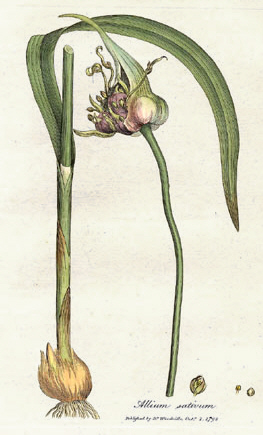
Photo: Wikimedia Commons
Planting Calendar for Subtropical
- Jan -
- Feb -
- Mar ✓
- Apr ✓
- May ✓
- Jun -
- Jul -
- Aug -
- Sep -
- Oct -
- Nov -
- Dec -
S = Seed Tray T = Transplant D = Direct Sow
Want a nudge when it is sowing time?
One email a week with what is worth planting in the Subtropical zone right now, Garlic included, plus which veg has jumped in price at the supermarket. Free, and you can stop it in one click.
How to Grow Garlic in Subtropical Australia
- Soil
- Well-drained, fertile sandy loam enriched with aged compost. Garlic absolutely demands good drainage. Waterlogged soil causes bulb rot. Raised beds ideal in heavy clay areas. Do not add fresh manure at planting time.
- Salt
- Moderately sensitive. Copes with a little salt, but the harvest drops on salty bore water.
- pH Range
- 6.0-7.0
- Sunlight
- Full sun (6+ hours). No shade tolerance. Garlic needs maximum sun for bulb development.
- Spacing
- 15cm apart, 25cm between rows
- Watering
- Water regularly during active growth (autumn-spring) but reduce watering as leaves begin to yellow in late spring/summer. Stop watering 2-3 weeks before harvest. Wet soil at harvest causes storage rot.
- Good companions
- Lettuce, Cucumber, Tomato, Carrot, Dill
- Keep away from
- Asparagus, Chickpeas, Cowpeas, Lentils, Sage, Snake Beans
- Grow before it
- Fruiting crops (Tomato, Capsicum, Zucchini)
- Grow after it
- Legumes (Beans - Dwarf, Peas, Broad Beans)
Give the bed 3 turns before alliums go back in. Onion, garlic and leek like a lean bed and clean up after the heavy feeders.
Subtropical Growing Tips for Garlic
Recommended Varieties
- Glenlarge (Subtropical)
- Southern Glen (Subtropical)
- Italian Pink (Subtropical)
- Italian Red (Subtropical)
Key Challenges
- Must choose subtropical or turban/artichoke varieties
- Hardneck varieties will not bulb properly
- Rust in humid spring
- Fusarium in warm soils
Pro Tips
- Glenlarge was developed at Gatton Research Station specifically for SEQ conditions
- Plant earlier than you think. Late February is not too early in subtropical zones
- Turban types (e.g., Early Italian Purple) also work well in SEQ
Pests and problems for Garlic in Subtropical
- Thrips Watch
- Rust Good air circulation (adequate spacing). Avoid overhead watering. Keep foliage as dry as possible. Avoid excessive nitrogen. Plant... Watch
- Aphids Watch
- Onion Yellow Dwarf Virus (OYDV) / Garlic Mosaic Virus Source certified virus-free or virus-tested seed stock. Control aphid vectors. Do not save seed from stunted or symptomatic plants... Watch
Harvesting Garlic
When ready: Bottom 3-4 leaves brown and dried, top 4-5 leaves still green. This typically indicates 5-7 bulb wrappers remain (each green leaf = one wrapper). Do not wait until all leaves die. Bulb wrappers deteriorate and bulbs split open. Dig one test bulb to check. Cloves should fill the wrapper tightly with clear clove differentiation.
How to harvest: Loosen soil alongside row with garden fork, then gently lift bulbs. Do NOT pull by the stalk, it may break. Brush off loose soil but do not wash. Cure in a dry, shaded, well-ventilated area for 2-4 weeks until outer wrappers are papery and stems are dry. Trim roots and stalks after curing (or braid softneck types).
Storing and preserving garlic
How to keep it
- Curing and Storage (Primary Method). After harvest, cure bulbs for 2-4 weeks in a dry, shaded, well-ventilated spot (under cover, not in direct sun). Once stems are dry and papery, trim roots close to base and cut stems to 3cm (or braid softneck types). Store in mesh bags or baskets in a cool, dry, dark place with good air circulation. Keeps: Softneck: 8-12 months. Hardneck: 4-6 months. Turban types: 3-4 months..
- Dehydrating (Garlic Powder). Peel and slice cloves thinly (2mm). Spread on dehydrator trays. Dehydrate at 55C for 8-12 hours until completely dry and brittle. Powder in spice grinder or blender. Store in airtight container. Keeps: 12 months in airtight container.
- Fermented Black Garlic. Place whole, unpeeled bulbs in a rice cooker or dedicated black garlic fermenter set to 'warm' (60-70C). Maintain constant temperature for 3-4 weeks. Bulbs transform into black, sweet, umami-rich cloves. Labour of patience, not effort. Keeps: 3-6 months at room temperature, 12 months refrigerated.
- Freezing. Peel cloves. Freeze whole on tray, then transfer to freezer bag. Or mince garlic, mix with small amount of olive oil, freeze in ice cube trays. Pop out cubes and store in freezer bag. Keeps: 12 months frozen.
- Garlic Confit (Oil-Preserved). Peel cloves. Place in small saucepan, cover with olive oil. Simmer on very low heat for 45-60 minutes until cloves are golden and soft. Cool, transfer to sterilised jar with oil. MUST be refrigerated. Garlic in oil at room temperature creates botulism risk. Keeps: 3-4 weeks refrigerated. Freeze for longer storage..
What garlic costs in the shops right now, retailer by retailer, updated daily.
What members get
- Soil and weather from your nearest station
- An email when it's time to sow
- Your own garden plan, including planning from a photo
- Price history and price alerts
- Pest risk alerts for your area
- Full salt and canning detail
Common Questions About Garlic
When do you plant garlic in Australia?
It depends on your climate zone, not the calendar month alone. Planting months by zone:
- Tropical (Cairns): Apr to May
- Subtropical (Brisbane): Mar to May
- Warm Temperate (Sydney): Mar to May
- Cool Temperate (Melbourne): Mar to May
- Cold / Highland (Canberra): Mar to Jun
- Arid / Semi-Arid (Alice Springs): Mar to May
- Mediterranean (Perth): Mar to May
Can you grow garlic all year round in Brisbane?
No. In the Subtropical zone the planting months are Mar to May. Outside that window it either bolts, sulks or gets cut down by the weather.
When should I plant Garlic in Brisbane?
Plant cloves point up in autumn, choosing subtropical or softneck types that do not need a cold winter. Lift the bulbs in late winter to spring once about half the leaves have yellowed.
What soil temperature do Garlic need?
Garlic germinate best when soil temperature is between 5°C and 20°C.
How do I know when Garlic are ready to harvest?
Bottom 3-4 leaves brown and dried, top 4-5 leaves still green. This typically indicates 5-7 bulb wrappers remain (each green leaf = one wrapper). Do not wait until all leaves die. Bulb wrappers deteriorate and bulbs split open. Dig one test bulb to check. Cloves should fill the wrapper tightly with clear clove differentiation.
What are the best Garlic varieties for Brisbane?
Recommended varieties for the Subtropical zone include: Glenlarge (Subtropical), Southern Glen (Subtropical), Italian Pink (Subtropical), Italian Red (Subtropical).
What grows well with Garlic?
Good companion plants for Garlic include: Lettuce, Cucumber, Tomato, Carrot, Dill.
Are garlic salt tolerant?
Only a little. Garlic are moderately sensitive to salt, so the harvest drops on salty bore water. Mix salty water with rainwater, and mulch the bed.
Which zone am I in?
Type your postcode into the box near the top of the page and it tells you, and links this crop in your own zone if it differs. Or look it up on the grow zone map. This page is the Subtropical zone, Brisbane is its reference city.