
When to Plant Broad Beans in Melbourne, Cool Temperate Guide
Also called fava beans, faba beans.
Soil temperature is modelled from Open-Meteo forecast (Melbourne), not a live sensor.
What this month normally looks like in Cool Temperate
In October the Cool Temperate zone normally runs 19°C by day and 8°C overnight, with about 67 mm of rain over 9 or 10 wet days. The coldest October night on record across the zone was -3.0°C, so a late frost is not out of the question. Averages 1991 to 2026, 28 postcodes, SILO.
Jump to section
This Broad Beans guide is written for the Cool Temperate zone, which takes in Melbourne, Hobart and Geelong. Somewhere else? Your postcode picks the right one.
Not your zone? Cairns Brisbane Sydney Canberra Alice Springs Perth
Also handy: will it frost this week? and what grows in shade.
- Planting window
- Mar to Aug
- Days to harvest
- about 13 weeks
- Sun
- Full sun to part shade
- Water
- Moderate
- Spacing
- 25 cm apart
- Soil pH
- 6.0–7.5
Broad beans are a cool-season legume and one of the few crops that thrive in winter across most of Australia. They fix atmospheric nitrogen, improve soil fertility, and are one of the oldest cultivated crops.
Published · By GardenBuddy.au
Planting dates, current conditions and prices on this page update daily.
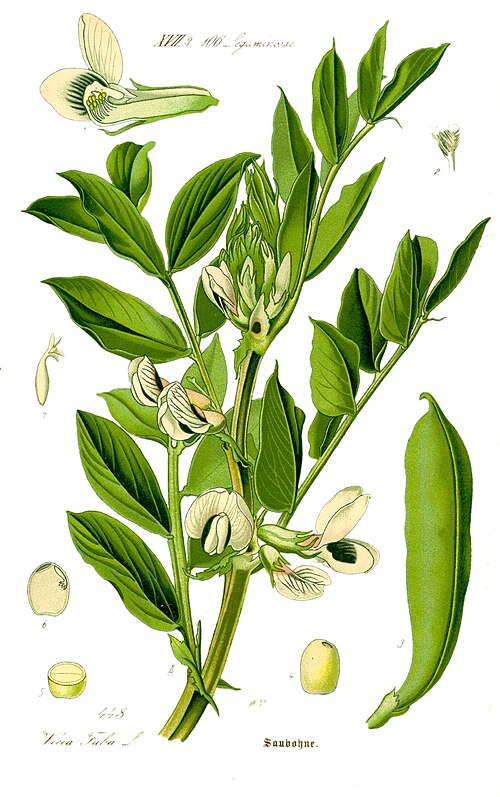
Photo: Wikimedia Commons
Planting Calendar for Cool Temperate
- Jan -
- Feb -
- Mar S/T/D
- Apr S/T/D
- May S/T/D
- Jun S/T/D
- Jul S/T/D
- Aug S/T/D
- Sep -
- Oct -
- Nov -
- Dec -
S = Seed Tray T = Transplant D = Direct Sow
Want a nudge when it is sowing time?
One email a week with what is worth planting in the Cool Temperate zone right now, Broad Beans included, plus which veg has jumped in price at the supermarket. Free, and you can stop it in one click.
How to Grow Broad Beans in Cool Temperate Australia
- Soil
- Well-drained, moderately fertile soil. Tolerates heavier soils than common beans. Enriched with compost but not fresh manure.
- Salt
- Moderately sensitive. Copes with a little salt, but the harvest drops on salty bore water.
- pH Range
- 6.0-7.5
- Sunlight
- Full sun to light shade (minimum 5 hours). Tolerates partial shade better than most beans.
- Spacing
- 25cm apart, 75cm between rows
- Watering
- Moderate water needs. Water during dry spells in winter. Increase watering during flowering and pod fill. Avoid waterlogging. Less thirsty than common beans.
- Good companions
- Sweet Corn (following season), Lettuce, Dill, Spinach, Potato
- Keep away from
- Fennel, Tree Onion
- Grow before it
- Roots and alliums (Carrot, Beetroot, Onion)
- Grow after it
- Leafy greens and brassicas (Lettuce, Silverbeet, Broccoli)
Give the bed 3 turns before legumes go back in. Beans and peas fix nitrogen, so they leave the bed richer than they found it.
Cool Temperate Growing Tips for Broad Beans
Recommended Varieties
- Aquadulce
- Exhibition Long Pod
- Crimson Flowered (ornamental and edible)
- Coles Dwarf
Key Challenges
- Chocolate spot in cold wet winters
- Frost damage to early flowers
- Slugs and snails on winter seedlings
Pro Tips
- This is the ideal climate for broad beans. They love Melbourne's cool, wet winters
- Autumn sowing (March-April) produces the biggest plants and heaviest yields
- Stake tall varieties or grow in sheltered position against a fence
Pests and problems for Broad Beans in Cool Temperate
- Rust Early sowing to allow crop to mature before rust season. Resistant varieties where available. Wide spacing. Do not save seed from infected... Watch
- Chocolate Spot Wide spacing (75-100cm between rows). Avoid overhead irrigation. Good air circulation. Do not use infected seed. Ensure adequate potassium... Watch
- Ascochyta Blight Use clean, certified seed. Crop rotation (4 years). Wide row spacing. Avoid working in crop when wet. Watch
- Slugs and snails Slugs and snails on winter seedlings Watch
Harvesting Broad Beans
When ready: Pods are plump, 15-20cm long, and beans inside are visible as bumps. For fresh eating, harvest when beans inside are bright green and about thumb-nail sized. For drying, leave pods on plant until completely brown and dry.
How to harvest: Snap or cut pods from stem. Start harvesting from the bottom of the plant (earliest pods). For fresh eating, pick regularly to encourage continued production. Inner skin of individual beans can be removed after blanching for best texture.
Storing and preserving broad beans
How to keep it
- Freezing (Double-peeled). Shell beans from pods. Blanch shelled beans in boiling water for 2 minutes. Ice bath. Slip off inner grey skin by pinching (optional but improves texture and colour dramatically). Spread on tray to flash-freeze, then bag. Keeps: 12 months.
- Drying. Leave pods on plant until brown and dry. Shell beans and spread on trays in well-ventilated area for 2-3 weeks until completely hard. Store in airtight jars. Soak overnight and cook as needed. Keeps: 12+ months.
- Broad Bean Falafel (Freeze). Soak dried broad beans overnight. Process with garlic, cumin, coriander, parsley, salt and flour. Form patties, flash-freeze on tray, then bag. Fry from frozen. Keeps: 6 months frozen.
What members get
- Soil and weather from your nearest station
- An email when it's time to sow
- Your own garden plan, including planning from a photo
- Price history and price alerts
- Pest risk alerts for your area
- Full salt and canning detail
Common Questions About Broad Beans
When do you plant broad beans in Australia?
It depends on your climate zone, not the calendar month alone. Planting months by zone:
- Tropical (Cairns): not recommended
- Subtropical (Brisbane): Mar to Jun
- Warm Temperate (Sydney): Mar to Jul
- Cool Temperate (Melbourne): Mar to Aug
- Cold / Highland (Canberra): Apr to May, Jul to Aug
- Arid / Semi-Arid (Alice Springs): Mar to May
- Mediterranean (Perth): Apr to Jul
Can you grow broad beans all year round in Melbourne?
No. In the Cool Temperate zone the planting months are Mar to Aug. Outside that window it either bolts, sulks or gets cut down by the weather.
What else is broad beans called?
Broad beans is the usual Australian name. Overseas seed packets and recipes call it fava beans, faba beans. Same plant, same growing advice.
When should I plant Broad Beans in Melbourne?
Sow from March to August. Autumn sowings grow slowly through winter and pod from September to November; late winter sowings crop into December.
What soil temperature do Broad Beans need?
Broad Beans germinate best when soil temperature is between 6°C and 24°C.
How do I know when Broad Beans are ready to harvest?
Pods are plump, 15-20cm long, and beans inside are visible as bumps. For fresh eating, harvest when beans inside are bright green and about thumb-nail sized. For drying, leave pods on plant until completely brown and dry.
What are the best Broad Beans varieties for Melbourne?
Recommended varieties for the Cool Temperate zone include: Aquadulce, Exhibition Long Pod, Crimson Flowered (ornamental and edible), Coles Dwarf.
What grows well with Broad Beans?
Good companion plants for Broad Beans include: Sweet Corn, Lettuce, Dill, Spinach, Potato.
Are broad beans salt tolerant?
Only a little. Broad beans are moderately sensitive to salt, so the harvest drops on salty bore water. Mix salty water with rainwater, and mulch the bed.
Which zone am I in?
Type your postcode into the box near the top of the page and it tells you, and links this crop in your own zone if it differs. Or look it up on the grow zone map. This page is the Cool Temperate zone, Melbourne is its reference city.