
When to Plant Walnut in Alice Springs, Arid / Semi-Arid Guide
What this month normally looks like in Arid / Semi-Arid
In October the Arid / Semi-Arid zone normally runs 32°C by day and 16°C overnight, with about 19 mm of rain over 2 or 3 wet days. The coldest October night on record across the zone was 1.9°C, so a late frost is not out of the question. Averages 1991 to 2026, 10 postcodes, SILO.
Jump to section
This Walnut guide is written for the Arid / Semi-Arid zone, which takes in Alice Springs, Broken Hill and Port Augusta. Somewhere else? Your postcode picks the right one.
Not your zone? Cairns Brisbane Sydney Melbourne Canberra Perth
Also handy: will it frost this week? and what grows in shade.
- Planting window
- Jun to Aug
- Sun
- Full sun
- Soil pH
- 6.0–7.5
Large deciduous nut tree that needs cold winters (500-1000+ chill hours) and warm dry summers. One of the best nut trees for cool-temperate and cold-highland Australia. Beautiful timber tree and shade tree.
Published · By GardenBuddy.au
Planting dates, current conditions and prices on this page update daily.
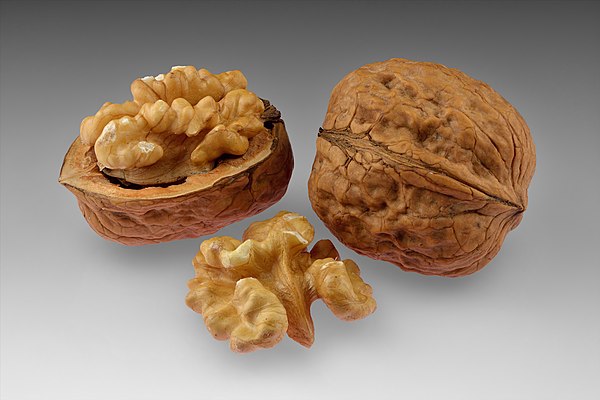
Photo: Wikimedia Commons
Best Planting Window for Arid / Semi-Arid
- Jan -
- Feb -
- Mar -
- Apr -
- May -
- Jun P
- Jul P
- Aug P
- Sep -
- Oct -
- Nov -
- Dec -
P = Planting window
Walnuts need a cold winter and suffer kernel and leaf sunburn above 38°C. They are only worth trying in the cooler southern semi-arid inland with deep soil and ample water, not around Alice Springs.
Want a nudge when it is sowing time?
One email a week with what is worth planting in the Arid / Semi-Arid zone right now, Walnut included, plus which veg has jumped in price at the supermarket. Free, and you can stop it in one click.
How to Grow Walnut in Arid / Semi-Arid Australia
- Soil
- Deep, fertile, well-drained. Walnuts have deep tap roots and need minimum 2m soil depth. Reasonably tolerant of clay but must not be waterlogged.
- Salt
- Sensitive. Struggles with salty bore water or salty soil. Give it rainwater if you can.
- pH Range
- 6.0-7.5
- Sunlight
- Full sun.
- Good companions
- Grass (tolerant of juglone)
- Keep away from
- Apple (juglone toxicity), Capsicum (juglone sensitive), Eggplant (juglone sensitive), Potato (juglone sensitive), Tomato (juglone sensitive)
Arid / Semi-Arid Growing Tips for Walnut
Recommended Varieties
- Chandler
- Howard
- Vina
Key Challenges
- Water requirements
- Alkaline soil may need amendment
Pro Tips
- Excellent walnut zone with irrigation. Cold winters + hot dry summers = ideal.
- Dry conditions virtually eliminate blight, huge advantage.
- Commercial walnut orchards are expanding in irrigated inland areas.
Pests and problems for Walnut in Arid / Semi-Arid
Harvesting Walnut
When ready: Green husk cracks and separates from shell. Nuts begin to fall from tree. Shake branches to accelerate harvest.
How to harvest: Collect fallen nuts. Remove any remaining husk (stains hands, wear gloves). Dry in single layer in shade for 2-3 weeks until shell interior walls are dry.
Storing and preserving walnut
How to keep it
- Freezing (shelled). Crack, shell, vacuum seal or zip-lock. Keeps: 24 months.
- In-shell storage. Dry for 2-3 weeks. Store in hessian bags in cool, dry, dark place. Keeps: 12+ months.
- Walnut oil. Cold press for premium oil. Delicate nutty flavour for salad dressings (not cooking). Keeps: 3 months refrigerated.
- Pickled green walnuts. Pick green (unshelled) nuts in November-December before shell hardens. Pierce with fork, brine for 2 weeks, pickle in spiced vinegar. Traditional English/Italian preserve. Keeps: 12+ months.
What members get
- Soil and weather from your nearest station
- An email when it's time to sow
- Your own garden plan, including planning from a photo
- Price history and price alerts
- Pest risk alerts for your area
- Full salt and canning detail
Common Questions About Walnut
When do you plant walnut in Australia?
It depends on your climate zone, not the calendar month alone. Planting months by zone:
- Tropical (Cairns): not recommended
- Subtropical (Brisbane): not recommended
- Warm Temperate (Sydney): Jun to Aug
- Cool Temperate (Melbourne): Jun to Aug
- Cold / Highland (Canberra): Jun to Aug
- Arid / Semi-Arid (Alice Springs): Jun to Aug
- Mediterranean (Perth): Jun to Aug
When should I plant Walnut in Alice Springs?
Walnuts need a cold winter and suffer kernel and leaf sunburn above 38°C. They are only worth trying in the cooler southern semi-arid inland with deep soil and ample water, not around Alice Springs.
How do I know when Walnut are ready to harvest?
Green husk cracks and separates from shell. Nuts begin to fall from tree. Shake branches to accelerate harvest.
What are the best Walnut varieties for Alice Springs?
Recommended varieties for the Arid / Semi-Arid zone include: Chandler, Howard, Vina.
What grows well with Walnut?
Good companion plants for Walnut include: Grass (tolerant of juglone).
Are walnut salt tolerant?
No. Walnut are salt-sensitive, one of the more sensitive veggies. Use rainwater if your bore water is salty, or grow them in a raised bed of fresh mix if your soil is.
Which zone am I in?
Type your postcode into the box near the top of the page and it tells you, and links this crop in your own zone if it differs. Or look it up on the grow zone map. This page is the Arid / Semi-Arid zone, Alice Springs is its reference city.