

User guide · features and tools · 6 min read
One email a week, and it is worth opening.
The Gardener Weekly Digest is a free email that lands in your inbox every Sunday morning. It comes with any GardenBuddy.au account, including the $0 one. The single most useful thing on the site if you actually read it.
 Free accounts get the digest too. It is not held back for paying members.
What’s in a digest
The Gardener Weekly Digest arrives on Sundays, free with any account. Seven sections, designed to be read in under three minutes over coffee.
1. Your garden this week
Your active crops in one table: growth stage, days since planting, and the current supermarket price for each crop we track. If you haven’t planted anything yet, this section becomes a what-to-plant-this-week guide for your climate zone instead, with the crops currently dearest at the supermarket.
2. This week’s tasks
Tasks generated from the plants you’re actually growing, so the reminders match your garden, not a generic calendar.
3. Week ahead
The coming days’ lows, highs and rain chances (reference station: a local station in South East Queensland), plus a planting call for the week.
4. Moon this week
Current moon phase and illumination, and the dates of the next new and full moon. Just the summary for those who follow moon planting; skip it freely if that’s not your thing.
5. Pest watch
Overall pest pressure with counts of high and moderate risks, the pest at the top of the list, and the first action to take. Lets you act before damage.
6. Season risk check
Current frost, drought, heat stress and flood risk for the season, plus a seasonal watch note.
7. Long-range outlook
The month’s temperature and rainfall outlook, with a 30-day model-blend summary. A guide, not a promise.
There is no price-movements section in the digest itself beyond the per-crop shop prices above; the biggest supermarket movers come in their own free email, the Weekly Price Alert.
Subscribing and unsubscribing
The digest is on by default when you create an account, any tier including free. If you want to turn it off (temporarily or permanently):
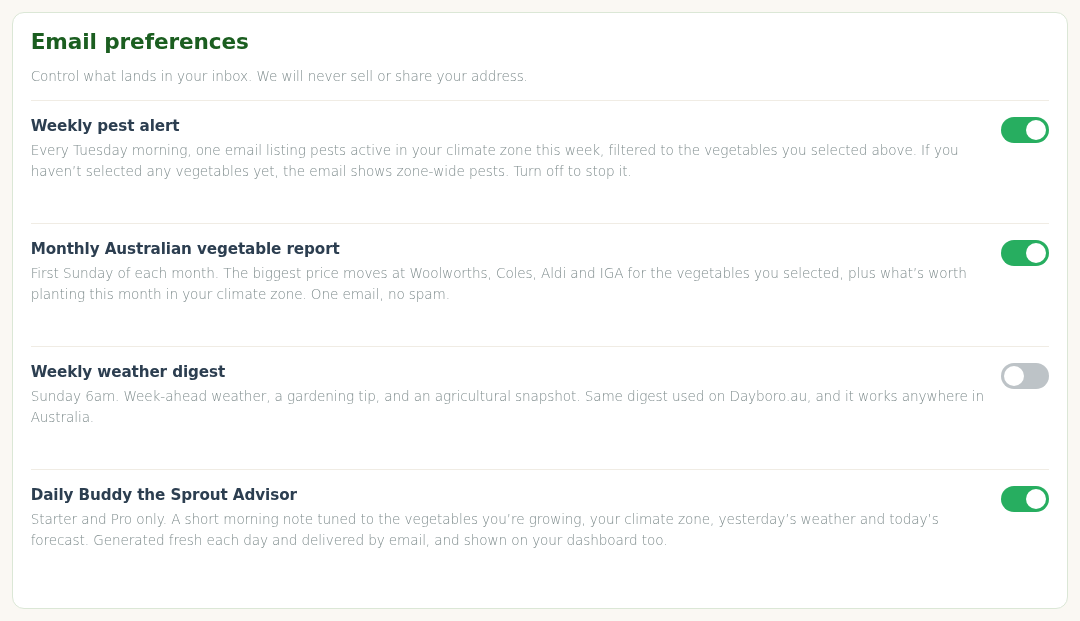
- Every digest email has an unsubscribe link at the bottom. One click and you stop receiving.
- Your other garden emails (pest alert, monthly vegetable report, daily advisor) are controlled from the email preferences panel on /my-garden/, see Manage your email preferences.
Add admin@gardenbuddy.au to your address book. Gmail: mark one digest as “not spam” and future ones will land in Primary. Outlook / Hotmail: move to Focused inbox. On Apple Mail: add to VIP contacts.
If a digest is late or missing
Check your spam or junk folder first (see the inbox tip above). If Sunday has come and gone and there is genuinely nothing, email us, or reply to any earlier digest, and we’ll investigate the send log for your address.
What’s coming
The digest is an active area of development. Planned additions for 2026:
- Variable frequency (fortnightly, monthly) for slow-paced growers
- Integration with local weather stations for hyperlocal forecasting
- Community pest reports (“5 nearby members reported cabbage white emergence”)
Feedback welcome, reply to any digest email with suggestions.