
The station had it down to 5.6 degrees just before dawn, cold enough for a heavy dew. By the time I was actually outside with a coffee the sun was already up and climbing past 13 degrees, the grass just wet, not white. My German Shepherd had other ideas about how the morning should start anyway. She had both my boots off the back step before I got to them, lined up dead straight on the wet grass like evidence, looking at me as if the whole point was to get me moving faster. It works, every time.

Round two on the onions
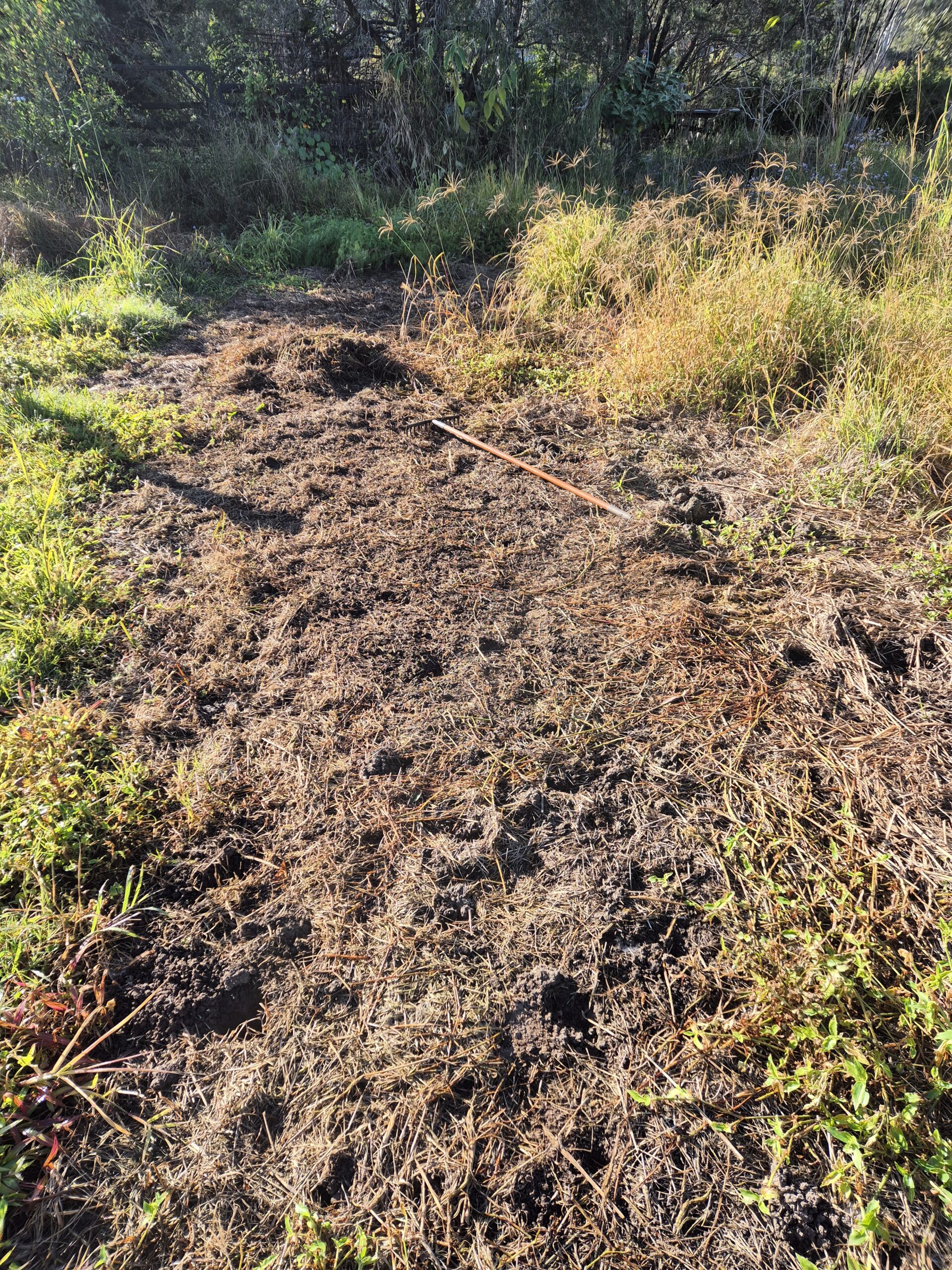
Well, the whole of the morning went on the onion bed. I have struggled with onions in this patch nearly every year I have tried, and I am not going to pretend I have cracked it now either. Some years they bulb up tiny and go to seed early, other years the clay just sits wet at the roots and they rot off before they get anywhere. I have grown a proper glut of silverbeet off the same ground without trying, so it is not the soil overall, it is something about onions specifically that this spot does not agree with.
My best guess this time is a mix of things. Onions want full sun and a bed that drains fast, and our clay holds water longer than an onion likes. I also suspect I have grown the wrong type before, a long-day variety meant for cooler states further south, when a subtropical patch like ours needs a short-day onion to bulb properly. So this run I raked out the old grass and roots, dug in some compost to lighten the clay, and I am going in with a short-day variety and better drainage. Whether that fixes it I genuinely do not know yet. Ask me again in spring.
If you are after a proper grow guide rather than my ongoing battle, we have the full onion write-up over on the onion page, zone by zone.
The silverbeet does not stop
Meanwhile the silverbeet has no such problems. I went out to check the patch and came back with two loads, one on a tray and one that filled the red bucket right up, and that is before the plants even notice they have been cut. This is the same clump that has been feeding us since autumn, and it just keeps giving more than we can eat fresh.
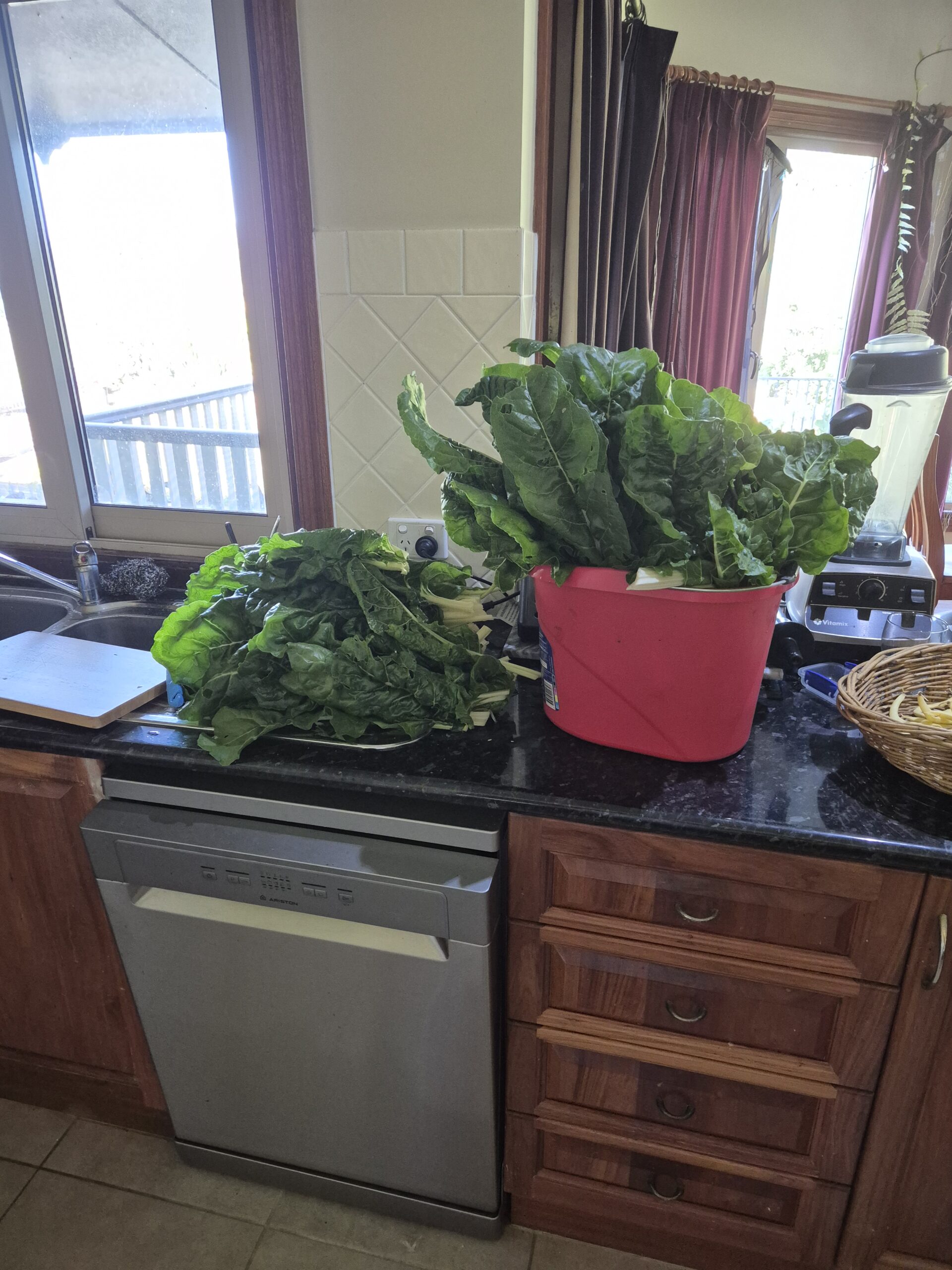
When it comes in this heavy, freezing is the only sensible option, so here is exactly what today’s batch went through on the bench.
- Wash and strip. Rinse the leaves well, then run a knife down each side of the thick white rib and pull the green leaf away from it. Leaves and ribs freeze differently, so they get separated here.
- Rough chop. The leaf gets chopped into whatever size suits soups and pies later. No need to be fussy about it.
- Blanch. Chopped leaf goes into a pot of boiling water for about two minutes. This stops the enzymes that would otherwise turn a frozen bag of silverbeet grey and bitter after a month or two.
- Straight into cold water. Out of the boiling pot and into a bowl of ice water immediately, to stop the cooking dead. Skip this step and the leaves keep cooking from their own heat and turn to mush.
- Squeeze it dry. Handful by handful, squeeze as much water out as you can. Wet silverbeet in the freezer just turns into an ice block with leaves stuck in it.
- Portion and freeze. I press the squeezed leaf into fist-sized balls or flatten it into snap-lock bags, label with today’s date, and lay them flat in the freezer until solid before stacking.
- The ribs. These get sliced thin and either go into tonight’s dinner fresh, or get their own labelled bag if there are too many to use straight away.
None of this is difficult, it just takes a spare half an hour on a bench that is suddenly buried in green. We wrote the fuller grow and eat guide for this plant a few weeks back if you want the whole story, including why it keeps producing like this. Have a look at the silverbeet harvest post for that.
So that was the morning. One dog convinced she runs the schedule, one onion bed getting a third or fourth chance, and a freezer that is slowly filling up with silverbeet against a winter that has not finished with us yet.