
I went out to the garden on a cold Monday morning this June, scissors in hand, meaning to grab a few leaves for dinner. Twenty minutes later I came back inside with a whole basket of it. That is silverbeet for you. Once it gets going you are not picking a meal, you are doing a harvest.
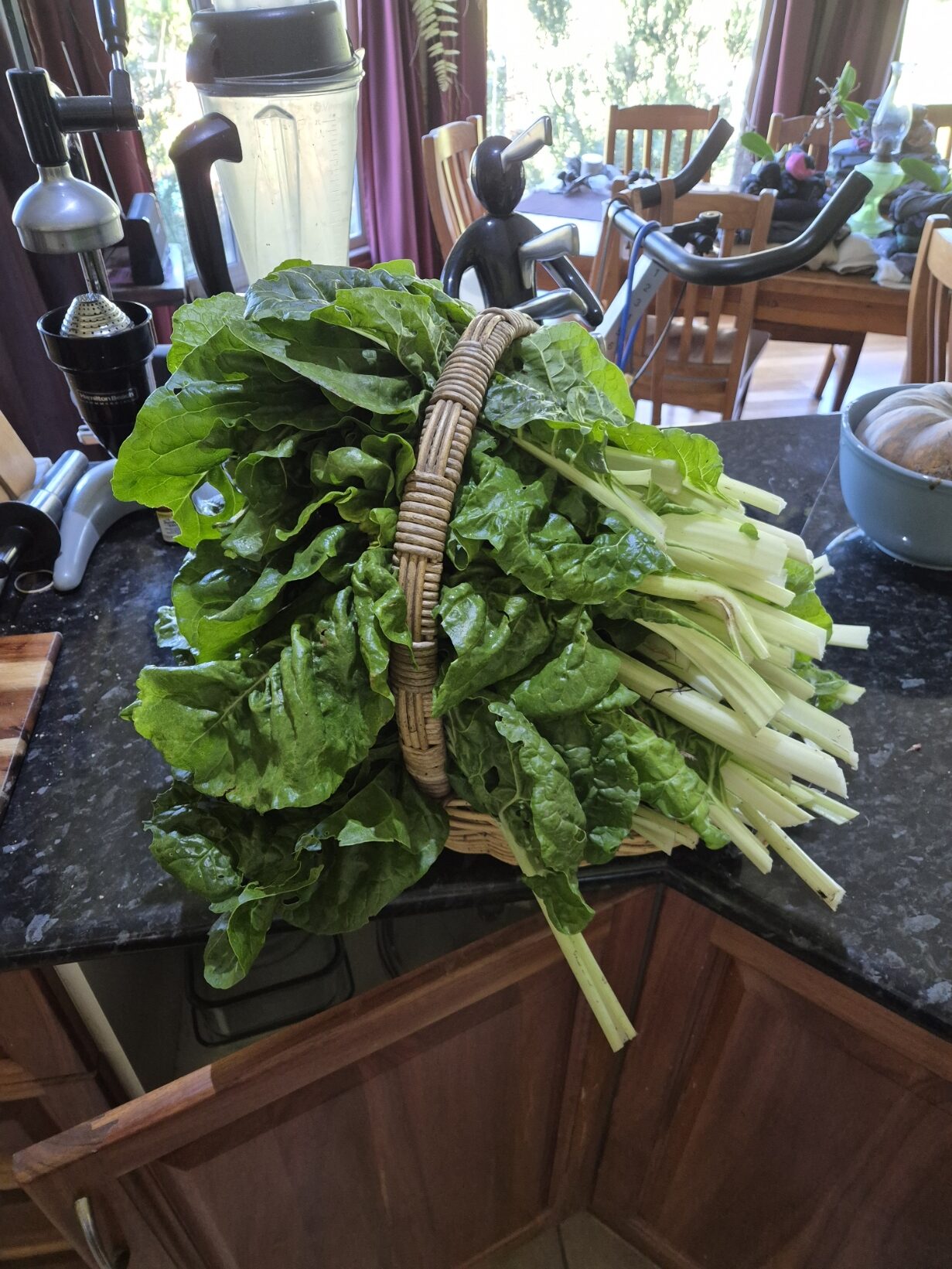
One pick, one basket. The white stalks are the bit a lot of people throw away, and they shouldn’t.
So what actually is silverbeet?
Silverbeet is the big leafy green a lot of Aussies grew up calling spinach, even though it is not real spinach at all. It is a chard, the same plant family as the beetroot, just bred for the leaves and stalks instead of the root. In the shops overseas you see the colourful versions sold as Swiss chard, with the bright red and yellow stems. The plain white-stemmed one in my basket is the classic Australian backyard type, and honestly it is the most reliable of the lot.
The reason every old Queenslander garden seems to have a clump of it is simple. It just keeps giving. A real spinach plant bolts to seed the second the weather warms and then it is done. Silverbeet is a cut-and-come-again plant, so you take the outer leaves, leave the centre to keep growing, and one plant will feed you for months. Mine have been going since autumn and they show no sign of stopping.
Using it in the kitchen
This is where people get stuck, because silverbeet is not quite spinach and they treat it like it is. The leaf and the stalk cook at different speeds, so I split them. Strip the green off the white rib, slice the ribs and give them a head start in the pan, then throw the leaves in for the last couple of minutes. The ribs go sweet and tender, a bit like a mild celery, and they are too good to bin.
What I make the most of it for, week in week out:
- Wilted in a hot pan with garlic and a splash of olive oil, salt, done. Five minutes.
- Chopped raw and small through a winter soup or a lentil dahl near the end of cooking.
- Big handfuls folded through a frittata or a quiche with some feta.
- The classic Greek spanakopita, where it works better than spinach because it holds its texture and does not turn to mush.
- Young small leaves raw in a salad. The big ones get a bit much raw, so keep those for the pan.
One thing worth knowing. Silverbeet has oxalates in it, same as spinach and rhubarb, so cooking it is kinder on you than eating a mountain of it raw every day. For a normal eater that is a non-issue. I just mention it because someone always asks.
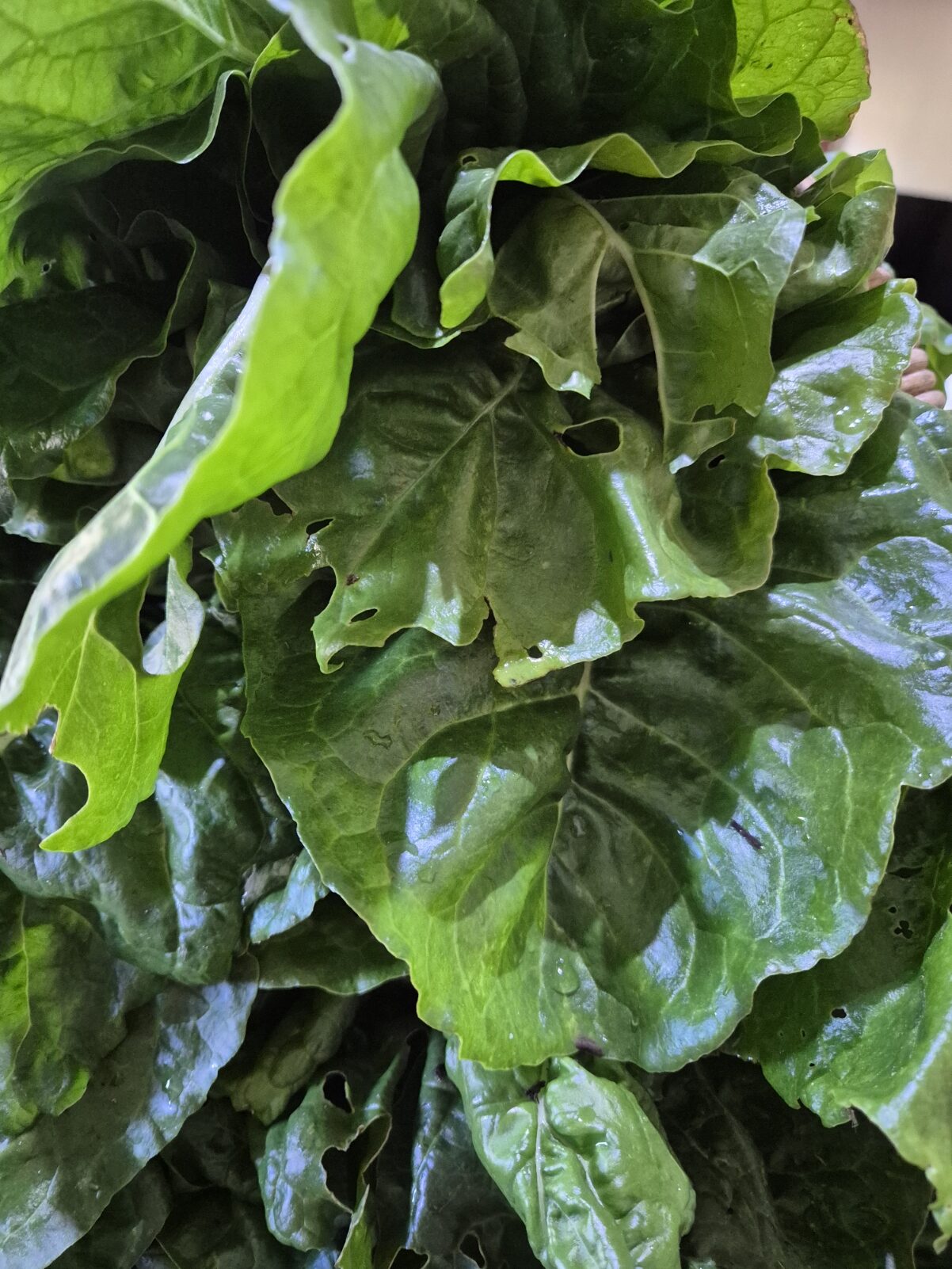
Look close and you see the little holes. That is the bugs telling you it has not been sprayed. I take that as a good sign.
Keeping it once it is picked
The trouble with a basket this size is that you cannot eat it all in one go, and silverbeet wilts faster than you would like. Here is what actually holds up.
In the fridge, short term. Do not wash it until you need it. Wrap the leaves loose in a dry tea towel or pop them in a container with a sheet of paper towel to take up the damp, and they will hold four or five days in the crisper. Wet leaves rot, every time.
In the freezer, longer term. This is the one most people skip and it is dead easy. Blanch the chopped leaves in boiling water for 2 mins, drop them straight into a bowl of cold water to stop them cooking, then squeeze the water out hard and freeze in portion-sized balls. You cannot use the thawed leaf in a salad after that, but for soups, pies and frittatas it is perfect, and it means a winter glut is still feeding you in spring.
You can fridge-pickle the stalks too, the same way you would a quick pickle, though I will be honest, I do not do this often. The freezer does most of the work in this house.
Growing your own, the Dayboro way
If you have never grown a vegetable in your life, start with this one. I mean that. Silverbeet is about the most forgiving thing you can put in the ground here, and it suits our climate down to the ground. If you want to know what else is worth sowing right now in your part of the country, our Plant Now zone calendar tells you crop by crop, and the climate-zone growing guides cover silverbeet from seed to plate whether you garden in the subtropics or somewhere cold enough for frost.
The best time to plant in our part of South East Queensland is the cooler stretch, roughly March through to about August. Up here in the D’Aguilar foothills behind Mt Mee, our winter mornings sit around 6°C and the silverbeet does not mind it one bit. You can see the actual Dayboro station readings for the month if you want to check how cold our June really ran. It will grow in summer as well, but once the days push past 30°C the heat sends it to bolt and the cabbage moths get busy, so the cool season is when it really hits its stride. Indeed the patch in my photos was planted out in autumn and it has cruised right through the cold.
A few things I have learned the hard way:
- Soil. It is not fussy, but it loves a feed. Dig in some compost or aged manure before you plant. A lot of our Dayboro ground is heavy clay, so a bit of organic matter to open it up goes a long way.
- Spacing. Give each plant about 30 cm. They get bigger than you think, and crammed plants stay small.
- Water. Steady and even. Let it dry right out and the leaves go tough and the plant sulks. Through the dry winter weeks I am watering deep twice a week.
- Picking. Always take the outer leaves and leave the heart. Pick little and often and the plant rewards you. If you wait on it to fill the whole bed before you start, the older leaves just go leathery.
- Bugs. Snails on the seedlings and the odd caterpillar on the big leaves, like you can see in the close-up photo. I control the patch every few days and just squash what I find. No spray needed on a backyard clump.
It grows fine from seed straight in the ground, or you can buy a punnet of seedlings if you want a head start. Either way, the hardest part is honestly remembering to keep eating it, because one healthy clump will out-produce a small family.
The tricks nobody tells you
These are the bits I worked out by myself, mostly by getting it wrong in the begin. You do not read them on the back of the seed packet.
- Each silverbeet seed is not one seed. What looks like a single seed is actually a little dried cluster, so two or three seedlings come up in a clump from the one spot. Do not panic and do not leave them all fighting. Snip the weaker ones off at ground level with scissors. Pull them and you tear the roots of the one you want to keep.
- Beat the snails with a night raid, not bait. Snails do their damage on the soft seedlings, and they feed after dark. Go out with a torch about an hour after sunset for the first week or two and you will catch them in the act on the leaves. Ten minutes a night for a fortnight breaks the back of the problem without a single pellet. A ring of crushed eggshell or used coffee grounds around each seedling helps too, they do not like crawling over the grit.
- A copper ring is the lazy fix. If you cannot be bothered with the torch, a strip of copper tape around the rim of a pot or a raised bed gives the snails a tiny electric tickle and they turn back. Once the plant is big and tough they leave it alone anyway, so you only have to protect it while it is small.
- Pick in the cool, not the heat. Cut your leaves early morning while they are still full of water and cold from the night. The same leaf picked at two in the afternoon in the sun goes limp on the walk back to the kitchen. This is half the reason a shop bunch looks tired and yours does not.
- Cut a tired plant right back and it starts again. When an old clump goes leggy and the leaves turn leathery, do not pull it out. Chop the whole thing down to a fist-high stump and give it a feed and a water. In a couple of weeks it throws a fresh flush of tender young leaves from the centre. I have had plants going since three years off this one trick.
- Snap off the seed stalk to buy more time. When the warm weather comes the plant wants to bolt, sending up a thick flower stalk from the middle. The second you see it, snap it out low. It will not stop it forever, but it can buy you a few more weeks of leaves before the plant gives up. Eventually it will win and go to seed, and that is your cue to let one plant flower so you collect free seed for next year.
- Let one go to seed on purpose. Following on from that, leave a single healthy plant to flower and dry off completely. The seed clusters go brown and papery, you rub them off into a paper bag, and you never buy silverbeet seed again. It crosses with beetroot if you have that flowering nearby, but for plain eating leaf that does not matter one bit.
Worth the bench space
I will say it plainly. If you want one green that feeds you for half the year, costs almost nothing, and survives a beginner, it is silverbeet. The basket on my bench cost me a packet of seed back in autumn and a bit of compost. The supermarket wants two or three dollars for a sad little bunch, and you can watch that gap yourself on our veggie price tracker. Mine has not stopped giving since the cold set in.
Get a few plants in now while the weather is right. If you log your first cut on GardenBuddy.au, the harvest tracker tallies what each clump returns against what you would have paid at the checkout. Come spring you will be the one with leaves to give away.