
When to Plant Pigeon Pea in Sydney, Warm Temperate Guide
Soil temperature is modelled from Open-Meteo forecast (Sydney), not a live sensor.
What this month normally looks like in Warm Temperate
In October the Warm Temperate zone normally runs 24°C by day and 13°C overnight, with about 66 mm of rain over 7 or 8 wet days. The coldest October night on record across the zone was -1.5°C, so a late frost is not out of the question. Averages 1991 to 2026, 153 postcodes, SILO.
Jump to section
This Pigeon Pea guide is written for the Warm Temperate zone, which takes in Sydney, Newcastle and Wollongong. Somewhere else? Your postcode picks the right one.
Not your zone? Cairns Brisbane Melbourne Canberra Alice Springs Perth
Also handy: will it frost this week? and what grows in shade.
- Planting window
- Oct to Nov
- Days to harvest
- about 17 weeks
- Sun
- Full sun
- Water
- Low
- Spacing
- 90 cm apart
Pigeon pea is a short lived evergreen legume shrub, 2 to 3 metres tall, grown in tropical and subtropical gardens for its protein rich seeds, which are eaten green like peas or dried for dhal (Daleys).
Published · By GardenBuddy.au
Planting dates, current conditions and prices on this page update daily.
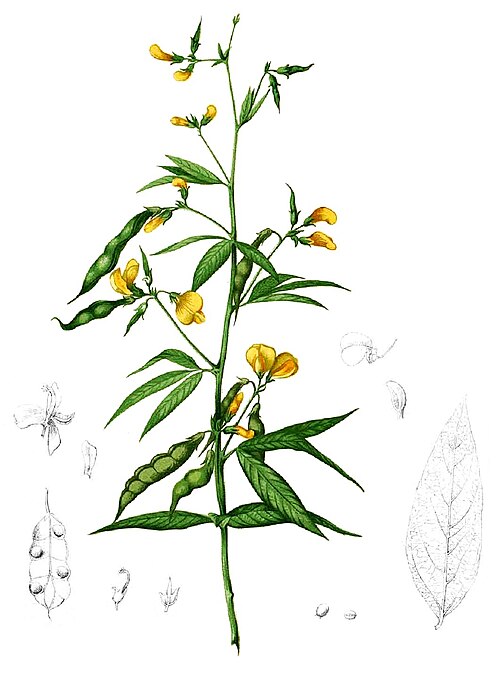
Photo: Wikimedia Commons
Planting Calendar for Warm Temperate
- Jan -
- Feb -
- Mar -
- Apr -
- May -
- Jun -
- Jul -
- Aug -
- Sep -
- Oct D
- Nov D
- Dec -
S = Seed Tray T = Transplant D = Direct Sow
Want a nudge when it is sowing time?
One email a week with what is worth planting in the Warm Temperate zone right now, Pigeon Pea included, plus which veg has jumped in price at the supermarket. Free, and you can stop it in one click.
How to Grow Pigeon Pea in Warm Temperate Australia
- Soil
- Any well drained soil; it tolerates poor soil but not wet feet (Green Harvest, Daleys).
- Salt
- Sensitive. Struggles with salty bore water or salty soil. Give it rainwater if you can.
- pH Range
- 4.5 to 8.4 tolerated (Green Harvest); 6.6 to 7.3 ideal (Daleys).
- Sunlight
- Full sun (Daleys).
- Spacing
- 90cm apart, 100cm between rows
- Watering
- Moderate. Water young plants until established; mature shrubs are drought tolerant and do best with 600 to 1000 mm of rain a year (Green Harvest, Daleys).
- Good companions
- Sweet Potato, Ginger, Pumpkin, Atemoya, Cassava
- Keep away from
- other legumes in the same bed year after year
- Grow before it
- Roots and alliums (Carrot, Beetroot, Onion)
- Grow after it
- Leafy greens and brassicas (Lettuce, Silverbeet, Broccoli)
Give the bed 3 turns before legumes go back in. Beans and peas fix nitrogen, so they leave the bed richer than they found it.
Warm Temperate Growing Tips for Pigeon Pea
Recommended Varieties
- Unnamed seed lines sold by Green Harvest and Daleys
Key Challenges
- Frost
- Short warm season
Pro Tips
- Sow once the soil is at least 25C (Green Harvest).
- Inoculate with rhizobia in new ground (Green Harvest).
- Prune to 2 metres to keep pods within reach (Daleys).
Pests and problems for Pigeon Pea in Warm Temperate
Harvesting Pigeon Pea
When ready: Green pods are ready a few weeks after flowering while the seeds are still soft; dry pods turn brown and the seeds rattle (Gardener's Path).
How to harvest: Pick green pods by hand for fresh peas. For dried seed leave pods on the bush until brown and dry, then pick, shell and finish drying on trays.
Storing and preserving pigeon pea
How to keep it
- Dry storage. Dry pods on the plant until they rattle, shell, spread the seeds on trays for another week in a dry airy spot, then jar. Freeze the jar for 48 hours first if you want to kill any weevil eggs (USU storing dry beans, via the existing chickpea record). Keeps: 12 months or more.
- Freezing cooked beans. Cook fully, cool, freeze in portions with a little liquid. Keeps: 8 to 12 months.
- Pressure canning. Soak 12 to 18 hours, boil 30 minutes, pack hot with 2.5 cm headspace, process at 10 to 11 psi for 75 minutes (pints) or 90 minutes (quarts) (NCHFP). Keeps: 12 months.
What members get
- Soil and weather from your nearest station
- An email when it's time to sow
- Your own garden plan, including planning from a photo
- Price history and price alerts
- Pest risk alerts for your area
- Full salt and canning detail
Common Questions About Pigeon Pea
When do you plant pigeon pea in Australia?
It depends on your climate zone, not the calendar month alone. Planting months by zone:
- Tropical (Cairns): Jan to Feb, Oct to Dec
- Subtropical (Brisbane): Sep to Nov
- Warm Temperate (Sydney): Oct to Nov
- Cool Temperate (Melbourne): Nov to Dec
- Cold / Highland (Canberra): not recommended
- Arid / Semi-Arid (Alice Springs): Oct to Nov
- Mediterranean (Perth): Oct to Nov
Can you grow pigeon pea all year round in Sydney?
No. In the Warm Temperate zone the planting months are Oct to Nov. Outside that window it either bolts, sulks or gets cut down by the weather.
When should I plant Pigeon Pea in Sydney?
You might be able to grow it here under the right conditions. Daleys rates frost tolerance as 'sometimes' and says heavy frost kills it. Sow direct in October or November once the soil is at least 25C (Green Harvest) and give it the warmest, best drained spot you have. A Sydney reviewer on Daleys says it needs rhizobia inoculant to do well. Months are our estimate.
What soil temperature do Pigeon Pea need?
Pigeon Pea germinate best when soil temperature is between 25°C and 35°C.
How do I know when Pigeon Pea are ready to harvest?
Green pods are ready a few weeks after flowering while the seeds are still soft; dry pods turn brown and the seeds rattle (Gardener's Path).
What are the best Pigeon Pea varieties for Sydney?
Recommended varieties for the Warm Temperate zone include: Unnamed seed lines sold by Green Harvest and Daleys.
What grows well with Pigeon Pea?
Good companion plants for Pigeon Pea include: Sweet Potato, Ginger, Pumpkin, Atemoya, Cassava.
Are pigeon pea salt tolerant?
No. Pigeon pea are salt-sensitive, one of the more sensitive veggies. Use rainwater if your bore water is salty, or grow them in a raised bed of fresh mix if your soil is.
Which zone am I in?
Type your postcode into the box near the top of the page and it tells you, and links this crop in your own zone if it differs. Or look it up on the grow zone map. This page is the Warm Temperate zone, Sydney is its reference city.