
When to Plant Luffa in Sydney, Warm Temperate Guide
Soil temperature is modelled from Open-Meteo forecast (Sydney), not a live sensor.
What this month normally looks like in Warm Temperate
In October the Warm Temperate zone normally runs 24°C by day and 13°C overnight, with about 66 mm of rain over 7 or 8 wet days. The coldest October night on record across the zone was -1.5°C, so a late frost is not out of the question. Averages 1991 to 2026, 153 postcodes, SILO.
Jump to section
This Luffa guide is written for the Warm Temperate zone, which takes in Sydney, Newcastle and Wollongong. Somewhere else? Your postcode picks the right one.
Not your zone? Cairns Brisbane Melbourne Canberra Alice Springs Perth
Also handy: will it frost this week? and what grows in shade.
- Planting window
- Sep to Dec
- Days to harvest
- 60 days
- Sun
- Full sun
- Water
- Regular
- Spacing
- 120 cm apart
- Soil pH
- 6.0–7.0
Luffa is a tropical/subtropical cucurbit vine grown for edible young fruit (eaten as a vegetable) and mature dried fruit (natural sponge). Two species are cultivated: smooth luffa (L.
Published · By GardenBuddy.au
Planting dates, current conditions and prices on this page update daily.
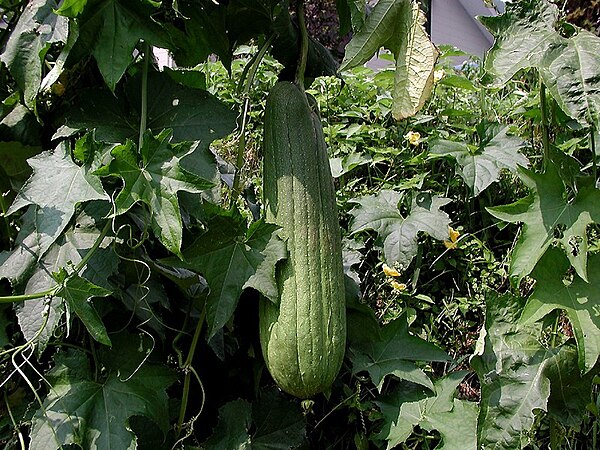
Photo: Wikimedia Commons
Planting Calendar for Warm Temperate
- Jan -
- Feb -
- Mar -
- Apr -
- May -
- Jun -
- Jul -
- Aug -
- Sep S
- Oct S/T/D
- Nov S/T/D
- Dec T
S = Seed Tray T = Transplant D = Direct Sow
Want a nudge when it is sowing time?
One email a week with what is worth planting in the Warm Temperate zone right now, Luffa included, plus which veg has jumped in price at the supermarket. Free, and you can stop it in one click.
How to Grow Luffa in Warm Temperate Australia
- Soil
- Rich, well-drained soil with generous compost and aged manure. Heavy feeder like most cucurbits.
- Salt
- Moderately sensitive. Copes with a little salt, but the harvest drops on salty bore water.
- pH Range
- 6.0-7.0
- Sunlight
- Full sun (minimum 8 hours). The more sun and heat, the better.
- Spacing
- 120cm apart, 200cm between rows
- Watering
- Very heavy water demands during fruiting. Deep, consistent watering essential. Drought stress causes flower drop and misshapen fruit. Drip irrigation recommended.
- Good companions
- Dwarf Beans, Onion, Sweet Corn, Peas, Sunflower
- Keep away from
- Potato
- Grow before it
- Leafy greens and brassicas (Lettuce, Silverbeet, Broccoli)
- Grow after it
- Roots and alliums (Carrot, Beetroot, Onion)
Give the bed 3 turns before cucurbits go back in. Pumpkin, cucumber and zucchini want a bed with fresh compost dug through.
Warm Temperate Growing Tips for Luffa
Recommended Varieties
- Ridged Luffa for eating (more likely to produce in shorter season)
- Smooth Luffa (sponges marginal)
Key Challenges
- Season often too short for sponge maturity
- Cool springs delay growth
- Powdery mildew
Pro Tips
- Honest assessment: sponge production is unreliable in Sydney-type climates
- Ridged luffa for eating is the safer goal
- Warmest possible position is essential. North wall, black mulch
Pests and problems for Luffa in Warm Temperate
Harvesting Luffa
When ready: For eating: harvest when 15-25cm long, bright green, and skin scratches easily with fingernail (tender). For sponges: leave on vine until skin turns brown, fruit feels light and papery, and you can hear seeds rattling inside.
How to harvest: Eating: cut with secateurs. Sponges: cut from vine when completely dry. If frost threatens before sponges are ready, cut and bring indoors to finish drying.
Storing and preserving luffa
How to keep it
- Freezing (Young Eating Fruit). Slice young ridged luffa. Blanch 2 minutes. Ice bath. Drain, flash-freeze on tray, bag. Keeps: 6-8 months.
- Stir-fry and Freeze. Slice young luffa and stir-fry with garlic, ginger and soy sauce for 2 minutes. Cool, portion and freeze. Keeps: 3 months.
- Dehydrating (Young Fruit). Slice young luffa thinly (3mm). Arrange on dehydrator trays. Dry at 60C for 6-10 hours. Store in airtight jars. Rehydrate in soup or stir-fry. Keeps: 12 months.
- Sponge Processing. Leave fruit on vine until brown, dry and light. Soak dried fruit in water for 1-2 days to loosen skin. Peel off outer skin and shake out seeds. Rinse sponge thoroughly, squeezing out dark sap. Soak in dilute bleach solution (1 tbsp per litre) for 30 minutes to whiten (optional). Dry in sun completely. Store dry. Keeps: Years (as a sponge).
What members get
- Soil and weather from your nearest station
- An email when it's time to sow
- Your own garden plan, including planning from a photo
- Price history and price alerts
- Pest risk alerts for your area
- Full salt and canning detail
Common Questions About Luffa
When do you plant luffa in Australia?
It depends on your climate zone, not the calendar month alone. Planting months by zone:
- Tropical (Cairns): Jan, Mar to May, Sep to Dec
- Subtropical (Brisbane): Sep to Dec
- Warm Temperate (Sydney): Sep to Dec
- Cool Temperate (Melbourne): Oct to Dec
- Cold / Highland (Canberra): not recommended
- Arid / Semi-Arid (Alice Springs): Sep to Dec
- Mediterranean (Perth): Sep to Dec
Can you grow luffa all year round in Sydney?
No. In the Warm Temperate zone the planting months are Sep to Dec. Outside that window it either bolts, sulks or gets cut down by the weather.
When should I plant Luffa in Sydney?
Needs a long hot season, so start early under cover and plant out once the soil is warm. Young fruit is eaten from midsummer, and sponges must dry on the vine before the May cold.
What soil temperature do Luffa need?
Luffa germinate best when soil temperature is between 22°C and 35°C.
How do I know when Luffa are ready to harvest?
For eating: harvest when 15-25cm long, bright green, and skin scratches easily with fingernail (tender). For sponges: leave on vine until skin turns brown, fruit feels light and papery, and you can hear seeds rattling inside.
What are the best Luffa varieties for Sydney?
Recommended varieties for the Warm Temperate zone include: Ridged Luffa for eating (more likely to produce in shorter season), Smooth Luffa (sponges marginal).
What grows well with Luffa?
Good companion plants for Luffa include: Dwarf Beans, Onion, Sweet Corn, Peas, Sunflower.
Are luffa salt tolerant?
Only a little. Luffa are moderately sensitive to salt, so the harvest drops on salty bore water. Mix salty water with rainwater, and mulch the bed.
Which zone am I in?
Type your postcode into the box near the top of the page and it tells you, and links this crop in your own zone if it differs. Or look it up on the grow zone map. This page is the Warm Temperate zone, Sydney is its reference city.