Drying
Light to store, great to snack on
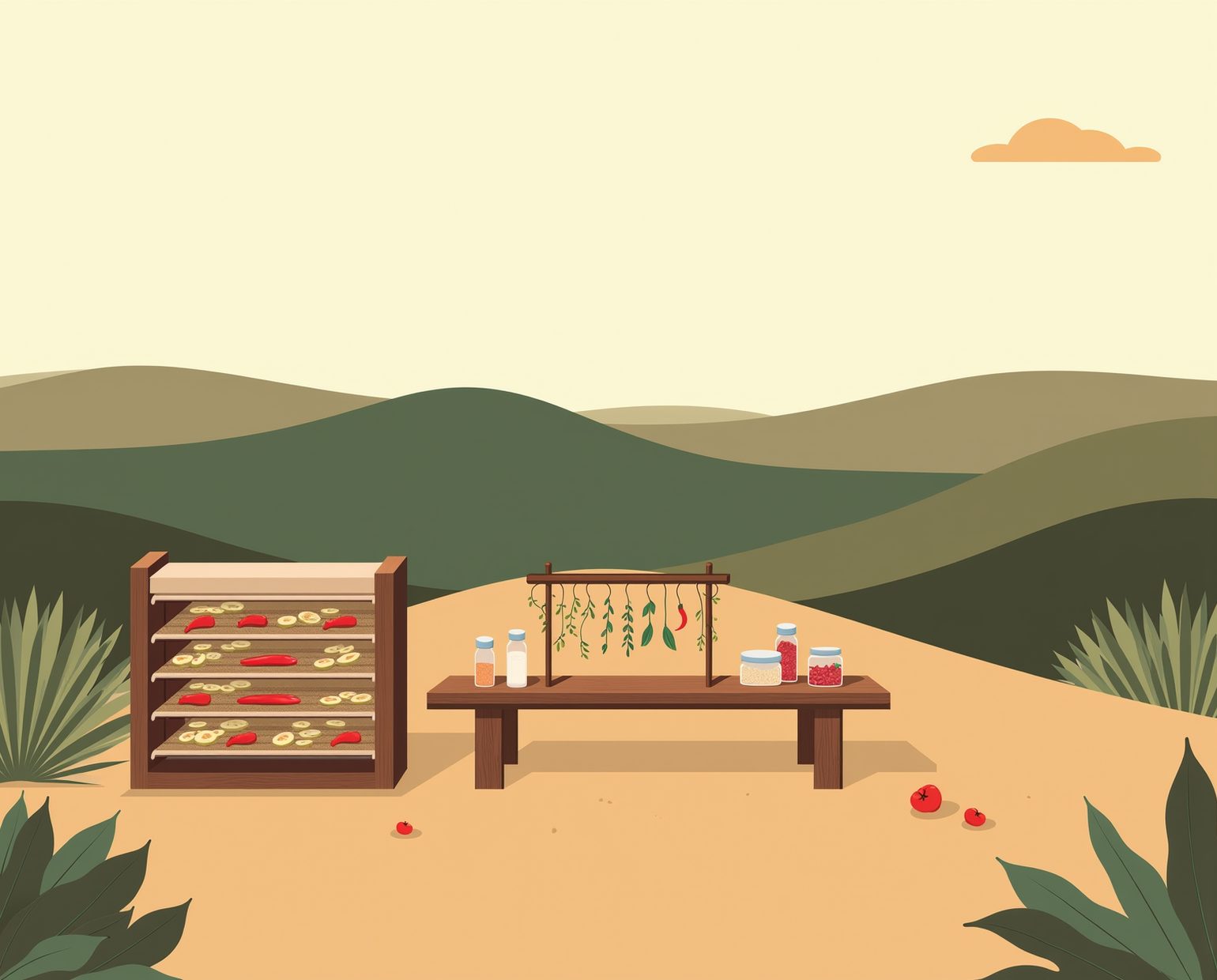
Herbs, fruit leathers and roasted pumpkin seeds take up almost no room once the water is gone. A dehydrator gives the most even result, an oven on its lowest setting works too. Every guide here is tested, so you know the temperature and how dry is dry enough.
 Tested recipes only, in Australian units.
The recipes
Find a recipe
Search by crop or recipe name, or browse the lot. Open one to see how much it makes and how long it keeps.
Vegetable Leathers
- Keeps: 4 months to a year in a cool, dry, dark spot. Dried fruit keeps about a year at 16°C and 6 months at 27°C, and vegetables about half as long as fruit.
- Crops: Pumpkin, Tomato
The full recipe is for members on a paid plan: 19 steps, in Australian units.
Please read. Keeping times are for best quality and come from published home preserving guidelines. They are a guide, not a guarantee. They only hold for a tested recipe followed to the letter, jars that sealed properly, and storage that is cool, dark and dry, or a freezer at minus 18°C. Look at, and smell, every jar and bag before you eat from it. When in doubt, throw it out.
Before you start
How we keep this safe
- Tested recipes only. Every recipe here comes from published home preserving guidelines. We do not invent preserving recipes, because a guess in a jar can make you sick.
- Follow the recipe to the letter. The amounts, the jar sizes and the times are part of what makes it safe, not a suggestion.
- Dry it quickly and fully. Leafy herbs with a lot of moisture go mouldy if they dry too slowly, so follow the guide for how to dry each one.
- Store it airtight, cool and dark. Pack it in a container that keeps moisture out. The cooler the spot, the longer it keeps.
- Australian units. mL, grams, millimetres and degrees Celsius. The conversion is ours. A tablespoon in these recipes is 15 mL, not the 20 mL Australian tablespoon.
- When in doubt, throw it out. A bulging lid, a broken seal, a smell or mould means the bin, not a taste test.