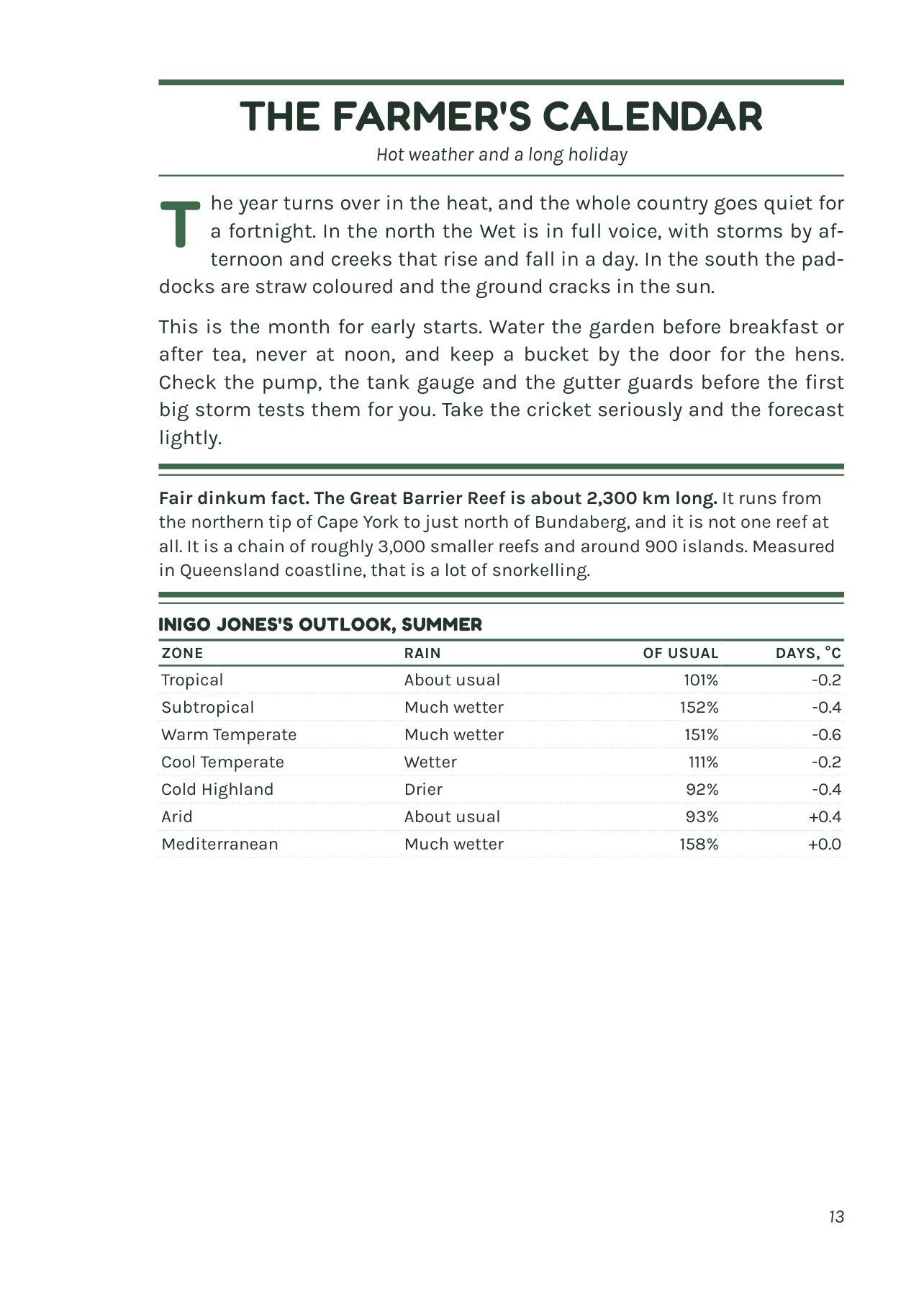
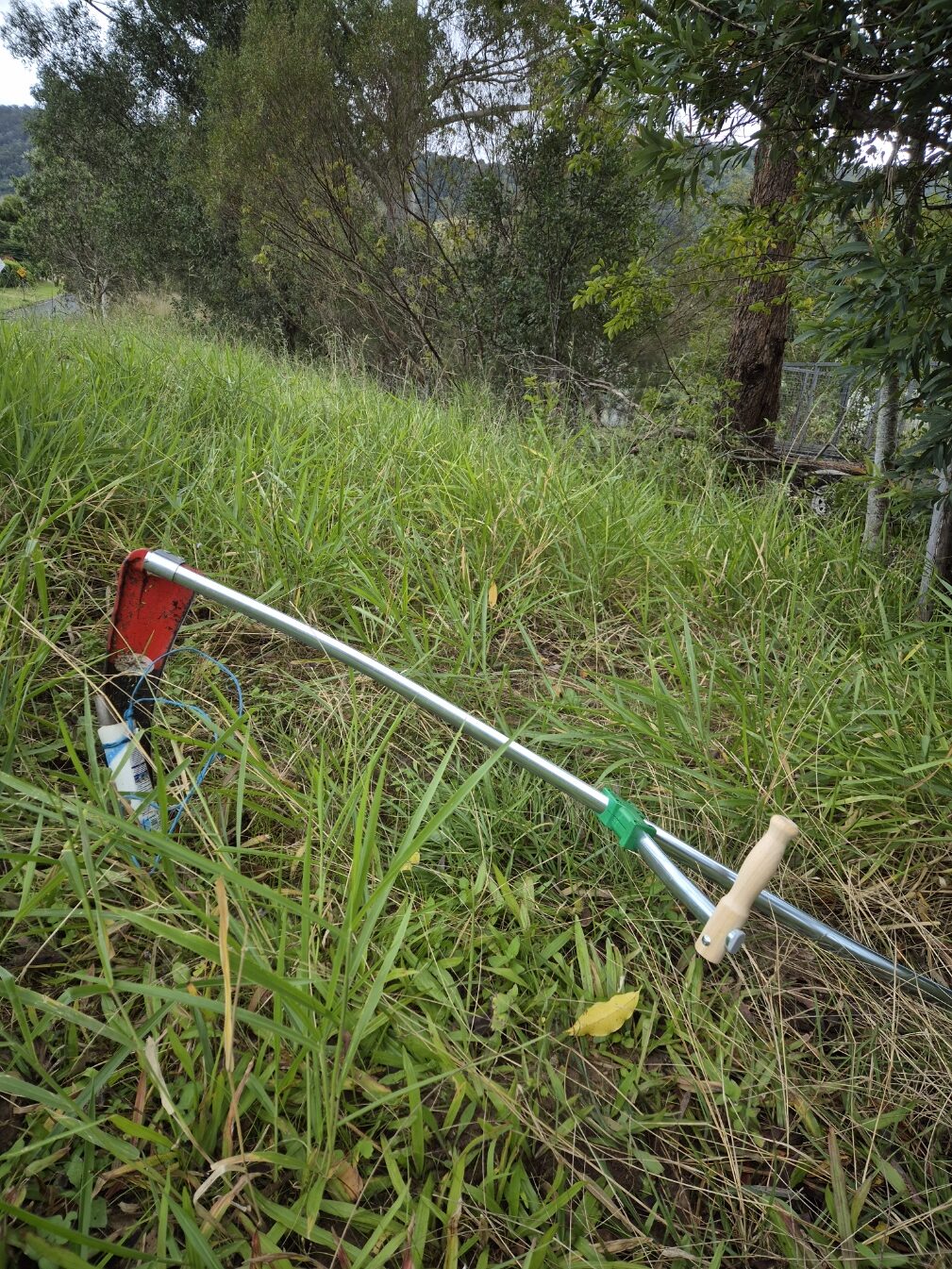
Half past nine this morning, 15 degrees on the thermometer and the dew jsut lifting off the grass, and for the first time we had a scythe the tallest of us could actually swing. The snath, that is the long curved shaft that carries the blade, finally reaches a proper height. Since three years we have been after one long enough, and every shaft we tried before was cut for someone a good head shorter.
Why we mow by hand
The mower is faster, indeed, but we reckon speed is not the point out here. No petrol, no noise that sends the birds off, and the swing is good for the back once you find the rhythm. You keep the blade sharp with a stone in your pocket, you control the edge every dozen strokes, and the grass falls in a clean row instead of being torn and flung about. We get all our hand tools from the one place, European Tools Australia, because a good snath and a properly peened blade are hard to come by here otherwise.
The grass does not go to waste
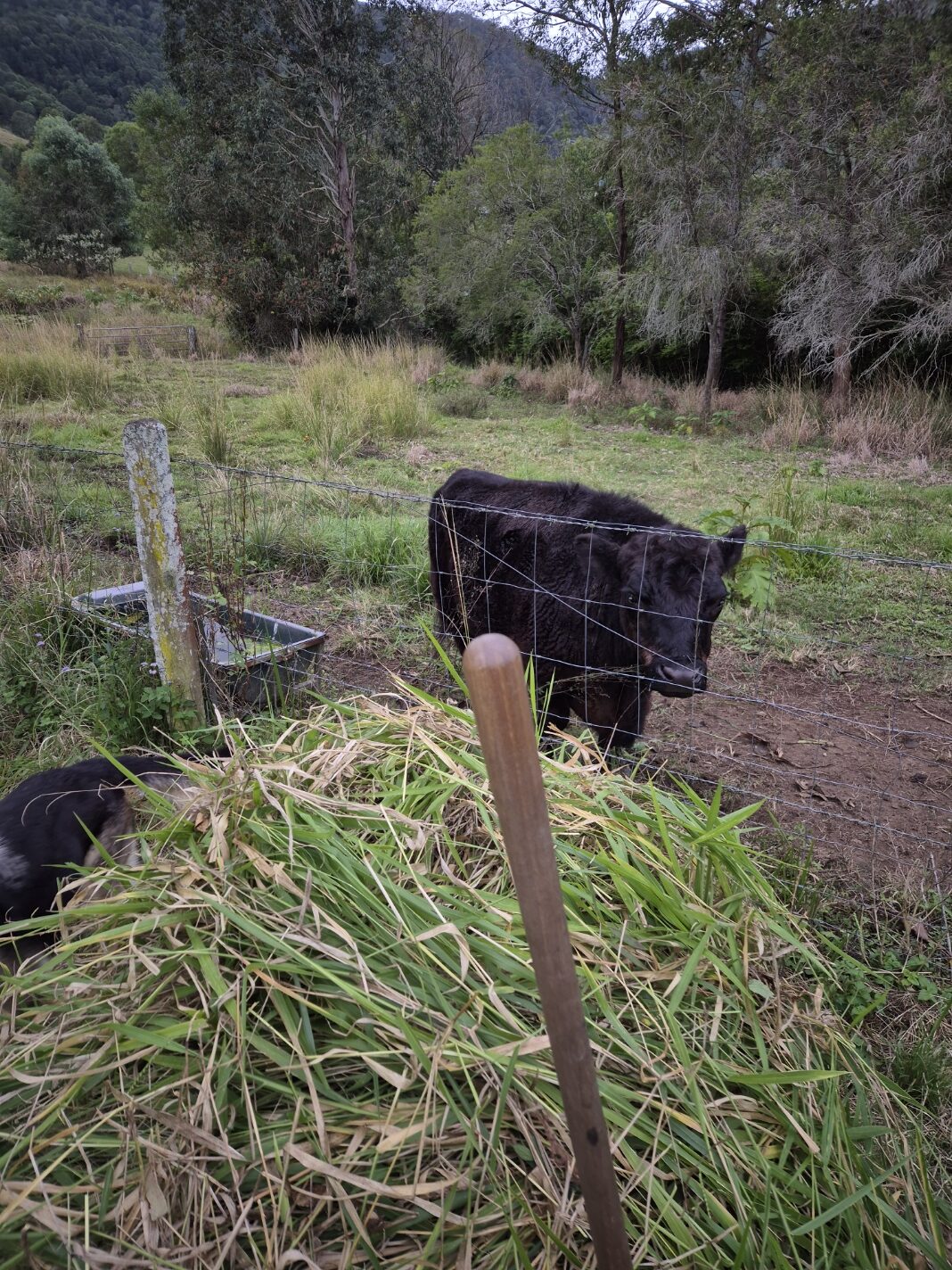
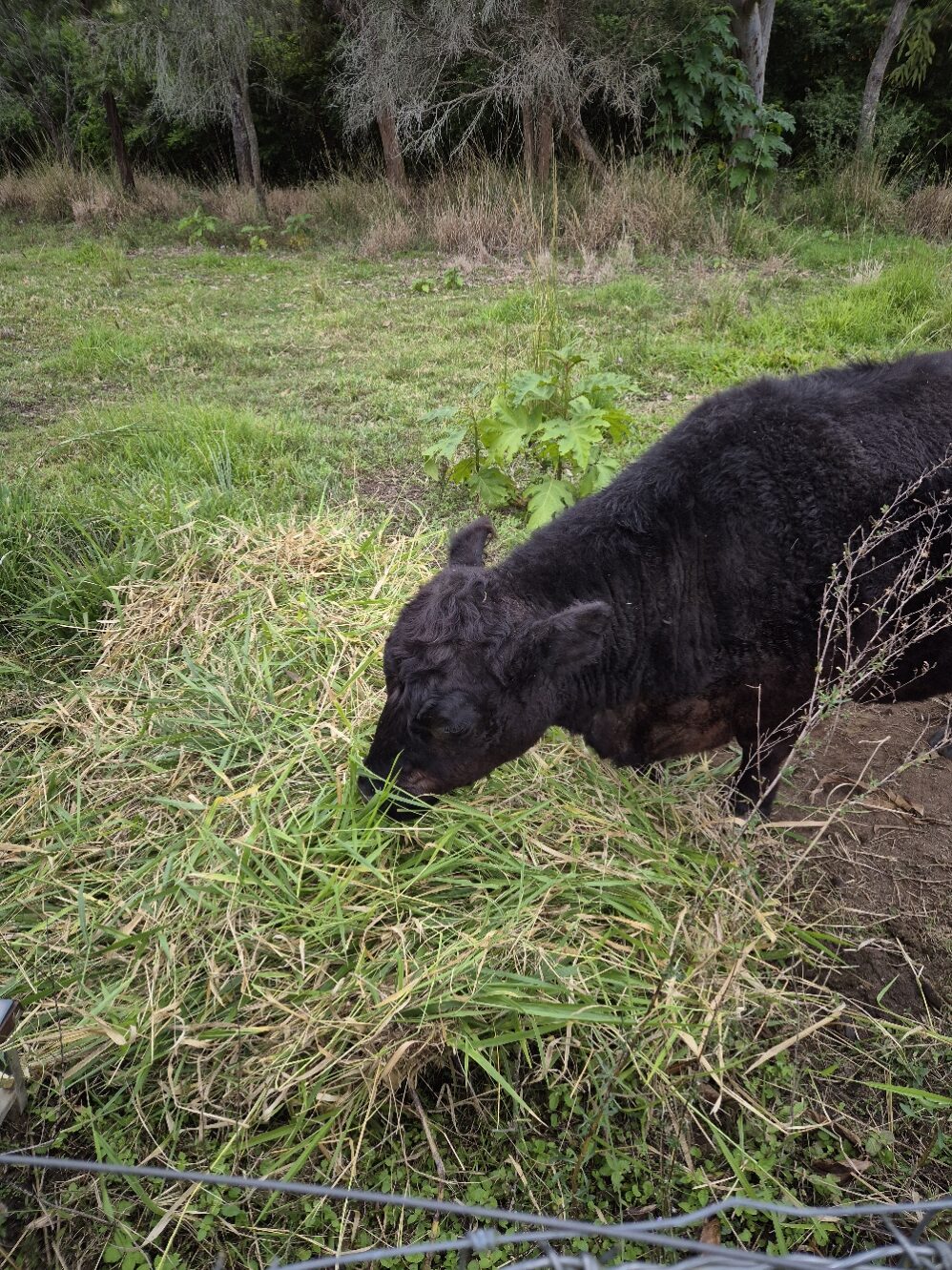
Every barrow of cut grass goes straight to the animals. This year we started the extra feeding a good month later than last, because the autumn stayed mild and there was more in the paddock for them to graze. Winter is the lean time though, so once the growth slows we carry the cut down to stock and top up what the ground can no longer give them.
Here is the thing we keep coming back to. An animal is not a plant, but it belongs in the garden all the same. The grass we cut goes into the beast, the beast turns it into meat and into manure, and the manure goes back onto the vegetable beds in spring. That is a full circle, and the scythe is just the first cut of it.
Looking after the animals is gardening too
People reckon gardening stops at the fence of the vegetable patch. It does not. Good gardening is the whole cycle, soil to plant to plate, and the animals sit right in the middle of that. They are a resource for food, the same as the silverbeet and the onions, they just happen to walk around and have names.
Our dog takes the job seriously. While we mow he sits at the edge of the paddock and keeps an eye on the lot, the stock, the barrow, us. Nothing gets past him, or so he reckons.
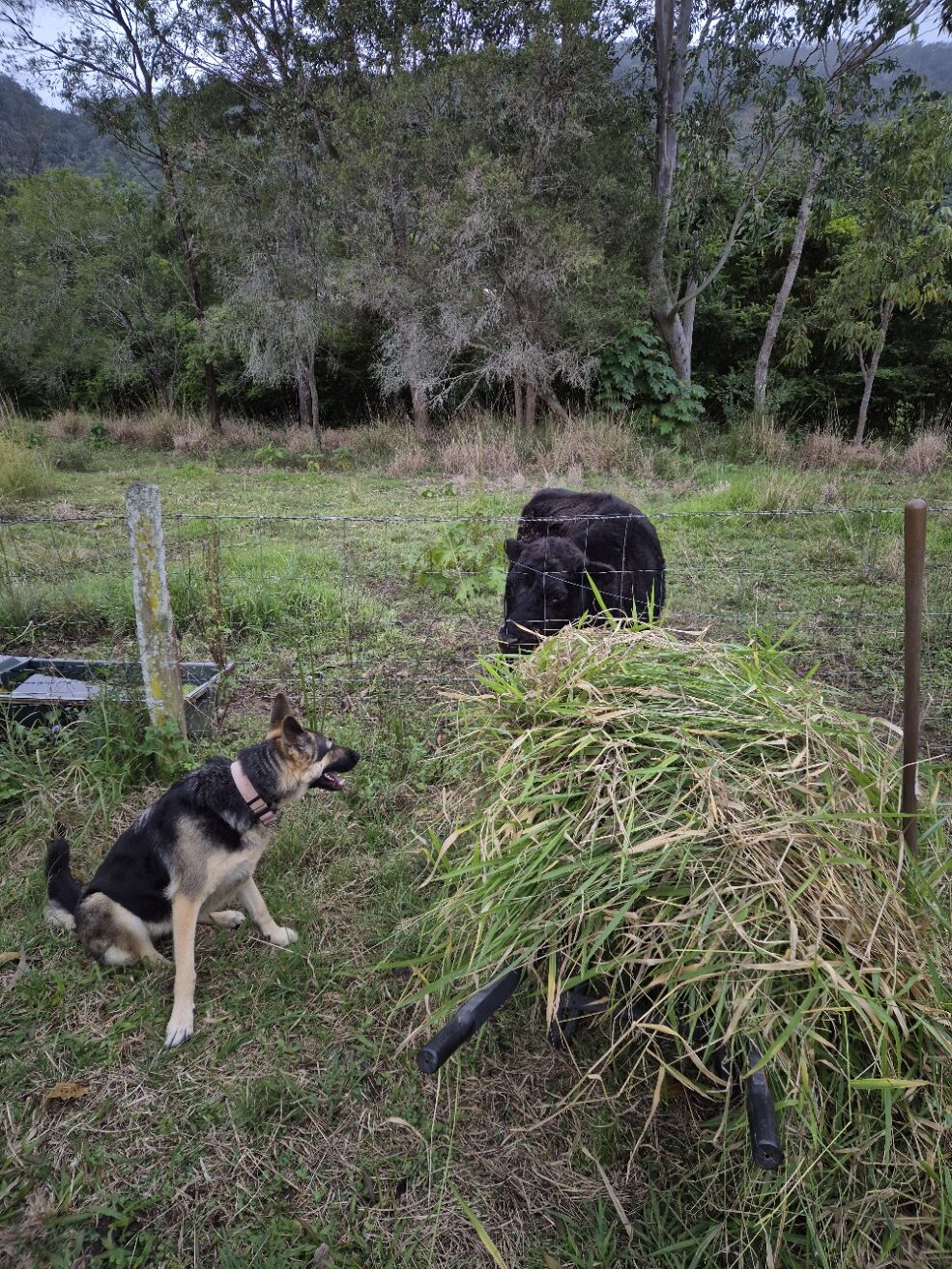
And then there is little Ren. We used to breed Lowlines, the small Angus, just for our own meat, and we had a habit of naming every beast after a neighbour. Little Ren here is named after Ren up the road. He does not know it, and we are not planning to tell him.
The circle closes
So this is a mowing day that is also a gardening day. The blade cuts the grass, the barrow carries it, the animals eat it, and in a few months the beds get the good of it back. Hand work, a quiet paddock, a dog on watch and a calf with a neighbour’s name. That is about as content as a winter morning gets out here.
If you want to follow more of what we get up to on the patch, have a look around the rest of GardenBuddy.au. There is always something going in or coming out.