
When to Plant Rutabaga in Sydney, Warm Temperate Guide
Also called swede.
Soil temperature is modelled from Open-Meteo forecast (Sydney), not a live sensor.
What this month normally looks like in Warm Temperate
In October the Warm Temperate zone normally runs 24°C by day and 13°C overnight, with about 66 mm of rain over 7 or 8 wet days. The coldest October night on record across the zone was -1.5°C, so a late frost is not out of the question. Averages 1991 to 2026, 153 postcodes, SILO.
Jump to section
This Rutabaga guide is written for the Warm Temperate zone, which takes in Sydney, Newcastle and Wollongong. Somewhere else? Your postcode picks the right one.
Not your zone? Cairns Brisbane Melbourne Canberra Alice Springs Perth
Also handy: will it frost this week? and what grows in shade.
- Planting window
- Feb to Apr
- Days to harvest
- about 13 weeks
- Sun
- Full sun
- Water
- Regular
- Spacing
- 20 cm apart
- Soil pH
- 6.0–7.5
- Shop price
- $7.50/kg at one shop
Swedes (known as rutabagas in North America) are a large, slow-growing root crop with yellow-orange flesh and a sweet, earthy flavour that improves after frost.
Published · By GardenBuddy.au
Planting dates, current conditions and prices on this page update daily.
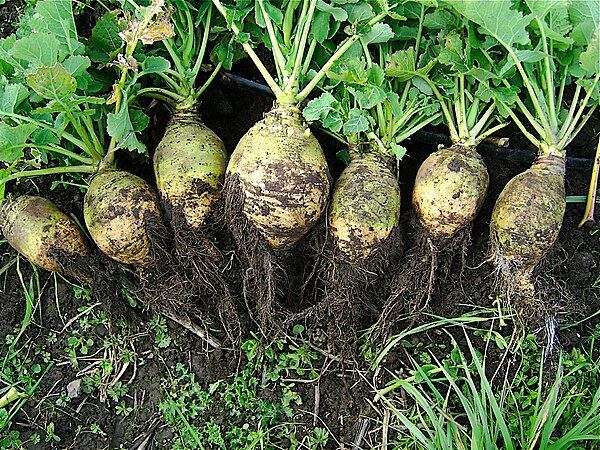
Photo: Wikimedia Commons
Planting Calendar for Warm Temperate
- Jan -
- Feb D
- Mar D
- Apr D
- May -
- Jun -
- Jul -
- Aug -
- Sep -
- Oct -
- Nov -
- Dec -
S = Seed Tray T = Transplant D = Direct Sow
Want a nudge when it is sowing time?
One email a week with what is worth planting in the Warm Temperate zone right now, Rutabaga included, plus which veg has jumped in price at the supermarket. Free, and you can stop it in one click.
How to Grow Rutabaga in Warm Temperate Australia
- Soil
- Deep, fertile, well-drained loam enriched with well-rotted compost. Avoid acid soils prone to clubroot. Remove stones which cause misshapen roots.
- Salt
- Moderately sensitive. Copes with a little salt, but the harvest drops on salty bore water.
- pH Range
- 6.0-7.5
- Sunlight
- Full sun
- Spacing
- 20cm apart, 40cm between rows
- Watering
- Consistent deep watering throughout growth. Irregular watering causes woody, fibrous roots and can lead to splitting. Water deeply once or twice weekly.
- Good companions
- Nasturtium (trap crop), Dwarf Beans, Onion, Chives, Peas
- Keep away from
- Strawberry
- Grow before it
- Legumes (Beans - Dwarf, Peas, Broad Beans)
- Grow after it
- Fruiting crops (Tomato, Capsicum, Zucchini)
Give the bed 3 turns before brassicas go back in. The cabbage family is hungry for nitrogen and shares club root and other soil diseases.
Warm Temperate Growing Tips for Rutabaga
Recommended Varieties
- Purple Top
- Altasweet
- Laurentian
- Virtue
Key Challenges
- Getting roots large enough before warm weather returns
- Flea beetle on seedlings
Pro Tips
- Sow in late summer (February-March) for harvest before spring warmth
- Insect mesh from sowing to protect against flea beetles and cabbage moths
- Frost improves sweetness. Leave in ground through light frosts
Pests and problems for Rutabaga in Warm Temperate
- Cabbage White Butterfly Watch
- Powdery Mildew Adequate spacing for airflow. Avoid overhead watering. Grow in full sun. Watch
- Clubroot Maintain soil pH above 7.0. Improve drainage. 7+ year brassica rotation. Raise beds with clean imported soil if endemic. Watch
- Flea beetle Flea beetle on seedlings Watch
Harvesting Rutabaga
When ready: Roots are 8-12cm diameter, with purple/green shoulders visible above soil. Harvest after first frost for sweetest flavour. Roots become woody if left too long (larger than 15cm).
How to harvest: Loosen soil alongside root with a fork. Lift gently. Trim foliage to 2cm. Brush off soil. Do not wash until ready to use.
Storing and preserving rutabaga
How to keep it
- Root Cellar / Sand Storage. Twist off tops (do not cut). Layer in damp sand in wooden boxes. Store at 1-4C in dark conditions. Keeps: 3-5 months.
- Freezing. Peel and dice into 2cm cubes. Blanch 3 minutes in boiling water. Ice bath, drain. Freeze on trays then bag. Alternatively, cook and mash, then freeze in portions. Keeps: 10-12 months.
- Dehydrating. Peel and slice or dice thinly. Blanch 3 minutes. Dehydrate at 55C for 10-14 hours until crisp. Store in airtight jars. Keeps: 12 months.
- In-Ground Storage. Leave roots in ground and harvest as needed through winter. Apply 10cm mulch for frost insulation. Best preservation method for fresh quality. Keeps: 3-4 months in ground.
Grow vs buy
A 2.4 m × 1.2 m bed fits 12 plants, about $45 worth at today’s Coles prices, checked today.
That is roughly 6 kg at $7.50 a kilo.
Draw your rutabaga bed → No account needed.
What rutabaga costs in the shops right now, retailer by retailer, updated daily.
What members get
- Soil and weather from your nearest station
- An email when it's time to sow
- Your own garden plan, including planning from a photo
- Price history and price alerts
- Pest risk alerts for your area
- Full salt and canning detail
Common Questions About Rutabaga
When do you plant rutabaga in Australia?
It depends on your climate zone, not the calendar month alone. Planting months by zone:
- Tropical (Cairns): not recommended
- Subtropical (Brisbane): Mar to May
- Warm Temperate (Sydney): Feb to Apr
- Cool Temperate (Melbourne): Jan to May, Sep to Dec
- Cold / Highland (Canberra): Jan to Apr, Dec
- Arid / Semi-Arid (Alice Springs): Mar to Jun
- Mediterranean (Perth): Jan to Mar
Can you grow rutabaga all year round in Sydney?
No. In the Warm Temperate zone the planting months are Feb to Apr. Outside that window it either bolts, sulks or gets cut down by the weather.
What else is rutabaga called?
Rutabaga is the usual Australian name. Overseas seed packets and recipes call it swede. Same plant, same growing advice.
When should I plant Rutabaga in Sydney?
Swede is a root crop, so sow it direct. Sow in late summer to autumn so roots size up in the cool months.
What soil temperature do Rutabaga need?
Rutabaga germinate best when soil temperature is between 7°C and 25°C.
How do I know when Rutabaga are ready to harvest?
Roots are 8-12cm diameter, with purple/green shoulders visible above soil. Harvest after first frost for sweetest flavour. Roots become woody if left too long (larger than 15cm).
What are the best Rutabaga varieties for Sydney?
Recommended varieties for the Warm Temperate zone include: Purple Top, Altasweet, Laurentian, Virtue.
What grows well with Rutabaga?
Good companion plants for Rutabaga include: Nasturtium, Dwarf Beans, Onion, Chives, Peas.
Are rutabaga salt tolerant?
Only a little. Rutabaga are moderately sensitive to salt, so the harvest drops on salty bore water. Mix salty water with rainwater, and mulch the bed.
Which zone am I in?
Type your postcode into the box near the top of the page and it tells you, and links this crop in your own zone if it differs. Or look it up on the grow zone map. This page is the Warm Temperate zone, Sydney is its reference city.