
When to Plant Onion in Cairns, Tropical Guide
Also called spring onion, scallion, shallot (the Australian name for spring onion).
Soil temperature is modelled from Open-Meteo forecast (Cairns), not a live sensor.
What this month normally looks like in Tropical
In October the Tropical zone normally runs 34°C by day and 23°C overnight, with about 53 mm of rain over 5 or 6 wet days. Averages 1991 to 2026, 37 postcodes, SILO.
Jump to section
This Onion guide is written for the Tropical zone, which takes in Cairns, Townsville and Darwin. Somewhere else? Your postcode picks the right one.
Not your zone? Brisbane Sydney Melbourne Canberra Alice Springs Perth
Also handy: will it frost this week? and what grows in shade.
- Planting window
- Mar to Jul
- Days to harvest
- about 13 weeks
- Sun
- Full sun
- Water
- Regular
- Spacing
- 12 cm apart
- Soil pH
- 6.0–7.0
- Shop price
- $2.75/kg
Onions are a staple in Australian kitchens and one of the most widely grown alliums in home gardens. Bulb formation is triggered by day length, making variety selection critical based on latitude.
Published · By GardenBuddy.au
Planting dates, current conditions and prices on this page update daily.
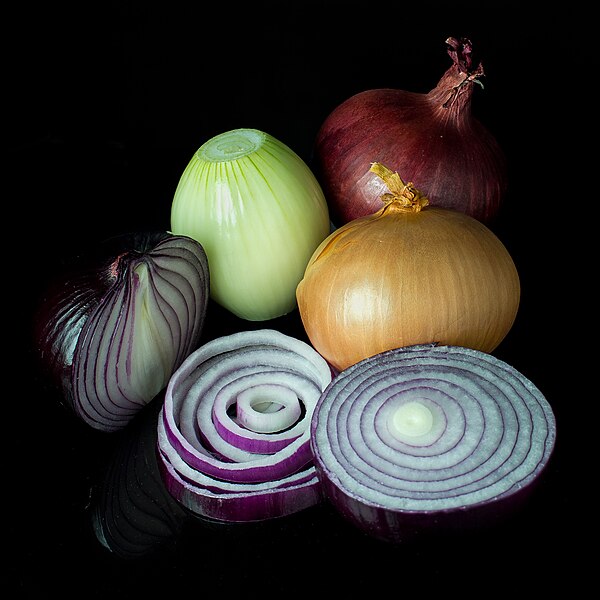
Photo: Wikimedia Commons
Planting Calendar for Tropical
- Jan -
- Feb -
- Mar S
- Apr S
- May S/T
- Jun T
- Jul T
- Aug -
- Sep -
- Oct -
- Nov -
- Dec -
S = Seed Tray T = Transplant D = Direct Sow
Want a nudge when it is sowing time?
One email a week with what is worth planting in the Tropical zone right now, Onion included, plus which veg has jumped in price at the supermarket. Free, and you can stop it in one click.
How to Grow Onion in Tropical Australia
- Soil
- Well-drained, fertile loam enriched with compost. Avoid heavy clay or freshly manured soil which causes forking and soft bulbs.
- Salt
- Sensitive. Struggles with salty bore water or salty soil. Give it rainwater if you can.
- pH Range
- 6.0-7.0
- Sunlight
- Full sun (minimum 6 hours direct)
- Spacing
- 12cm apart, 30cm between rows
- Watering
- Consistent moisture during bulb development. Water deeply once or twice weekly. Reduce watering as tops begin to fall over (curing signal). Overhead irrigation can reduce thrips but increases fungal risk.
- Good companions
- Lettuce, Carrot, Dill, Beetroot, Cabbage
- Keep away from
- Asparagus, Cowpeas, Lentils, Peas, Sage, Snake Beans, Snow Peas
- Grow before it
- Fruiting crops (Tomato, Capsicum, Zucchini)
- Grow after it
- Legumes (Beans - Dwarf, Peas, Broad Beans)
Give the bed 3 turns before alliums go back in. Onion, garlic and leek like a lean bed and clean up after the heavy feeders.
Tropical Growing Tips for Onion
Recommended Varieties
- Red Tropicana (short-day)
- Texas Grano (short-day)
- Gladalan Brown (short-day)
- Spring onions/shallots (year-round)
Key Challenges
- Insufficient day length variation for bulb formation in many varieties
- High humidity drives fungal diseases
- Thrips pressure year-round
- Wet season waterlogging
Pro Tips
- Focus on short-day varieties only. Long-day types will never bulb here
- Spring onions and shallots are the most reliable allium crops
- Raised beds are essential for drainage during wet season
Pests and problems for Onion in Tropical
- Botrytis (Grey Mould) Watch
- Thrips Thrips pressure year-round Watch
- Damping Off Watch
- Downy Mildew Watch
- Wireworms Watch
- Rust Watch
- White Rot The single most important disease to prevent. Never introduce infected sets or transplants. Clean tools between beds. Rotate alliums on the... Watch
- Basal Rot Avoid mechanical damage to bulbs. Plant in well-drained soil. Minimise soil disturbance near roots. Handle harvested bulbs carefully. Store... Watch
- High humidity drives fungal diseases High humidity drives fungal diseases Watch
Harvesting Onion
When ready: Tops fall over naturally and begin to yellow. Bulb skin is papery and dry. Neck tissue is thin and soft. Do not push tops over prematurely as this reduces storage life.
How to harvest: Loosen soil with a fork and lift gently. Do not pull by the tops. Lay on their side in the garden for 1-2 days if weather is dry, then move to a well-ventilated, shaded area for 2-4 weeks to cure fully. Roots and tops are trimmed after curing.
Storing and preserving onion
How to keep it
- Curing and Dry Storage. After harvest, cure in a warm (25-30C), dry, well-ventilated area for 2-4 weeks until neck is completely dry and outer skins are papery. Trim roots and tops. Store in mesh bags, plaited braids, or slatted crates in a cool (5-10C), dry, dark location with good airflow. Keeps: 3-6 months for most varieties; long-keeper types up to 8-10 months.
- Dehydrating. Peel, slice into 3-5mm rings or dice. Spread on dehydrator trays. Dry at 55-60C for 6-12 hours until completely brittle. Grind dried onion into powder or store as flakes in airtight containers. Keeps: 12 months in airtight containers, cool dark place.
- Freezing. Peel and dice. Spread on a baking tray and open-freeze for 2 hours. Transfer to freezer bags, removing as much air as possible. No blanching required. Frozen onions become soft when thawed. Best for cooking only. Keeps: 8-12 months.
- Pickling. Peel small onions or quarter larger ones. Salt and stand overnight. Rinse. Pack into sterilised jars. Cover with boiling pickling vinegar (malt or white wine vinegar with spices). Seal immediately. Allow 4-6 weeks to develop flavour. Keeps: 12 months sealed; 4 weeks once opened (refrigerated).
- Caramelised Onion Preserve. Slowly cook sliced onions in olive oil with a pinch of salt for 30-45 minutes until deeply golden. Add a splash of balsamic vinegar. Pack into sterilised jars. Refrigerate or process in a water bath (15 minutes). Keeps: 3-4 weeks refrigerated; 6 months if water-bath processed.
Grow vs buy
A 2.4 m × 1.2 m bed fits 72 plants, about $30 worth at today’s Aldi, Coles and Woolworths prices, checked today.
That is roughly 11 kg at $2.75 a kilo.
Draw your onion bed → No account needed.
What onion costs in the shops right now, retailer by retailer, updated daily.
What members get
- Soil and weather from your nearest station
- An email when it's time to sow
- Your own garden plan, including planning from a photo
- Price history and price alerts
- Pest risk alerts for your area
- Full salt and canning detail
Common Questions About Onion
When do you plant onion in Australia?
It depends on your climate zone, not the calendar month alone. Planting months by zone:
- Tropical (Cairns): Mar to Jul
- Subtropical (Brisbane): Mar to Jun
- Warm Temperate (Sydney): Mar to Aug
- Cool Temperate (Melbourne): Mar to Sep
- Cold / Highland (Canberra): Apr to Sep
- Arid / Semi-Arid (Alice Springs): Feb to Aug
- Mediterranean (Perth): Mar to Sep
Can you grow onion all year round in Cairns?
No. In the Tropical zone the planting months are Mar to Jul. Outside that window it either bolts, sulks or gets cut down by the weather.
What else is onion called?
Onion is the usual Australian name. Overseas seed packets and recipes call it spring onion, scallion, shallot (the Australian name for spring onion). Same plant, same growing advice.
When should I plant Onion in Cairns?
Use short-day varieties only and sow early so bulbs finish and cure in the dry before the build-up. Spring onions and shallots are far easier in the tropics.
What soil temperature do Onion need?
Onion germinate best when soil temperature is between 8°C and 30°C.
How do I know when Onion are ready to harvest?
Tops fall over naturally and begin to yellow. Bulb skin is papery and dry. Neck tissue is thin and soft. Do not push tops over prematurely as this reduces storage life.
What are the best Onion varieties for Cairns?
Recommended varieties for the Tropical zone include: Red Tropicana (short-day), Texas Grano (short-day), Gladalan Brown (short-day), Spring onions/shallots (year-round).
What grows well with Onion?
Good companion plants for Onion include: Lettuce, Carrot, Dill, Beetroot, Cabbage.
Are onion salt tolerant?
No. Onion are salt-sensitive, one of the more sensitive veggies. Use rainwater if your bore water is salty, or grow them in a raised bed of fresh mix if your soil is.
Which zone am I in?
Type your postcode into the box near the top of the page and it tells you, and links this crop in your own zone if it differs. Or look it up on the grow zone map. This page is the Tropical zone, Cairns is its reference city.