
When to Plant Mulberry in Brisbane, Subtropical Guide
What this month normally looks like in Subtropical
In October the Subtropical zone normally runs 27°C by day and 15°C overnight, with about 77 mm of rain over 7 wet days. The coldest October night on record across the zone was -0.2°C, so a late frost is not out of the question. Averages 1991 to 2026, 33 postcodes, SILO.
Jump to section
This Mulberry guide is written for the Subtropical zone, which takes in Brisbane, the Gold Coast and the Sunshine Coast. Somewhere else? Your postcode picks the right one.
Not your zone? Cairns Sydney Melbourne Canberra Alice Springs Perth
Also handy: will it frost this week? and what grows in shade.
- Planting window
- Jun to Sep
- Sun
- Full sun to part shade
- Soil pH
- 5.5–7.5
Possibly the easiest fruit tree to grow in Australia. Virtually indestructible, tolerates poor soil, drought, neglect, and a wide climate range. Black mulberry (M. nigra) produces the best-flavoured fruit.
Published · By GardenBuddy.au
Planting dates, current conditions and prices on this page update daily.
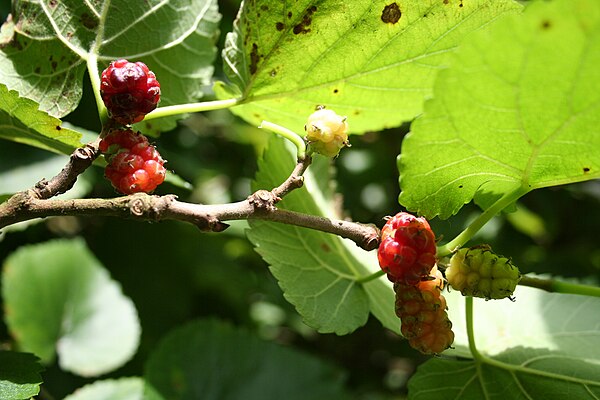
Photo: Wikimedia Commons
Best Planting Window for Subtropical
- Jan -
- Feb -
- Mar -
- Apr -
- May -
- Jun P
- Jul P
- Aug P
- Sep P
- Oct -
- Nov -
- Dec -
P = Planting window
Plant bare-root trees in winter, or potted trees into spring. The main Brisbane crop is August to October, with Hicks Fancy later.
Want a nudge when it is sowing time?
One email a week with what is worth planting in the Subtropical zone right now, Mulberry included, plus which veg has jumped in price at the supermarket. Free, and you can stop it in one click.
How to Grow Mulberry in Subtropical Australia
- Soil
- Tolerates almost anything including heavy clay, sand, and poor soils. Performs best in well-drained fertile soil but genuinely undemanding.
- Salt
- Sensitive. Struggles with salty bore water or salty soil. Give it rainwater if you can.
- pH Range
- 5.5-7.5
- Sunlight
- Full sun for best fruit. Tolerates part shade.
- Good companions
- Anything, mulberries are not fussy
- Keep away from
- Paths, driveways, clotheslines, swimming pools (staining), Anything you don't want purple-stained
Subtropical Growing Tips for Mulberry
Recommended Varieties
- Black English
- White Shahtoot
- Hicks Fancy
- Red Shahtoot
Key Challenges
- Virtually none
Pro Tips
- Almost bulletproof in SEQ. Plant it and leave it alone.
- Position where staining doesn't matter.
Pests and problems for Mulberry in Subtropical
Harvesting Mulberry
When ready: Black mulberry: fully black-purple and soft. White/Shahtoot: pale pink to white and sweet. Ripe fruit falls at a touch. Lay a clean sheet under the tree and shake branches.
How to harvest: Shake branches over a sheet or pick individually. Wear old clothes, staining is inevitable.
Storing and preserving mulberry
How to keep it
- Freezing. Spread on tray, freeze, bag. Best preservation method for mulberries. Keeps: 12 months.
- Dehydrating. Spread on trays, dehydrate at 55°C for 12-18 hours. Keeps: 12 months.
- Jam. Simmer with sugar (1:1) and lemon juice to setting point. Jar hot. Keeps: 12 months.
- Syrup. Simmer berries in water, strain, add sugar, reduce to syrup. Bottle. Keeps: 6 months refrigerated.
- Wine. Ferment juice with sugar and wine yeast. Traditional use. Keeps: Years.
What members get
- Soil and weather from your nearest station
- An email when it's time to sow
- Your own garden plan, including planning from a photo
- Price history and price alerts
- Pest risk alerts for your area
- Full salt and canning detail
Common Questions About Mulberry
When do you plant mulberry in Australia?
It depends on your climate zone, not the calendar month alone. Planting months by zone:
- Tropical (Cairns): Oct to Dec
- Subtropical (Brisbane): Jun to Sep
- Warm Temperate (Sydney): Jun to Aug
- Cool Temperate (Melbourne): Jun to Aug
- Cold / Highland (Canberra): Jun to Aug
- Arid / Semi-Arid (Alice Springs): May to Jun, Aug to Sep
- Mediterranean (Perth): Jun to Aug
When should I plant Mulberry in Brisbane?
Plant bare-root trees in winter, or potted trees into spring. The main Brisbane crop is August to October, with Hicks Fancy later.
How do I know when Mulberry are ready to harvest?
Black mulberry: fully black-purple and soft. White/Shahtoot: pale pink to white and sweet. Ripe fruit falls at a touch. Lay a clean sheet under the tree and shake branches.
What are the best Mulberry varieties for Brisbane?
Recommended varieties for the Subtropical zone include: Black English, White Shahtoot, Hicks Fancy, Red Shahtoot.
What grows well with Mulberry?
Good companion plants for Mulberry include: Anything, mulberries are not fussy.
Are mulberry salt tolerant?
No. Mulberry are salt-sensitive, one of the more sensitive veggies. Use rainwater if your bore water is salty, or grow them in a raised bed of fresh mix if your soil is.
Which zone am I in?
Type your postcode into the box near the top of the page and it tells you, and links this crop in your own zone if it differs. Or look it up on the grow zone map. This page is the Subtropical zone, Brisbane is its reference city.