
When to Plant Atemoya in Brisbane, Subtropical Guide
That soil figure is read off our own weather station in South East Queensland at 6:55 this morning, not a model.
What this month normally looks like in Subtropical
In October the Subtropical zone normally runs 27°C by day and 15°C overnight, with about 77 mm of rain over 7 wet days. The coldest October night on record across the zone was -0.2°C, so a late frost is not out of the question. Averages 1991 to 2026, 33 postcodes, SILO.
Jump to section
This Atemoya guide is written for the Subtropical zone, which takes in Brisbane, the Gold Coast and the Sunshine Coast. Somewhere else? Your postcode picks the right one.
Not your zone? Cairns Sydney Melbourne Canberra Alice Springs Perth
Also handy: will it frost this week? and what grows in shade.
- Planting window
- Sep to Nov
- Days to harvest
- about 104 weeks
- Sun
- Full sun
- Water
- Low
- Spacing
- 800 cm apart
- Soil pH
- 6.5–7.5
Atemoya is a hybrid of sugar apple and cherimoya, grown in Australia under the name custard apple. It is a small, semi-deciduous tree with creamy, sweet flesh and black seeds, and it needs a warm, frost-free site.
Published · By GardenBuddy.au
Planting dates, current conditions and prices on this page update daily.
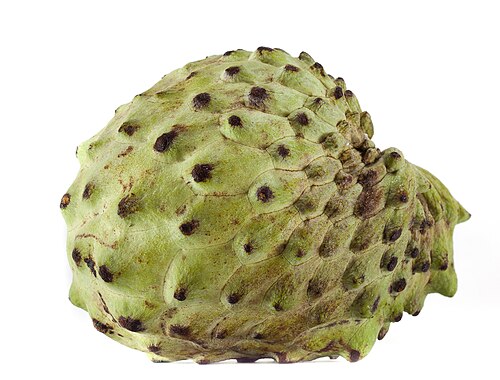
Photo: Wikimedia Commons
Planting Calendar for Subtropical
- Jan -
- Feb -
- Mar -
- Apr -
- May -
- Jun -
- Jul -
- Aug -
- Sep ✓
- Oct ✓
- Nov ✓
- Dec -
S = Seed Tray T = Transplant D = Direct Sow
Want a nudge when it is sowing time?
One email a week with what is worth planting in the Subtropical zone right now, Atemoya included, plus which veg has jumped in price at the supermarket. Free, and you can stop it in one click.
How to Grow Atemoya in Subtropical Australia
- Soil
- Fertile, well-drained sandy loam or rich loam. Tolerates sandy, limestone and gravelly soils if drainage is good. Will not tolerate standing water.
- Salt
- Sensitive. Struggles with salty bore water or salty soil. Give it rainwater if you can.
- pH Range
- 6.5-7.5
- Sunlight
- Full sun, at least 6 to 8 hours of direct sun a day for best flowering and fruit set
- Spacing
- 800cm apart, 600cm between rows
- Watering
- Deep, slow watering at the base of the tree, for example with a soaker hose.
- Good companions
- Nasturtium, Basil, Comfrey, Lemongrass, Sweet Potato
Subtropical Growing Tips for Atemoya
Recommended Varieties
- African Pride (Grafted atemoya): Self-compatible and usually sets well without hand pollination. Also a good pollen source for Pink's Mammoth
- Pink's Mammoth (Grafted atemoya): Largely self-incompatible, so fruit set and shape improve with hand pollination, using African Pride pollen
- Geffner (Grafted atemoya): Listed as self-pollinating with some cold tolerance
- Tropic Sun (Dwarf grafted atemoya): Dwarf tree. Mulch and prune in spring to an open vase shape
Key Challenges
- Citrus mealybug: Sucks sap, weakens shoots and leaves sticky honeydew with black sooty mould on fruit and leaves
- Fruitspotting bugs: Spots on the fruit shoulders and distorted or dropped fruit
- Chalcid fly (seed borer): Larvae feed on the seeds
- Collar Rot: Rots the trunk base and kills the tree
Pro Tips
- Feed young trees every 4 to 6 weeks in spring and summer with a balanced fertiliser or one higher in potash, with zinc, iron and manganese
- Avoid heavy nitrogen, which gives leaf at the cost of fruit
- Stop feeding in winter
Pests and problems for Atemoya in Subtropical
- Collar Rot Plant on a mound in well drained soil and keep mulch away from the trunk. Watch
- Black fruit rot Keep the tree healthy with regular pruning, feeding and watering. Watch
- Fruitspotting bugs Fruitspotting bugs: Spots on the fruit shoulders and distorted or dropped fruit Watch
- Chalcid fly (seed borer) Chalcid fly (seed borer): Larvae feed on the seeds Watch
Harvesting Atemoya
When ready: The skin changes from dark green to pale or yellowish green. The gaps between the fruit segments widen and show cream colour, and the fruit gives slightly under gentle thumb pressure near the stem.
How to harvest: Clip the stem with sharp secateurs. Do not pull or snap the fruit off, because that damages the branch.
What members get
- Soil and weather from your nearest station
- An email when it's time to sow
- Your own garden plan, including planning from a photo
- Price history and price alerts
- Pest risk alerts for your area
- Full salt and canning detail
Common Questions About Atemoya
When do you plant atemoya in Australia?
It depends on your climate zone, not the calendar month alone. Planting months by zone:
- Tropical (Cairns): Sep to Nov
- Subtropical (Brisbane): Sep to Nov
- Warm Temperate (Sydney): Sep to Oct
- Cool Temperate (Melbourne): not recommended
- Cold / Highland (Canberra): not recommended
- Arid / Semi-Arid (Alice Springs): not recommended
- Mediterranean (Perth): Sep to Oct
Can you grow atemoya all year round in Brisbane?
No. In the Subtropical zone the planting months are Sep to Nov. Outside that window it either bolts, sulks or gets cut down by the weather.
When should I plant Atemoya in Brisbane?
Plant young trees from September to November.
What soil temperature do Atemoya need?
Atemoya germinate best when soil temperature is between 21°C and 29°C.
How do I know when Atemoya are ready to harvest?
The skin changes from dark green to pale or yellowish green. The gaps between the fruit segments widen and show cream colour, and the fruit gives slightly under gentle thumb pressure near the stem.
What are the best Atemoya varieties for Brisbane?
Recommended varieties for the Subtropical zone include: African Pride (Grafted atemoya): Self-compatible and usually sets well without hand pollination. Also a good pollen source for Pink's Mammoth, Pink's Mammoth (Grafted atemoya): Largely self-incompatible, so fruit set and shape improve with hand pollination, using African Pride pollen, Geffner (Grafted atemoya): Listed as self-pollinating with some cold tolerance, Tropic Sun (Dwarf grafted atemoya): Dwarf tree. Mulch and prune in spring to an open vase shape.
What grows well with Atemoya?
Good companion plants for Atemoya include: Nasturtium, Basil, Comfrey, Lemongrass, Sweet Potato.
Are atemoya salt tolerant?
No. Atemoya are salt-sensitive, one of the more sensitive veggies. Use rainwater if your bore water is salty, or grow them in a raised bed of fresh mix if your soil is.
Which zone am I in?
Type your postcode into the box near the top of the page and it tells you, and links this crop in your own zone if it differs. Or look it up on the grow zone map. This page is the Subtropical zone, Brisbane is its reference city.