
When to Plant Feverfew in Melbourne, Cool Temperate Guide
Soil temperature is modelled from Open-Meteo forecast (Melbourne), not a live sensor.
What this month normally looks like in Cool Temperate
In October the Cool Temperate zone normally runs 19°C by day and 8°C overnight, with about 67 mm of rain over 9 or 10 wet days. The coldest October night on record across the zone was -3.0°C, so a late frost is not out of the question. Averages 1991 to 2026, 28 postcodes, SILO.
Jump to section
This Feverfew guide is written for the Cool Temperate zone, which takes in Melbourne, Hobart and Geelong. Somewhere else? Your postcode picks the right one.
Not your zone? Cairns Brisbane Sydney Canberra Alice Springs Perth
Also handy: will it frost this week? and what grows in shade.
- Planting window
- Sep to Mar
- Days to harvest
- about 14 weeks
- Sun
- Full sun to part shade
- Soil pH
- 6.0–7.2
Feverfew is a short-lived, bushy perennial about 25 to 60cm tall with ferny, aromatic leaves and small white daisy-like flowers. It is grown as a cottage garden herb and ornamental, and it self-seeds freely.
Published · By GardenBuddy.au
Planting dates, current conditions and prices on this page update daily.
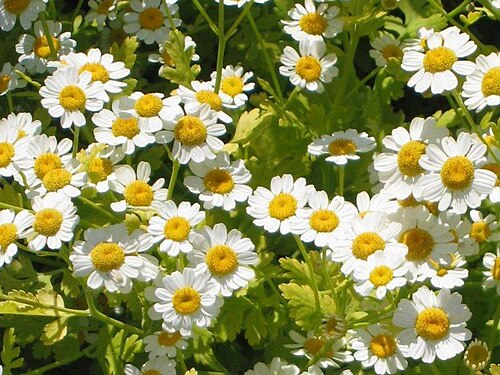
Photo: Wikimedia Commons
Planting Calendar for Cool Temperate
- Jan T/D
- Feb D
- Mar ✓
- Apr -
- May -
- Jun -
- Jul -
- Aug -
- Sep S/D
- Oct S/T/D
- Nov S/T/D
- Dec S/T/D
S = Seed Tray T = Transplant D = Direct Sow
Want a nudge when it is sowing time?
One email a week with what is worth planting in the Cool Temperate zone right now, Feverfew included, plus which veg has jumped in price at the supermarket. Free, and you can stop it in one click.
How to Grow Feverfew in Cool Temperate Australia
- Soil
- Well-draining sandy loam or light garden soil
- Salt
- Moderately sensitive. Copes with a little salt, but the harvest drops on salty bore water.
- pH Range
- 6.0-7.2
- Sunlight
- Full sun to partial shade, at least 4 to 6 hours of direct sun a day
- Spacing
- 20-40cm apart, 35cm between rows
- Watering
- Water when the top 5 cm of soil is dry, ideally early morning or late afternoon, and keep water off the foliage.
- Good companions
- Lavender
Cool Temperate Growing Tips for Feverfew
Recommended Varieties
- Golden Ball (short-lived perennial, yellow flowers, about 25 to): 100 to 130 days to maturity across the feverfew range
- Snowball (short-lived perennial, white pompom flowers, about)
- Tall Single White (short-lived perennial, single white daisies, about)
Key Challenges
- Aphids: Sap-sucking, virus transmission
- Common Garden Snail: Introduced snail with a tan spiral shell
- Slugs: Soft-bodied shell-less molluscs that feed at night on seedlings and leafy vegetables
- Slugs and Snails: Eat young seedlings and tender leaves
Pro Tips
- Light feeder; top-dress with organic compost or apply a light slow-release organic fertiliser in early spring
- Apply a light organic straw mulch around plants to keep soil moisture even and suppress weeds
- Cut back flower heads after blooming to prevent unwanted self-seeding and encourage fresh foliage growth
Pests and problems for Feverfew in Cool Temperate
- Powdery Mildew Space plants well, water the soil rather than the leaves, and cut back after flowering. Watch
- Common Garden Snail Common Garden Snail: Introduced snail with a tan spiral shell Watch
- Slugs Slugs: Soft-bodied shell-less molluscs that feed at night on seedlings and leafy vegetables Watch
- Aphids Aphids: Sap-sucking, virus transmission Watch
- Bacterial Leaf Spot Use good drainage and air flow, and avoid working among wet plants. Watch
Harvesting Feverfew
When ready: Harvest leaves and flowering tops when plants begin blooming in mid-to-late summer
How to harvest: Snip flowering stems and upper leafy growth with sharp scissors or snips 10 cm above ground
What members get
- Soil and weather from your nearest station
- An email when it's time to sow
- Your own garden plan, including planning from a photo
- Price history and price alerts
- Pest risk alerts for your area
- Full salt and canning detail
Common Questions About Feverfew
When do you plant feverfew in Australia?
It depends on your climate zone, not the calendar month alone. Planting months by zone:
- Tropical (Cairns): Mar to Jun
- Subtropical (Brisbane): Jan, Mar, Aug to Dec
- Warm Temperate (Sydney): Jan to Mar, Sep to Dec
- Cool Temperate (Melbourne): Jan to Mar, Sep to Dec
- Cold / Highland (Canberra): Sep to Dec
- Arid / Semi-Arid (Alice Springs): Jan, Sep to Dec
- Mediterranean (Perth): Jan to Mar, Sep to Dec
Can you grow feverfew all year round in Melbourne?
No. In the Cool Temperate zone the planting months are Jan to Mar, Sep to Dec. Outside that window it either bolts, sulks or gets cut down by the weather.
When should I plant Feverfew in Melbourne?
Sow direct or in seed trays from September to November. Dies back after frost and shoots back in spring.
What soil temperature do Feverfew need?
Feverfew germinate best when soil temperature is between 18°C and 24°C.
How do I know when Feverfew are ready to harvest?
Harvest leaves and flowering tops when plants begin blooming in mid-to-late summer
What are the best Feverfew varieties for Melbourne?
Recommended varieties for the Cool Temperate zone include: Golden Ball (short-lived perennial, yellow flowers, about 25 to): 100 to 130 days to maturity across the feverfew range, Snowball (short-lived perennial, white pompom flowers, about), Tall Single White (short-lived perennial, single white daisies, about).
What grows well with Feverfew?
Good companion plants for Feverfew include: Lavender.
Are feverfew salt tolerant?
Only a little. Feverfew are moderately sensitive to salt, so the harvest drops on salty bore water. Mix salty water with rainwater, and mulch the bed.
Which zone am I in?
Type your postcode into the box near the top of the page and it tells you, and links this crop in your own zone if it differs. Or look it up on the grow zone map. This page is the Cool Temperate zone, Melbourne is its reference city.