
When to Plant Eggplant in Alice Springs, Arid / Semi-Arid Guide
Also called aubergine, brinjal.
Soil temperature is modelled from Open-Meteo forecast (Alice Springs), not a live sensor.
What this month normally looks like in Arid / Semi-Arid
In October the Arid / Semi-Arid zone normally runs 32°C by day and 16°C overnight, with about 19 mm of rain over 2 or 3 wet days. The coldest October night on record across the zone was 1.9°C, so a late frost is not out of the question. Averages 1991 to 2026, 10 postcodes, SILO.
Jump to section
This Eggplant guide is written for the Arid / Semi-Arid zone, which takes in Alice Springs, Broken Hill and Port Augusta. Somewhere else? Your postcode picks the right one.
Not your zone? Cairns Brisbane Sydney Melbourne Canberra Perth
Also handy: will it frost this week? and what grows in shade.
- Planting window
- Jul to Feb
- Days to harvest
- about 11 weeks
- Sun
- Full sun
- Water
- Regular
- Spacing
- 60 cm apart
- Soil pH
- 5.5–6.5
- Shop price
- $8.90/kg at one shop
Eggplant is a warm-season Solanaceae that requires more heat than tomatoes to thrive. Originally from India, it loves hot Australian summers.
Published · By GardenBuddy.au
Planting dates, current conditions and prices on this page update daily.
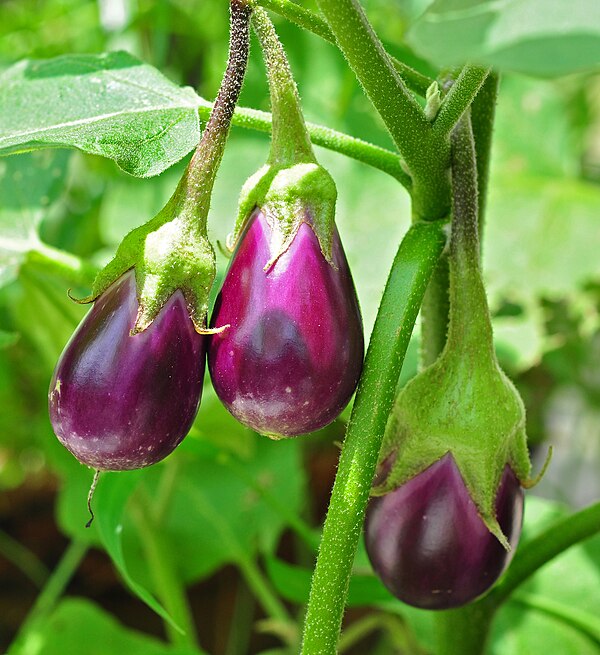
Photo: Wikimedia Commons
Planting Calendar for Arid / Semi-Arid
- Jan T
- Feb T
- Mar -
- Apr -
- May -
- Jun -
- Jul S
- Aug S
- Sep S
- Oct S/T
- Nov T
- Dec S/T
S = Seed Tray T = Transplant D = Direct Sow
Want a nudge when it is sowing time?
One email a week with what is worth planting in the Arid / Semi-Arid zone right now, Eggplant included, plus which veg has jumped in price at the supermarket. Free, and you can stop it in one click.
How to Grow Eggplant in Arid / Semi-Arid Australia
- Soil
- Rich, well-drained soil with generous compost and aged manure. Slightly acidic preferred. Heavy feeders.
- Salt
- Moderately sensitive. Copes with a little salt, but the harvest drops on salty bore water.
- pH Range
- 5.5-6.5
- Sunlight
- Full sun (minimum 8 hours). More heat-demanding than tomatoes. The warmest, most sheltered position in the garden.
- Spacing
- 60cm apart, 80cm between rows
- Watering
- Consistent deep watering 2-3 times per week. Irregular watering causes bitter fruit and blossom end rot. Drip irrigation ideal. Avoid wetting foliage.
- Good companions
- Dwarf Beans, Lettuce, Basil, Marigold, Capsicum
- Keep away from
- Fennel, Galangal, Guava, Mustard greens (Listed under 'keep apart from' for mustard greens; no reason is given.), Potato, Strawberry (share Verticillium wilt), Walnut (juglone sensitive)
- Grow before it
- Leafy greens and brassicas (Lettuce, Silverbeet, Broccoli)
- Grow after it
- Roots and alliums (Carrot, Beetroot, Onion)
Give the bed 3 turns before nightshades go back in. Tomato, capsicum, eggplant and potato share wilts and blights that live on in the soil.
Arid / Semi-Arid Growing Tips for Eggplant
Recommended Varieties
- Black Beauty
- Long Purple
- Listada de Gandia
- Turkish Orange
Key Challenges
- Extreme heat above 42C can still cause flower drop
- High water requirements
- Spider mites in dry heat
Pro Tips
- Eggplant loves heat more than most vegetables. Arid zones can produce excellent crops
- 30% shade cloth during extreme heatwaves only (they genuinely like heat)
- Drip irrigation essential. Consistent moisture prevents bitterness
Pests and problems for Eggplant in Arid / Semi-Arid
- Verticillium Wilt Moderate
- Bacterial Wilt Watch
- Queensland Fruit Fly Watch
- Early Blight Crop rotation (3 year minimum with non-Solanaceae). Mulch to prevent soil splash. Remove lower leaves below first fruit truss. Stake and... Watch
- Tomato Potato Psyllid Watch
- Tomato Spotted Wilt Virus Initial symptoms appear on young growth: bronze or coppery discolouration with tiny dark flecks on expanding leaves, giving a metallic... Watch
- Green Vegetable Bug Watch
- Spider mites Spider mites in dry heat Watch
Harvesting Eggplant
When ready: Fruit should be glossy and firm. Press gently. Flesh should spring back. Skin colour at variety-typical stage (deep purple, white, striped etc.). Dull skin and brown seeds inside indicate over-maturity. Fruit will be bitter and seedy.
How to harvest: Cut with sharp secateurs (stems are woody and thorny). Leave 2-3cm of stem. Do not pull. Wear gloves as some varieties have thorns on calyx. Harvest in morning.
Storing and preserving eggplant
How to keep it
- Freezing (Cooked). Slice eggplant 1cm thick. Grill, roast or pan-fry until soft and golden. Cool completely. Lay on tray to flash-freeze. Transfer to freezer bags. Use in pasta, curry, moussaka from frozen. Do NOT freeze raw. The texture becomes spongy and unpleasant. Keeps: 12 months.
- Dehydrating. Slice 5mm thick. Optional: lightly salt and stand 20 minutes, pat dry. Arrange on dehydrator trays. Dry at 60C for 8-14 hours until leathery or crispy. Store in airtight jars. Rehydrate in warm water or oil before use. Keeps: 12 months.
- Baba Ganoush (Freeze). Char whole eggplant over gas flame or under grill until skin is blackened and flesh is completely soft. Peel. Mash with tahini, lemon juice, garlic, salt. Portion and freeze flat in bags. Keeps: 6 months frozen.
- Pickled (Middle Eastern Style). Slice small eggplants lengthwise. Salt and press 2 hours to remove bitter liquid. Stuff with garlic, walnuts, chilli. Pack into jars. Cover with white vinegar. Seal and process in water bath 15 minutes. Keeps: 12 months.
What eggplant costs in the shops right now, retailer by retailer, updated daily.
What members get
- Soil and weather from your nearest station
- An email when it's time to sow
- Your own garden plan, including planning from a photo
- Price history and price alerts
- Pest risk alerts for your area
- Full salt and canning detail
Common Questions About Eggplant
When do you plant eggplant in Australia?
It depends on your climate zone, not the calendar month alone. Planting months by zone:
- Tropical (Cairns): Feb to Jul
- Subtropical (Brisbane): Jan to Mar, Aug to Dec
- Warm Temperate (Sydney): Aug to Dec
- Cool Temperate (Melbourne): Aug to Sep, Nov to Dec
- Cold / Highland (Canberra): Aug to Dec
- Arid / Semi-Arid (Alice Springs): Jan to Feb, Jul to Dec
- Mediterranean (Perth): Jul to Dec
Can you grow eggplant all year round in Alice Springs?
No. In the Arid / Semi-Arid zone the planting months are Jan to Feb, Jul to Dec. Outside that window it either bolts, sulks or gets cut down by the weather.
What else is eggplant called?
Eggplant is the usual Australian name. Overseas seed packets and recipes call it aubergine, brinjal. Same plant, same growing advice.
When should I plant Eggplant in Alice Springs?
Raise in pots under cover and plant out once nights are warm. Midsummer heat can slow fruiting, but plants crop heavily in autumn; thin Asian and African types handle heat best.
What soil temperature do Eggplant need?
Eggplant germinate best when soil temperature is between 21°C and 32°C.
How do I know when Eggplant are ready to harvest?
Fruit should be glossy and firm. Press gently. Flesh should spring back. Skin colour at variety-typical stage (deep purple, white, striped etc.). Dull skin and brown seeds inside indicate over-maturity. Fruit will be bitter and seedy.
What are the best Eggplant varieties for Alice Springs?
Recommended varieties for the Arid / Semi-Arid zone include: Black Beauty, Long Purple, Listada de Gandia, Turkish Orange.
What grows well with Eggplant?
Good companion plants for Eggplant include: Dwarf Beans, Lettuce, Basil, Marigold, Capsicum.
Are eggplant salt tolerant?
Only a little. Eggplant are moderately sensitive to salt, so the harvest drops on salty bore water. Mix salty water with rainwater, and mulch the bed.
Which zone am I in?
Type your postcode into the box near the top of the page and it tells you, and links this crop in your own zone if it differs. Or look it up on the grow zone map. This page is the Arid / Semi-Arid zone, Alice Springs is its reference city.