

User guide · running your garden · 7 min read
Beat the same pest faster next season.
Pest tracking is separate from care events because pests have more structure, severity, treatment applied, whether the treatment worked. This becomes your personal pest database after a couple of seasons.
 Record what you tried and whether it worked. That is the half most people skip.
What to record
Pest observations get their own layer (separate from the care log) because pests have more structure, severity, treatment, effectiveness tracked over time.
| Field | Examples |
|---|---|
| Pest type | Cabbage white butterfly, Aphids (green peach), Possum (Brushtail), Fruit fly, Slug |
| Severity | Low / Moderate / High / Severe |
| Plant / bed affected | Specific plant + bed context |
| Action taken | “Hosed off with water”, “Net deployed”, “BT sprayed”, “Left for biological control” |
| Treatment product | Brand + dilution (“Eco-Neem 20 mL in 1 L”) |
| Effectiveness | Recorded 7–14 days later: “85% reduction”, “Didn’t work”, “Biological takeover” |
Organic-first escalation ladder
The recommended treatment order, you don’t have to follow it, but the UI groups treatments this way:
- Physical, netting, hand-picking, hose, row covers, collars. Works for most pests if applied early.
- Biological, encourage lady beetles (aphids), praying mantis (caterpillars), beneficial wasps, pollinators. Often free and self-sustaining.
- Organic sprays, Eco-Neem oil, Yates Dipel BT, pyrethrum, milk spray (for powdery mildew), iron-phosphate slug pellets (pet-safe).
- Synthetic, only if organic fails and the crop is at genuine risk. Read the withholding period on the label; don’t harvest within that window.
You can record whatever you actually use; the UI just defaults to organic-first to nudge in that direction.
Why record effectiveness a week or two later
Logging “applied neem, done” doesn’t help future-you. Logging “applied neem, 7 days later, 85% of aphids gone, lady beetles moved in, leaving remaining population for biological control” gives you a real playbook.
There is no automatic follow-up reminder, so set your own: a week after you log a treatment, come back and add a fresh observation with what actually happened.
Common subtropical Australian pests
Brassica family
- Cabbage white butterfly (broccoli, kale, bok choy, cabbage), white butterflies laying yellow eggs on leaf undersides. Treatment: Yates Dipel BT spray weekly from week 8; or fine insect netting as physical barrier.
- Cabbage looper, similar treatment to cabbage white.
- Aphids (green peach), clusters on new growth and leaf undersides. Treatment: hose off first, then Eco-Neem if persistent.
- Club root (fungal, not technically a pest but groups similarly), plants wilt and stunt; roots show galls. Prevention: lime bed before planting, rotate crops.
Fruiting crops
- Fruit fly (tomatoes, stone fruit, chillies), maggots in fruit. Treatment: traps + netting.
- Heliothis moth (tomatoes, corn), caterpillars eating into fruit. BT spray.
General garden
- Possums and bush rats, nearly every suburban backyard. Only solution is physical: netting, cages, or tolerance.
- Slugs and snails (seedlings, leafy greens), hand-picking at night, beer traps, iron-phosphate pellets (pet-safe).
- Grasshoppers and locusts (summer, leafy crops), physical barriers, timing plantings to avoid peaks.
- Earwigs (seedlings), damp cardboard traps, nighttime collection.
Real example from our demo garden
Aphid infestation on kale, full treatment cycle
Day 0: Logged “Aphids (green peach), HIGH severity, on kale undersides, leaves starting to crinkle”. Hosed off with strong water, applied Eco-Neem 20 mL/L that evening.
Day 7: Follow-up observation, “Aphid population reduced ~60%. Lady beetles present and laying eggs.”
Day 14: Final observation, “Aphid population reduced ~85%. Lady beetle population established. Leaving remaining aphids for biological control.”
Result: one round of neem + natural predators took care of a high-severity infestation without repeat spraying. That’s the playbook documented.
Pest alert emails
Every member tier gets the weekly pest alert email: it arrives Tuesday morning and flags pests active in your climate zone, filtered to the vegetables you have selected. If your plants are vulnerable to a pest on the list, the email tells you what to watch for before damage appears. Turn it on or off from the email preferences panel on /my-garden/.
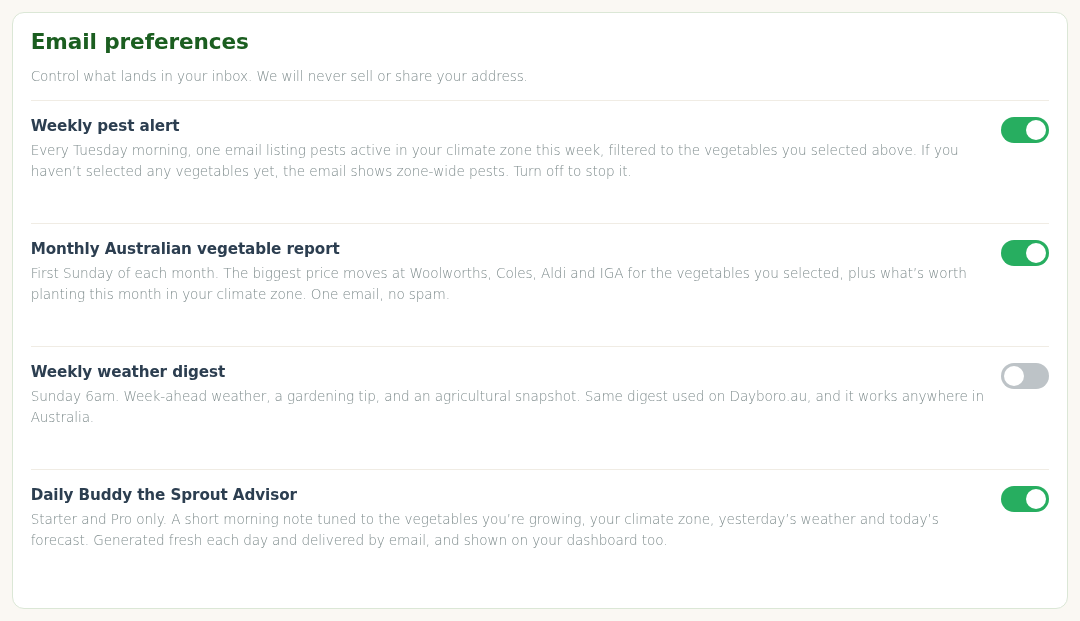
Pro adds live pest pressure on top: weather-triggered pest data for your postcode, including QLD fruit fly.
Example subtropical autumn alerts:
- Cabbage white butterfly emergence (weeks 1–8 after brassica transplanting)
- Aphid pressure (warm overcast days in autumn)
- Fruit fly activity (late summer stone fruit, extends into autumn)
- Slug explosions (humid overcast nights after rain)
Archiving old pest events
Pest records stay in your history forever, they’re your personal playbook. Don’t archive or delete unless a specific event was a mistake. Two seasons of pest records is genuinely valuable reference material.