
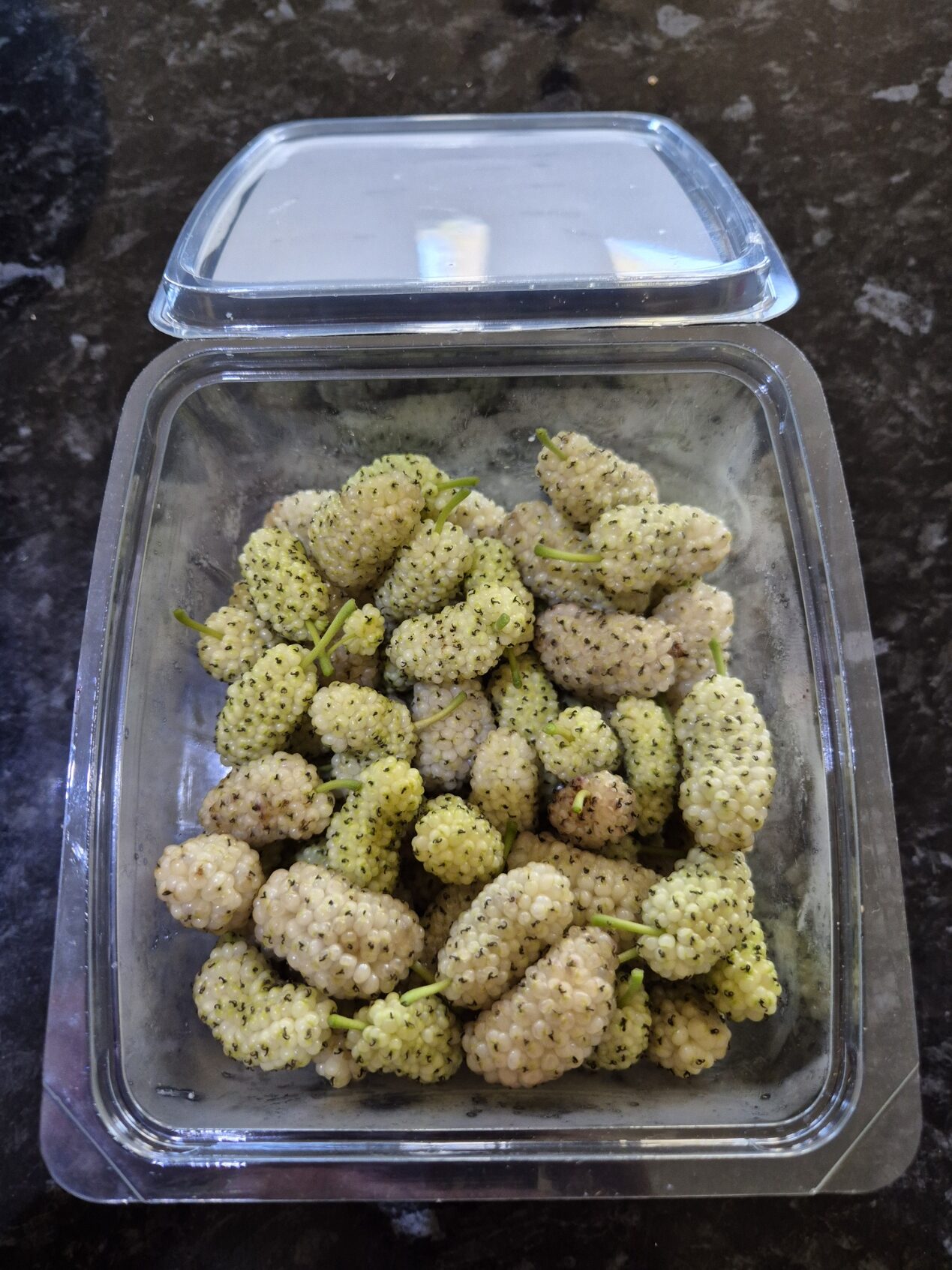
We picked these two punnets off the same tree run this week, one red, one white, and it reminded us how little most people actually know about mulberries. They used to be everywhere. Every old Queensland farmhouse had one out the back, usually a big untidy tree the chooks camped under. Then somewhere along the way they went out of fashion, probably because the fruit stains everything it touches. That is a shame, because a mulberry tree is one of the easiest, most generous things you can put in a backyard.

Two mulberries, two very different fruit
The red and near black fruit is almost certainly Morus nigra, the black mulberry, or one of the red hybrids sold as a garden variety. This is the one people mean when they say mulberry: deep colour, strong flavour, a good balance of sweet and tart. The white punnet is Morus alba, the white mulberry, originally grown to feed silkworms. It is sweeter and milder, with almost none of the sharpness of the red fruit, and it stains far less, which makes it the one to hand a toddler.
Both trees grow the same way and both are worth having if you have the room, because they ripen slightly differently and extend your picking season.
Growing a mulberry in a Dayboro backyard
Mulberries are about as forgiving as fruit trees get. A few things to get right:
- Sun. Full sun gives the best fruit set, though a mulberry will still crop in part shade.
- Soil. They are not fussy, but they do best in soil that drains well and holds some organic matter. Dig in compost at planting time and mulch every year.
- Water. Deep, occasional watering while young. Once established, a mulberry copes with dry spells better than most fruit trees, though the fruit will be juicier with regular water while it is filling out.
- Space. Left alone a mulberry will get big, easily four to six metres. Annual pruning after fruiting keeps it to a manageable size and makes picking far easier.
- Propagation. The easy way is a hardwood cutting taken in winter, pushed straight into the ground. Mulberries strike so readily that a fence post cut from a mulberry branch has been known to grow into a tree.
- Pests. Fruit fly is the main threat in this district, along with birds and fruit bats, who will strip a tree overnight if it is not netted.
When to harvest
This is the one rule that catches people out: mulberries do not ripen after picking. Unlike a banana or a tomato, once it is off the tree it is done developing, so you have to pick it at exactly the right moment, or better, let it choose the moment for you.
A ripe mulberry comes away with the gentlest pull, sometimes just a light shake of the branch. If you have to tug, it is not ready. Many growers simply spread an old sheet or tarp under the tree and shake it every day or two through the season, then collect what falls. It is quicker than hand picking and it only takes the truly ripe fruit.
Season in Southeast Queensland runs roughly through spring into early summer, though a tree with a long fruiting window can keep dropping fruit for six to eight weeks.
How to eat them
Fresh off the tree is still the best way, ideally eaten standing under the branches before anyone notices the stains on your fingers. Beyond that, mulberries work well:
- Scattered over porridge, muesli or yoghurt
- Folded through pancake or muffin batter
- Blended into a smoothie, which hides the seeds nicely
- Baked into a crumble or pie, paired with apple to balance the sweetness
Nutritionally they earn their keep too. The dark varieties are high in anthocyanins, the same antioxidant pigment family found in blueberries, and mulberries carry a solid dose of vitamin C and iron for a fruit most people have never eaten.
Preserving the glut
A productive tree drops more fruit than any household can eat fresh, so preserving is not optional, it is the whole point of growing one.
Freezing
The simplest option. Spread washed, dry mulberries on a tray, freeze until solid, then bag them. They will keep a full year and go straight into baking or smoothies with no thawing needed.
Mulberry jam
Mulberries are naturally low in pectin, so a splash of lemon juice helps the set.
- 1 kg mulberries, stems removed
- 800 g sugar
- Juice of two lemons
Simmer the fruit gently for ten minutes to break it down, then add the sugar and lemon juice. Bring to a rolling boil and cook for twenty to twenty five minutes, stirring often so it does not catch. Test for set on a cold saucer: if it wrinkles when pushed, it is ready. Pour into sterilised jars while still hot and seal.
Mulberry cordial
Simmer 1 kg of fruit with 1 litre of water for fifteen minutes, strain through a fine cloth, then return the liquid to the pot with 500 g of sugar and the juice of a lemon. Simmer another ten minutes, bottle while hot. Dilute to taste with still or sparkling water.
Mulberry vinegar
An old preserving trick worth reviving. Cover crushed mulberries with white vinegar in a jar, leave for a week in a cool spot, then strain and sweeten lightly with sugar if you like. Use it in dressings or as a shrub mixed with soda water.
Drying
White mulberries in particular dry beautifully, since they are already sweeter and lower in moisture. A dehydrator or a very low oven with the door cracked will turn them into a chewy, raisin like snack that keeps for months in an airtight jar.
From the tree to the jar
That is the full run of it, seed to plate as the old saying goes: pick a good variety, or two for a longer season, give it sun and a bit of water while it establishes, wait for the fruit to drop into your hand rather than fighting it off the branch, then eat what you can and preserve the rest before the birds beat you to it. If you have a mulberry tree sitting unused in a corner of the yard, this is the week to go and shake it.
The GardenBuddy.au team