
When to Plant Chilli peppers in Melbourne, Cool Temperate Guide
Also called chili, hot pepper.
Soil temperature is modelled from Open-Meteo forecast (Melbourne), not a live sensor.
What this month normally looks like in Cool Temperate
In October the Cool Temperate zone normally runs 19°C by day and 8°C overnight, with about 67 mm of rain over 9 or 10 wet days. The coldest October night on record across the zone was -3.0°C, so a late frost is not out of the question. Averages 1991 to 2026, 28 postcodes, SILO.
Jump to section
This Chilli peppers guide is written for the Cool Temperate zone, which takes in Melbourne, Hobart and Geelong. Somewhere else? Your postcode picks the right one.
Not your zone? Cairns Brisbane Sydney Canberra Alice Springs Perth
Also handy: will it frost this week? and what grows in shade.
- Planting window
- Aug to Dec
- Days to harvest
- about 11 weeks
- Sun
- Full sun
- Water
- Regular
- Spacing
- 45 cm apart
- Soil pH
- 6.0–6.8
Chillies are warm-season Solanaceae grown for their pungent fruit. Five cultivated species exist, with C. annuum (jalapeno, cayenne) and C. chinense (habanero, reaper) being most popular.
Published · By GardenBuddy.au
Planting dates, current conditions and prices on this page update daily.
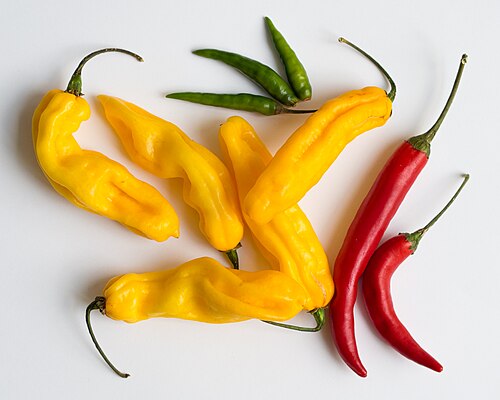
Photo: Wikimedia Commons
Planting Calendar for Cool Temperate
- Jan -
- Feb -
- Mar -
- Apr -
- May -
- Jun -
- Jul -
- Aug S
- Sep S
- Oct S
- Nov T
- Dec T
S = Seed Tray T = Transplant D = Direct Sow
Want a nudge when it is sowing time?
One email a week with what is worth planting in the Cool Temperate zone right now, Chilli peppers included, plus which veg has jumped in price at the supermarket. Free, and you can stop it in one click.
How to Grow Chilli peppers in Cool Temperate Australia
- Soil
- Well-drained, moderately fertile soil with compost. Slightly acidic preferred. Overly rich soil produces foliage over fruit.
- Salt
- Moderately sensitive. Copes with a little salt, but the harvest drops on salty bore water.
- pH Range
- 6.0-6.8
- Sunlight
- Full sun (minimum 6-8 hours). More sun = more heat in the fruit.
- Spacing
- 45cm apart, 60cm between rows
- Watering
- Moderate and consistent watering. Slightly less water than capsicums. Some controlled water stress when fruit is ripening increases capsaicin (heat) levels. Avoid waterlogging.
- Good companions
- Tomato, Basil, Marigold, Oregano, Coconut
- Keep away from
- Fennel
- Grow before it
- Leafy greens and brassicas (Lettuce, Silverbeet, Broccoli)
- Grow after it
- Roots and alliums (Carrot, Beetroot, Onion)
Give the bed 3 turns before nightshades go back in. Tomato, capsicum, eggplant and potato share wilts and blights that live on in the soil.
Cool Temperate Growing Tips for Chilli peppers
Recommended Varieties
- Jalapeno (most reliable)
- Hungarian Hot Wax
- Cayenne
- Cherry Bomb
Key Challenges
- Very short warm season
- Cool nights slowing fruit development
- Super-hot varieties will not ripen
Pro Tips
- Jalapeno and Hungarian Hot Wax are the most reliable for Melbourne-type climates
- Greenhouse or polytunnel dramatically improves results
- Grow in pots to bring indoors for overwintering
Pests and problems for Chilli peppers in Cool Temperate
- Bacterial Wilt Low
- Queensland Fruit Fly Watch
- Bacterial Spot Watch
- Tomato Potato Psyllid Watch
- Tomato Spotted Wilt Virus Initial symptoms appear on young growth: bronze or coppery discolouration with tiny dark flecks on expanding leaves, giving a metallic... Watch
- Helicoverpa / Corn Earworm / Tomato Grub Watch
- Mosaic Viruses Use clean seed and seedlings, and control sap sucking insects (AUSVEG). Watch
Harvesting Chilli peppers
When ready: Depends on variety and intended use. Green chillies: full-sized, firm, glossy. Ripe chillies: fully coloured (red, orange, yellow etc.). Hotter when fully ripe. Some varieties (jalapeno) can be used green or red.
How to harvest: Cut with scissors or secateurs leaving short stem. Do not pull. Wear gloves when harvesting super-hot varieties. Capsaicin on fingers causes painful burning if you touch eyes, nose or other sensitive areas.
Storing and preserving chilli peppers
How to keep it
- Dehydrating / Drying. Thread whole chillies onto string through stems (ristras). Hang in dry, airy location. Alternatively, halve and dehydrate at 60C for 6-12 hours until brittle. Store whole or grind into chilli flakes/powder. Sun-drying works well in arid and Mediterranean climates. Keeps: 12+ months.
- Freezing. Wash and dry chillies. Freeze whole in zip-lock bags. No blanching needed. Frozen chillies can be grated directly into dishes while still frozen. Texture softens on thawing but flavour is preserved. Keeps: 12 months.
- Fermented Hot Sauce. Roughly chop chillies (with gloves for hot varieties). Pack into jar. Cover with 3% salt brine (30g salt per litre water). Weight down to keep submerged. Cover loosely. Ferment at room temperature for 1-4 weeks until sour and bubbly. Blend smooth with vinegar to taste. Bottle. Keeps: 6-12 months refrigerated.
- Pickling. Slice chillies into rings (wear gloves). Pack into sterilised jars with garlic and herbs. Pour hot vinegar brine (equal parts vinegar and water, 1 tbsp salt, 1 tbsp sugar per 500ml). Process in boiling water bath 10 minutes. Keeps: 12 months.
- Chilli Oil. Dry or dehydrate chillies until crisp. Crush or flake. Heat neutral oil (rice bran, sunflower) to 180C. Pour hot oil over chilli flakes in a heat-proof jar. Sizzle is expected. Cool and seal. Stir before use. Keeps: 6 months at room temperature, 12 months refrigerated.
Canning safety. Low-acid vegetables like chilli peppers must be pressure canned, never water-bath canned.
What chilli peppers costs in the shops right now, retailer by retailer, updated daily.
What members get
- Soil and weather from your nearest station
- An email when it's time to sow
- Your own garden plan, including planning from a photo
- Price history and price alerts
- Pest risk alerts for your area
- Full salt and canning detail
Common Questions About Chilli peppers
When do you plant chilli peppers in Australia?
It depends on your climate zone, not the calendar month alone. Planting months by zone:
- Tropical (Cairns): Feb to Aug
- Subtropical (Brisbane): Jan to Mar, Aug to Dec
- Warm Temperate (Sydney): Aug to Nov
- Cool Temperate (Melbourne): Aug to Dec
- Cold / Highland (Canberra): Aug to Dec
- Arid / Semi-Arid (Alice Springs): Jan to Feb, Jul to Dec
- Mediterranean (Perth): Jan, Jul to Dec
Can you grow chilli peppers all year round in Melbourne?
No. In the Cool Temperate zone the planting months are Aug to Dec. Outside that window it either bolts, sulks or gets cut down by the weather.
What else is chilli peppers called?
Chilli peppers is the usual Australian name. Overseas seed packets and recipes call it chili, hot pepper. Same plant, same growing advice.
When should I plant Chilli peppers in Melbourne?
Start seed on a heat mat under cover and plant out only after the last frost. Fast C. annuum types crop best, from February until the first cold snap.
What soil temperature do Chilli peppers need?
Chilli peppers germinate best when soil temperature is between 20°C and 35°C.
How do I know when Chilli peppers are ready to harvest?
Depends on variety and intended use. Green chillies: full-sized, firm, glossy. Ripe chillies: fully coloured (red, orange, yellow etc.). Hotter when fully ripe. Some varieties (jalapeno) can be used green or red.
What are the best Chilli peppers varieties for Melbourne?
Recommended varieties for the Cool Temperate zone include: Jalapeno (most reliable), Hungarian Hot Wax, Cayenne, Cherry Bomb.
What grows well with Chilli peppers?
Good companion plants for Chilli peppers include: Tomato, Basil, Marigold, Oregano, Coconut.
Are chilli peppers salt tolerant?
Only a little. Chilli peppers are moderately sensitive to salt, so the harvest drops on salty bore water. Mix salty water with rainwater, and mulch the bed.
Which zone am I in?
Type your postcode into the box near the top of the page and it tells you, and links this crop in your own zone if it differs. Or look it up on the grow zone map. This page is the Cool Temperate zone, Melbourne is its reference city.